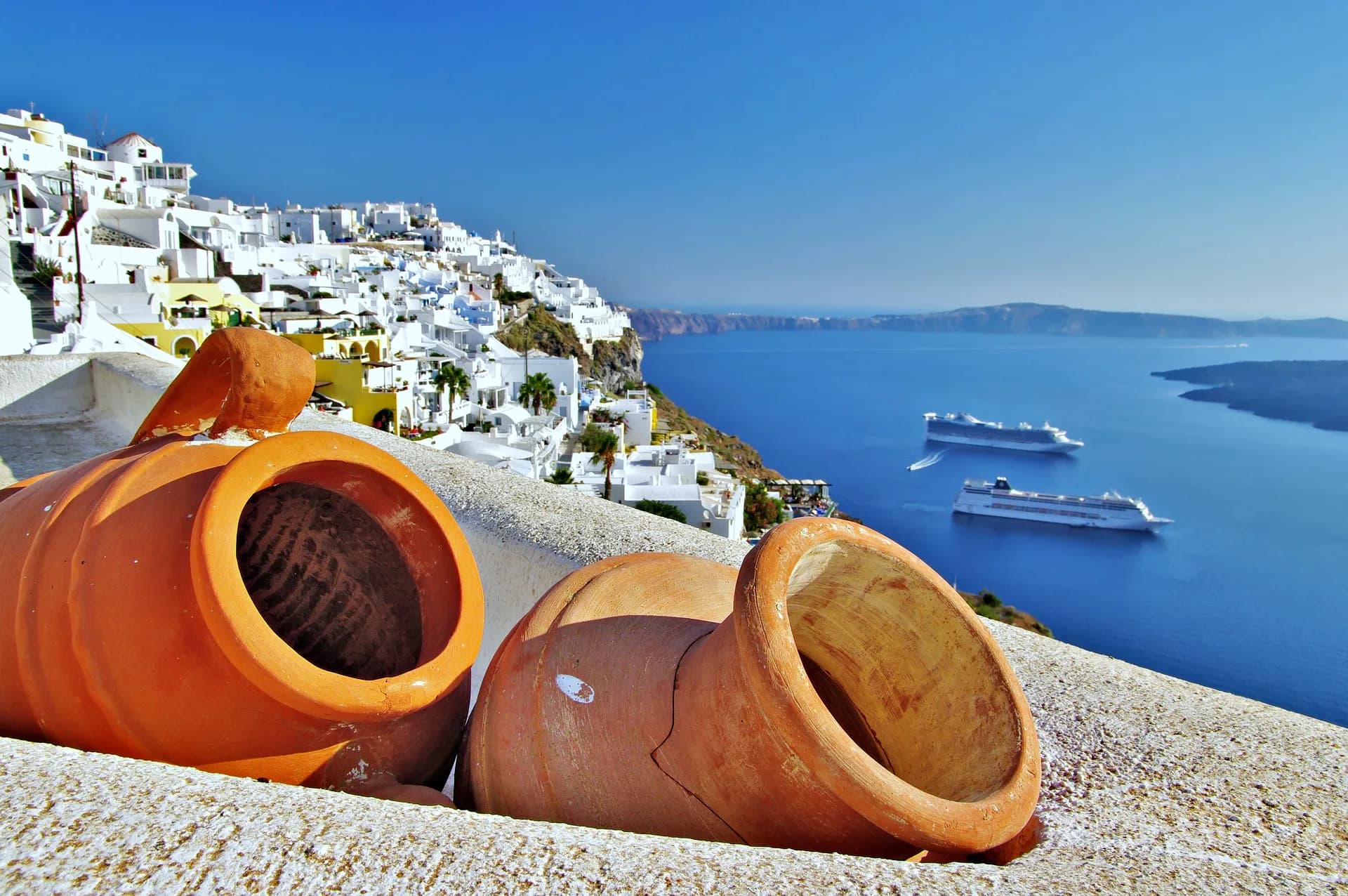
Santorini is the rim of a flooded volcano. The island’s famous cliffs are the inside wall of a caldera left by one of the largest eruptions in human history, around 1600 BCE. That eruption buried a Bronze Age town, may have inspired the legend of Atlantis, and still shapes everything from the island’s cave houses to its wine.
Here are 12 facts about Santorini that most visitors never hear, plus when to go and how to see the island without the crowds.
| Santorini at a glance | |
|---|---|
| Official name | Thira (Thera) |
| Island group | Cyclades, southern Aegean Sea |
| Formed by | Volcanic eruptions; the caldera flooded after the Minoan eruption around 1600 BCE |
| Main towns | Fira (the capital), Oia, Imerovigli, Firostefani |
| Signature wine | Assyrtiko, plus sweet Vinsanto |
| Best months | May–June and September–October |
What are some fun facts about Santorini?
1. The island is the edge of a sunken volcano
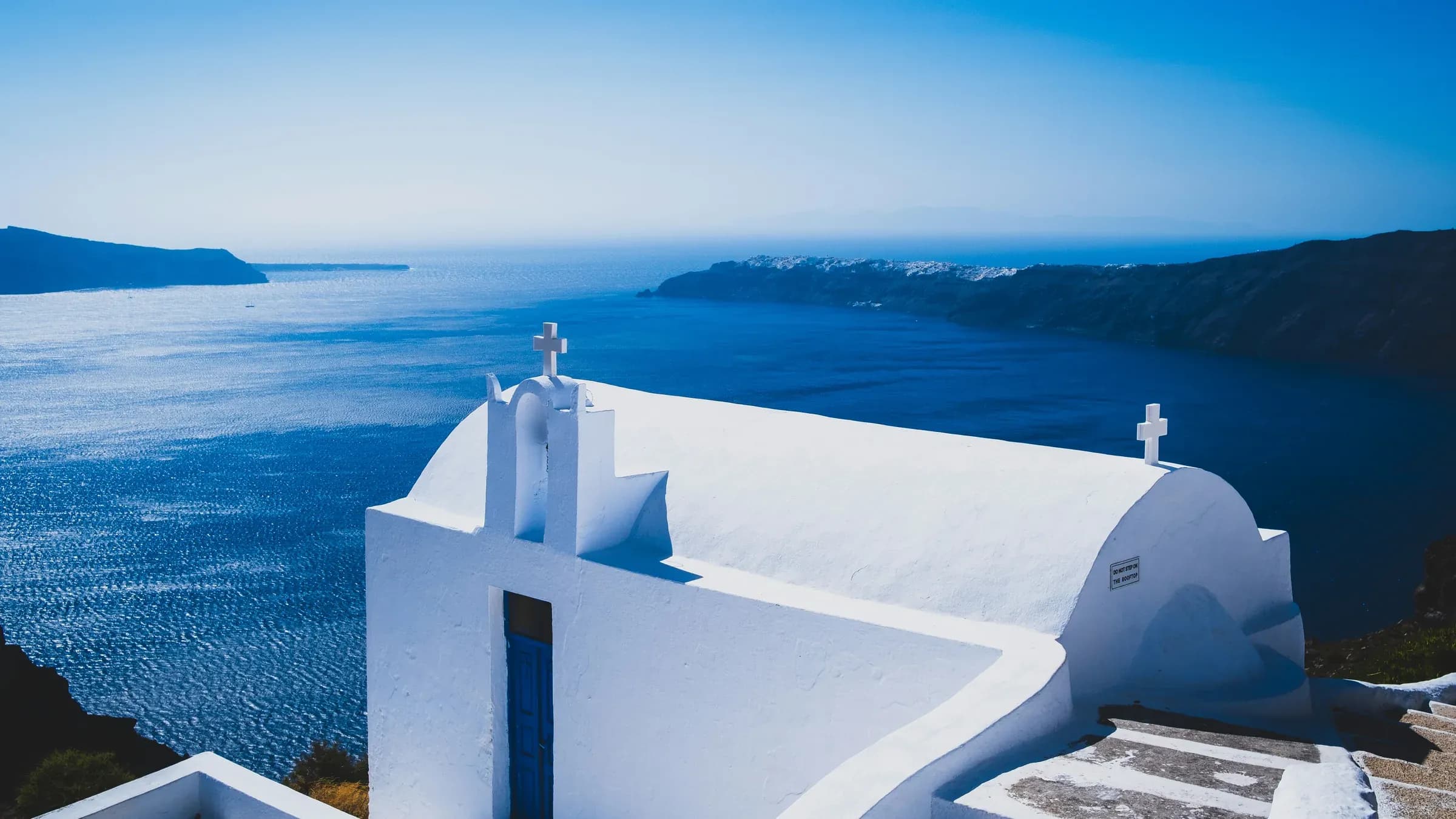
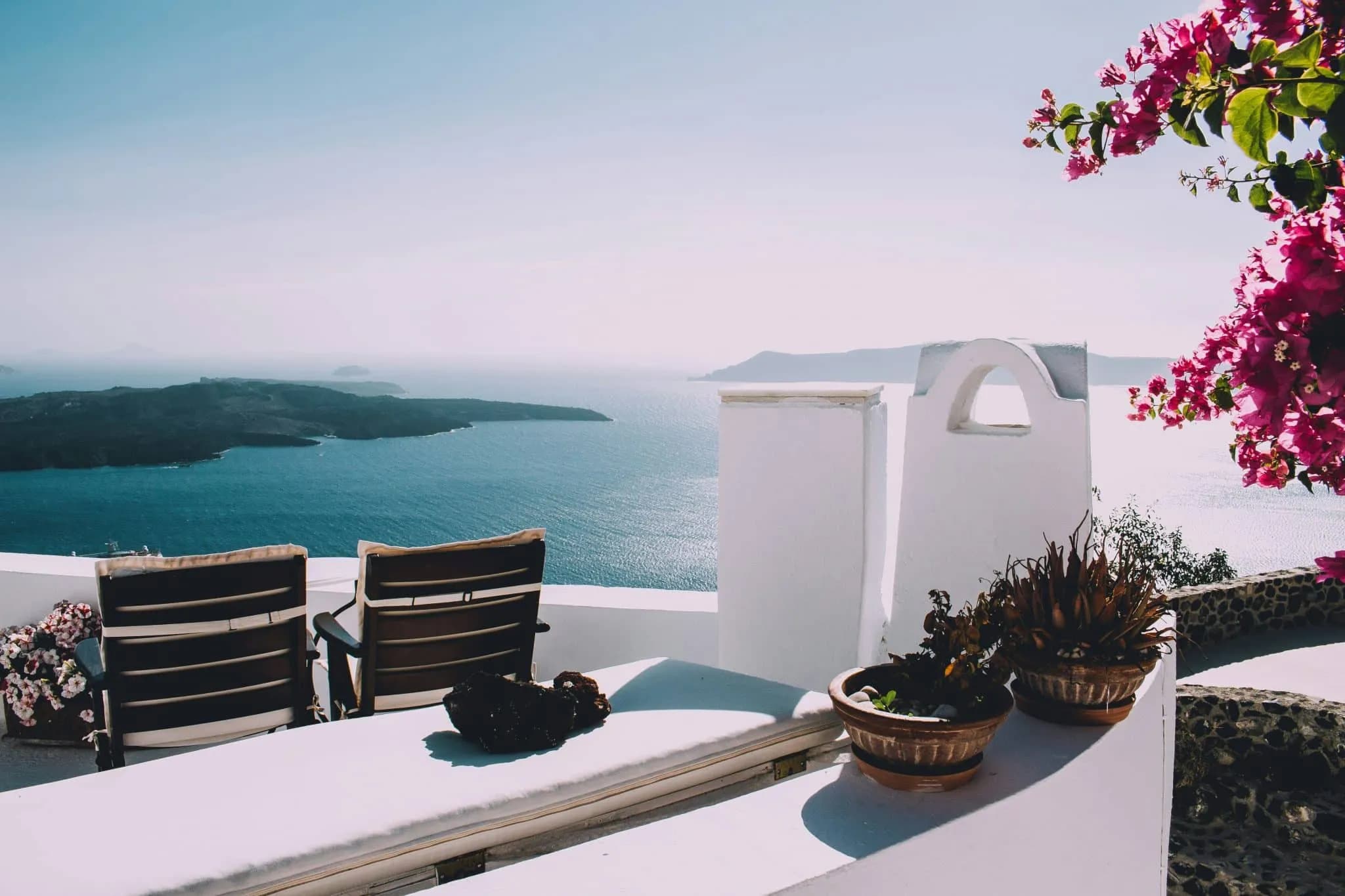
Santorini is a ring of islands around a caldera, a huge basin that formed when the volcano emptied and its center collapsed into the sea. The main island is the crescent on the east side. The towns of Fira, Imerovigli and Oia sit on top of cliffs that rise more than 200 meters (650+ feet) straight out of the water, and the layers of red, black and white rock in the cliff face are each a different eruption.
2. The volcano is still active
In the middle of the caldera are two small, dark islands, Nea Kameni and Palea Kameni, built by eruptions over the last two thousand years. Nea Kameni last erupted in 1950. Boat trips land there so you can walk up to steaming vents on the crater, then swim in the warm, iron-red water of the hot springs off Palea Kameni.
3. It produced one of the largest eruptions in human history
Around 1600 BCE, the Minoan eruption blew out the center of the island, buried it in pumice and ash many meters deep, and sent tsunamis across the Aegean. It is often linked to the decline of the Minoan civilization on Crete, around 110 km (70 miles) to the south.
4. A Bronze Age town lies under the ash
Akrotiri, on the island’s south coast, is sometimes called the “Minoan Pompeii”. Excavations since 1967 have uncovered multi-story houses, drainage systems and some of the finest wall paintings of the Aegean Bronze Age. Unlike Pompeii, almost no human remains have been found, which suggests the residents had warning and left before the eruption. The site sits under a protective roof and is open to visitors year round.
5. It may be the origin of the Atlantis legend
Plato described Atlantis as a rich island civilization that vanished into the sea in a single day. Some historians think memories of the Minoan eruption, passed down for more than a thousand years, could lie behind the story. It is a theory rather than a fact, but the caldera makes it easy to imagine.
6. “Santorini” is not its official name
Greeks call the island Thira. “Santorini” comes from Santa Irini (Saint Irene), the name the Venetians used after they took control of the Cyclades in the 13th century. Both names are in daily use, and ferries and flights often list it as Thira.
7. The vines are woven into baskets
Santorini’s vineyards look nothing like the rows you see in California or France. Growers coil the vines into low baskets called kouloura, which sit on the ground and shelter the grapes from strong summer winds. The island’s volcanic soil also kept out phylloxera, the pest that destroyed most of Europe’s vineyards in the 19th century, so many vines grow on very old root systems.
8. Its best-known wine is bone dry — and its other one is very sweet
Assyrtiko, the island’s signature white grape, makes crisp, mineral wines that pair perfectly with seafood. Vinsanto is the opposite: a rich dessert wine made from grapes dried in the sun before pressing. A tasting at one of the cliff-top wineries near Pyrgos or Megalochori is one of the best ways to spend a late afternoon.
9. The island has almost no fresh water
Santorini has no rivers and very little rain in summer. The vines and the island’s famous small tomatoes get much of their moisture from overnight sea mist absorbed by the porous volcanic soil, and much of the tap water comes from desalination plants. Drink bottled water and treat water as the scarce resource it is.
10. People live inside the cliffs
The traditional homes on the caldera are yposkafa, cave houses dug sideways into the soft layers of volcanic ash. The rock keeps them cool in summer and warm in winter, and the whitewash on the outside reflects the sun. Many of today’s cave hotels and suites are converted yposkafa. The famous blue domes belong to churches — there are hundreds of churches and chapels on the island.
11. The beaches come in red, black and white
Because Santorini is volcanic, its beaches are unlike those on other Greek islands. Kamari and Perissa have long stretches of black sand that gets very hot by midday. Red Beach, near Akrotiri, sits under rust-red cliffs, though access is often restricted because of rockfall risk. Vlychada on the south coast has pale cliffs carved into strange shapes by the wind.
12. Two of its foods have protected status
Santorini fava, a creamy purée of yellow split peas grown on the island, and the small, intensely sweet Santorini cherry tomato both carry EU protected designation of origin status. Order fava with capers and onions, and tomatokeftedes (tomato fritters), at any traditional taverna.
How do you get from the old port up to Fira?
By cable car. The usual alternative, the 588-step Karavolades path that zigzags up the cliff, has been closed since July 27, 2026, when a wall beside it collapsed, and no reopening date has been announced. The closure also stops the donkey rides that used the path, so the cable car is currently the only way up. It takes about three minutes, and lines can be long when several cruise ships are in, so some cruise passengers are now landed at the island’s main port, Athinios, and taken up by bus instead.
If the path reopens, keep in mind that the donkeys that work it have been the focus of animal welfare campaigns: in 2018 Greece banned anyone over 100 kg (220 lb) from riding them. Walking or taking the cable car is the kinder choice.
Where is the best place to watch the sunset in Santorini?
Oia is the most famous spot, and on summer evenings its castle walls are packed an hour before sunset. For the same view with fewer people, try the caldera paths in Imerovigli or Firostefani, a sunset sail around the caldera, or a terrace dinner booked in advance in Oia itself.
When is the best time to visit Santorini?
Late May, June, September and early October offer warm sea temperatures and long days without the peak crowds and prices of July and August. Cruise ships make the island busiest in the middle of the day, so plan Fira and Oia for early morning or evening and spend the middle of the day at a beach, a winery or on the water.
Many couples base themselves in Santorini for a honeymoon — see our Santorini honeymoon guide. To combine it with other islands, our Athens & the Cyclades itinerary pairs Athens with Santorini and its neighbors, and the Santorini Stay is a five-day trip on the island alone.
Frequently asked questions
Is Santorini a volcano?
Yes. Santorini is the rim of a volcanic caldera, and the volcano is still active. Its most recent eruption was in 1950, on the islet of Nea Kameni in the middle of the caldera.
What is Santorini famous for?
Its caldera views, sunsets in Oia, whitewashed cave houses and blue-domed churches, volcanic beaches, Assyrtiko wine and the Bronze Age site of Akrotiri.
Is Santorini really Atlantis?
Nobody knows. Some historians think the Minoan eruption around 1600 BCE could be the real event behind Plato’s legend of Atlantis, but there is no proof.
How many days do you need in Santorini?
Three to four nights is enough to see the caldera towns, Akrotiri, a winery, a beach and a caldera cruise without rushing.
For more about the country, read our fun facts about Greece.
Planning a trip to Greece
Juniper Tours designs private, custom Greece itineraries — never group tours, never fixed departures. Most run 10–14 days and fall between about $5,000 and $15,000+ per person, with hand-selected stays, private transfers and island connections arranged end to end. Planned by Allison Tucker. The 30-minute consultation is free; a $100 planning deposit begins your itinerary. See Greece trips →
Greece trips are designed by Allison Tucker — book a call.