England’s oldest castle depends on how you count. Pevensey Castle in East Sussex is the oldest castle site: William the Conqueror built a fort there in 1066 inside the walls of a Roman fort from around AD 290. Colchester Castle and the Tower of London have the oldest surviving Norman stone keeps, both begun in the 1070s. And Windsor Castle, founded around 1070, is the oldest castle still lived in.
Almost every castle in England dates from after the Norman Conquest of 1066 — the Normans introduced castle-building to the country. Here is how the main contenders compare, and how to visit them.
| Castle | Location | Begun | Its claim |
|---|---|---|---|
| Pevensey Castle | East Sussex | 1066 (Roman walls c. AD 290) | Oldest castle site; first Norman fort in England |
| Dover Castle | Kent | After 1066; great tower 1180s | Roman lighthouse and Saxon church inside the walls |
| Tower of London | London | 1066; White Tower c. 1078 | Oldest royal fortress; Crown Jewels |
| Colchester Castle | Essex | c. 1076 | Largest Norman keep in Europe |
| Warwick Castle | Warwickshire | 1068 | Early Norman motte, one of England’s best preserved |
| Windsor Castle | Berkshire | c. 1070 | Oldest castle still in use as a home |
What is the oldest castle in England?
If you mean the oldest place where a castle has stood, it is Pevensey. William the Conqueror landed at Pevensey in September 1066, weeks before the Battle of Hastings, and fortified the ruins of the Roman fort of Anderitum as his first base in England. The Roman walls still stand around most of the site, and the later medieval castle sits in one corner — so you can see Roman and Norman defenses in a single visit.
If you mean the oldest stone castle building still standing, it is a close race between Colchester Castle’s keep and the White Tower at the Tower of London. Both were begun in the 1070s on William’s orders and share a very similar design.
What is the oldest castle in England that people still live in?
Windsor Castle. William the Conqueror founded it around 1070 on a chalk ridge above the Thames, and monarchs have lived there for over 900 years. It is the oldest and largest occupied castle in the world and is still a working royal residence. When the King is not in residence, you can tour the State Apartments and St George’s Chapel. Read more in our guide to Windsor Castle.
Is the Tower of London the oldest castle in England?
It is among the oldest and the most famous. William began a fortress here in 1066 to control London, and the stone White Tower at its center was begun around 1078. Over the next 900 years the Tower served as a royal palace, an armory, the Royal Mint, a zoo and, most famously, a prison.
- Famous prisoners: Anne Boleyn and Lady Jane Grey were executed within the walls, in 1536 and 1554. Guy Fawkes was questioned here after the Gunpowder Plot of 1605.
- The Crown Jewels: the royal regalia, including the Imperial State Crown and the Sovereign’s Sceptre with Cross, are displayed in the Jewel House and still used at coronations.
- The Yeoman Warders: the “Beefeaters” have guarded the Tower since Tudor times. Their tours, included in your ticket, are the best way to see it.
- The ravens: legend says the kingdom will fall if the ravens leave, so at least six are always kept at the Tower.
Go first thing in the morning and head straight to the Crown Jewels before the lines build.
Is Dover Castle older than the Tower of London?
The site is. Dover’s clifftop has been fortified since the Iron Age, and inside the castle walls stand a Roman lighthouse from the 1st or 2nd century AD and a Saxon church, St Mary in Castro. The Normans built a castle here soon after 1066, but most of what you see today, including the great tower, was built by Henry II in the 1180s. Dover was garrisoned for nearly 900 years, and you can tour the tunnels in the cliffs from which the 1940 Dunkirk evacuation was directed.
Which other early castles are worth visiting?
- Warwick Castle (1068) — William built a motte here two years after the Conquest. Today it is a large, family-friendly castle with medieval towers, ramparts to walk and a trebuchet.
- Tamworth Castle (late 11th century) — a small Norman castle on its original mound above the River Tame, with rooms furnished from different centuries.
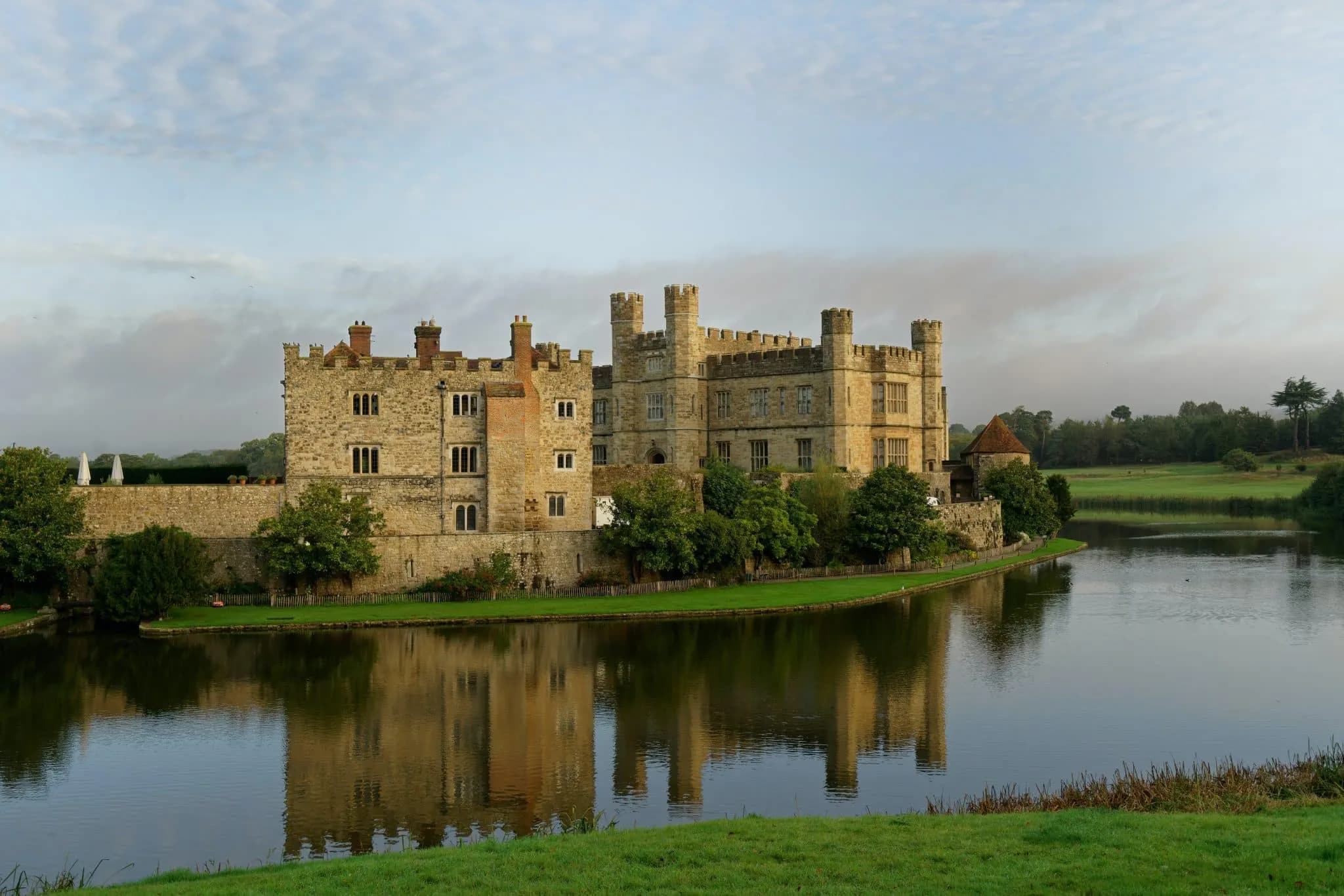
- Leeds Castle (1119), pictured above — not one of the very oldest, but often called one of the most beautiful castles in England, set on two islands in a lake in Kent.
What is the oldest castle in the UK?
Look beyond England and the answer is often Chepstow Castle in Wales. Its stone Great Tower was begun in 1067, a year after the Conquest, which makes it one of the oldest surviving post-Roman stone fortifications in Britain. For the oldest castles in the rest of the British Isles, see our guides to Scotland’s oldest castle and Ireland’s oldest castles.
Can you visit England’s oldest castles on one trip?
Yes. Pevensey, Dover and Leeds are all in the southeast and can be combined in a two- or three-day loop from London, with the Tower of London and Windsor as easy day trips from the city. Our Complete England itinerary is a good starting point, and London & Wales pairs the Tower of London with Chepstow and the Welsh castles.
Frequently asked questions
What is the oldest castle in England still standing?
The oldest standing castle buildings are the Norman keeps at Colchester Castle and the Tower of London, both begun in the 1070s. Pevensey’s Roman walls are older, but they were built as a Roman fort, not a castle.
Who built England’s first castles?
The Normans. William the Conqueror and his barons built castles across England after 1066 to control the conquered country, starting with earth-and-timber forts and replacing them with stone.
Can you stay overnight in an old English castle?
Yes. A number of historic castles in England operate as hotels, and some, like Leeds Castle, have on-site accommodation. A travel specialist can match a castle stay to your route.
Planning a trip to the UK
Juniper Tours designs private, custom England, Scotland and Wales itineraries — never group tours, never fixed departures. Most run 8–12 days and fall between about $4,000 and $10,000 per person, with hand-selected hotels, private guides and transfers arranged end to end by a named specialist. The 30-minute consultation is free; a $100 planning deposit begins your itinerary. See UK trips →
Ready to plan? Book a free call with a UK specialist.