Thanks for checking out Juniper Tours’ Travel blog! We hope you enjoyed your read and if you’re looking for more content please check out our other blog posts! If you’re looking for help planning your next travel adventure then book a FREE travel consultation with one of our Travel Specialists today!
Ireland Castle Tours: Explore Majesty
Ireland Castle Tours: What You Are Actually Booking
“Ireland castle tours” covers three completely different trips, and most people searching for one do not yet know which they want. Sorting that out first saves a lot of wasted planning:
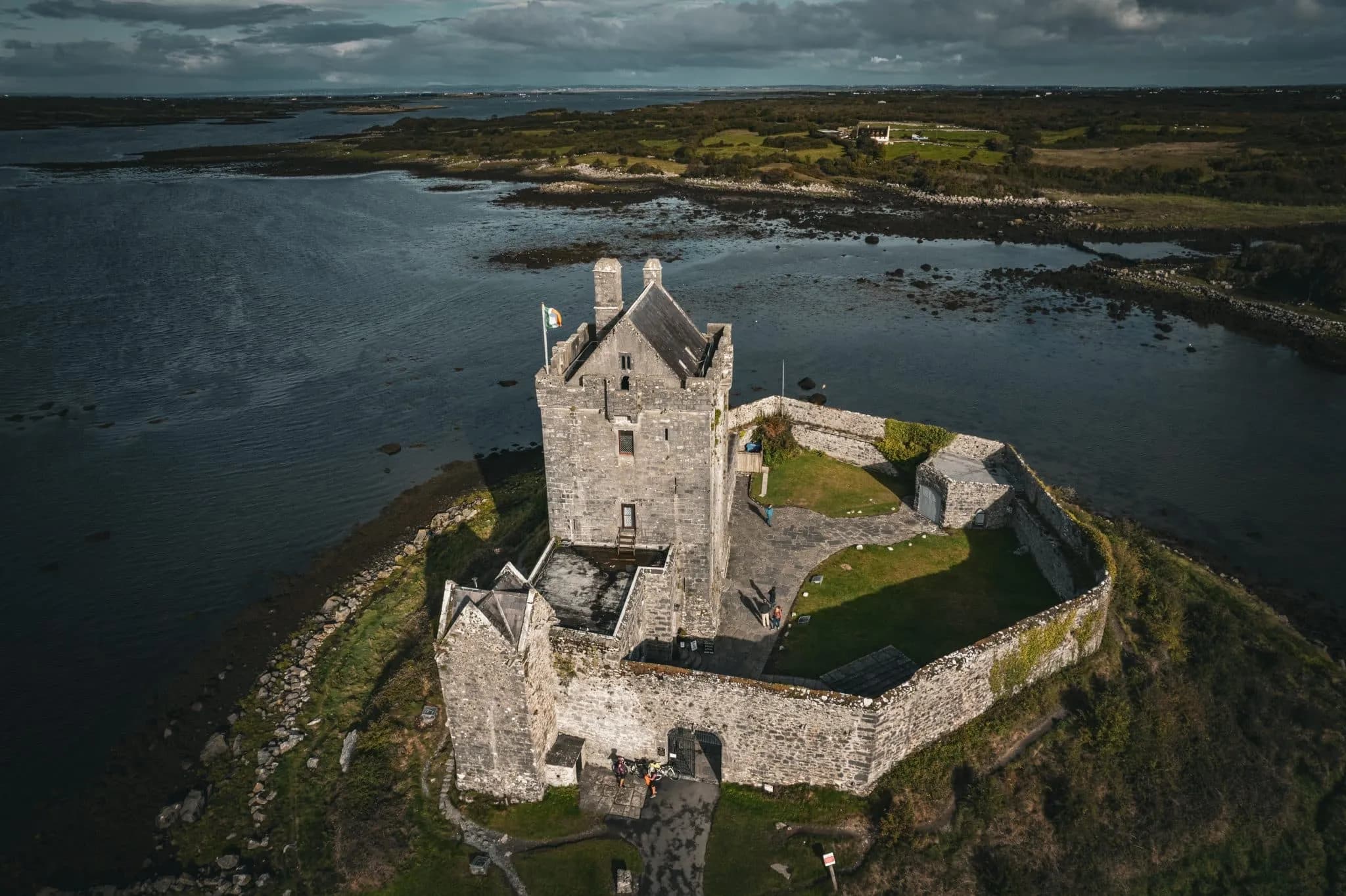
- Castles you tour. Ticketed historic sites you walk through in an hour or two, then drive on.
- Castles you sleep in. Working hotels inside genuine castles, where the castle is the accommodation rather than the attraction.
- Castles you only look at. Ruins and private homes — spectacular from the outside, closed on the inside.
Nearly every disappointing castle day in Ireland comes from confusing the three. Below is which is which.
Castles You Can Tour
The Office of Public Works runs a network of castles open to visitors under the Heritage Ireland banner. These are the reliable ones — real opening hours, real guides, modest admission:
Trim Castle (Meath) — the largest Anglo-Norman castle in Ireland, begun in 1173, and the one to see if you want scale. Kilkenny Castle (Kilkenny) — the most complete great-house experience, with restored interiors and parkland. Cahir Castle (Tipperary) — unusually intact defensive architecture on an island in the River Suir. Ross Castle (Kerry) — a tower house on the Killarney lakes, easy to fold into a Ring of Kerry day. Donegal Castle (Donegal), Aughnanure and Athenry (Galway), Parke’s Castle (Leitrim), Portumna (Galway) and Rathfarnham (Dublin) round out the network.
Two of Ireland’s most visited castles are not in that network, because they are privately run: Blarney Castle (Cork), where the queue for the Blarney Stone is the main event and the gardens are the underrated part, and Bunratty Castle (Clare), restored and furnished to the 15th century, with the medieval banquet in the evening. Kylemore Abbey (Galway) is often listed with the castles — it was built as a private castle-house before it became an abbey, and the Victorian walled garden is the reason to go.
For the ones that cost nothing, see our guide to free castles in Ireland.
Castles You Can Sleep In
This is what most people picture when they imagine a castle trip, and it is a different booking entirely. Ireland has a genuine castle-hotel circuit — Ashford Castle on Lough Corrib in Mayo, Dromoland in Clare, Ballynahinch in Connemara, Cabra in Cavan and Waterford Castle on its own island among them.
A night in one is not a museum visit with a bed attached. Expect falconry, walled gardens, dinner that runs long, and grounds you are meant to wander. Our Irish Castle Hotels & Whiskey Tour is built around exactly this — eight days moving between castle stays with distillery visits in between — and our guide to Ireland’s best castle hotels goes deeper on choosing between them.
Castles You Can Only Look At
Some of the most photographed castles in Ireland cannot be toured at all, and it is worth knowing before you build a day around one. Dunluce Castle (Antrim) is a clifftop ruin — walkable, roofless, unforgettable in bad weather. The Rock of Cashel (Tipperary) is a medieval religious complex rather than a castle proper, and none the worse for it. Killyleagh Castle (Down) is widely described as the oldest inhabited castle in Ireland and is a private family home, so it is a photograph from the gate rather than a visit. More on the contenders in Ireland’s oldest castles.
How Many Castles Should You Actually Visit?
Fewer than you think. Ireland has thousands of castles and tower houses — we get into the count in how many castles are in Ireland — and the temptation is to chain them. Three or four across a ten-day trip is the sweet spot: one you tour properly, one you stay in, one ruin for the drama, and whatever you stumble across in between. Beyond that they blur.
Geography does most of the deciding. Castles cluster by region, so pair them with where you were already going: Trim and Rathfarnham near Dublin, Kilkenny and Cahir on the way south, Ross around Killarney, Aughnanure and the Galway castles in the west. A self-drive tour of Ireland suits this better than a coach, because the good ones sit down small roads.
When to Go
Most OPW sites run full hours from roughly Easter to September and reduce or close in winter, so a castle-led trip is a shoulder-season trip: May, June and September give you open doors and thinner queues. Castle hotels stay open year-round, and a fire-lit castle in November is arguably the better version — if the castle is your destination rather than your stopover.
Planning a Castle Trip in Ireland
The practical work is sequencing — which castles are worth the detour, which castle hotels are worth the splurge and on which nights, and how to route it so you are not doubling back across the country. That is the part our Ireland specialists do every week. Tell us whether you want to tour them, sleep in them, or both, and we will build the route around it.