Quick answer
A self-drive honeymoon in Italy works best when you drive the countryside — Tuscany, Umbria, the Italian Lakes, Piedmont, the Dolomites, or Puglia — and skip the car for cities and the Amalfi Coast, where limited-traffic ZTL zones, scarce parking, and the narrow SS163 make driving more stress than romance. Plan 7–10 days for one or two adjacent regions, get an International Driving Permit before you fly, and keep daily drives under two to three hours.
Key takeaways
- Drive the country, not the cities. Rent a car for Tuscany, Umbria, the Lakes, Piedmont, the Dolomites, or Puglia. Go car-free in Rome, Florence, Venice, and Naples — park on the edge and walk in.
- Do not self-drive the Amalfi Coast in summer. The SS163 is one of the most congested, blind-curve coastal roads in Europe with almost no parking. Use a private driver, the SITA buses, or ferries instead.
- ZTL zones cause most surprise fines — camera-enforced limited-traffic zones ring historic centers, roughly €80–100+ per camera, billed months later.
- US, Canadian & Australian drivers need an International Driving Permit — legally required; US drivers get one for about $20 from AAA (Canadians via the CAA, Australians via a state auto club), obtained before you leave home.
- Reserve an automatic early if you don't drive a stick — manuals dominate Italy, and automatics cost more and sell out.
- The sweet spot is May or September. The Dolomites driving window runs roughly late June through September.
Is a self-drive honeymoon in Italy a good idea?
Yes — for the right parts of Italy. A self-drive honeymoon is one of the most romantic ways to see the Italian countryside, because the freedom to pull over for a Chianti vineyard, an empty hill town, or a lake overlook is the whole point. Where it goes wrong is when couples try to drive everywhere. The honeymoon version of this trip is a hybrid: car for the countryside, no car for the cities and the Amalfi Coast.
We design a lot of Italy honeymoons, and the couples who love their self-drive trip are the ones who picked one or two adjacent regions and slowed down. The ones who didn't tried to link the Lakes, Tuscany, and Amalfi in ten days and spent the trip on the autostrada. The car should serve the romance, not dictate the schedule.
If you want the wider context first, our self-drive honeymoon in Europe pillar guide shows how Italy compares to driving routes elsewhere, and our Italy destination page lays out how the regions connect.
Do you need a car for a honeymoon in Italy?
No — not for the whole trip, and not for the cities at all. Italy's trains are fast and excellent between major cities (Rome, Florence, Venice, Milan, Naples), so the smart move is to take the train city-to-city and rent a car only when you reach the countryside. That's exactly how we structure most self-drive tours of Italy: fly in, train between bases, then pick up a car at the edge of wine country or the lakes.
Keeping a car in Venice, Florence, or Rome is a liability — you'll pay for parking you can't easily reach, and risk ZTL fines just navigating to your hotel. Pick the car up the day you leave the city, drop it the day you return to one.
Self-drive vs. private driver vs. train: which is right for your honeymoon?
For most Italy honeymoons the answer is a blend — train between cities, self-drive in the countryside, and a private driver for the stretches that aren't fun to drive (the Amalfi Coast above all). Here's how the three compare.
| Option | Best for | Freedom | Stress | Relative cost |
|---|---|---|---|---|
| Self-drive | Countryside — Tuscany, Umbria, the Lakes, Piedmont, the Dolomites, Puglia | High — stop anywhere, anytime | Low on country roads; high in cities and on the Amalfi Coast | $ — cheapest for rural touring |
| Private driver | The Amalfi Coast, transfers, a special day out | Medium — your schedule, someone else's wheel | Lowest — you just enjoy the view | $$$ — premium; best used selectively |
| Train | City to city (Rome, Florence, Venice, Milan, Naples) | Low — fixed routes and times | Low — fast and effortless | $$ — efficient between cities |
What are the best regions in Italy for a self-drive honeymoon?
The most romantic regions to drive are Tuscany, Umbria, the Italian Lakes, Piedmont's Langhe wine hills, the Dolomites, and Puglia. Each pairs scenic, manageable roads with the agriturismo, villa, and masseria stays a honeymoon is built around.
| Region | Nights | Driving character | Honeymoon highlight |
|---|---|---|---|
| Tuscany (Florence → Chianti → Val d'Orcia) | 5–7 | Rolling SR/SP roads; add ~15% to map times | The classic: vineyard-view farmhouse, the SR222 "Chiantigiana," Montalcino & Pienza |
| Italian Lakes (Como + Garda) | 5–7 | Easy lakeside; let boats move you between villages | Grand lakeside villa-hotels around Bellagio and Varenna |
| Piedmont / Langhe (Alba, Barolo, La Morra) | 3–5 | Quiet, gentle hills, low traffic | Food-and-wine estate stays; Barolo at the source |
| Umbria (Assisi → Montefalco → Orvieto) | 4–5 | Easier roads, thinner crowds than Tuscany | Tuscany's romance with fewer crowds; Sagrantino country |
| Dolomites (Bolzano → Val Gardena → Cortina) | 4–7 | Spectacular passes & switchbacks; June–Sept | Alpine spa hotels; Lago di Braies, the Great Dolomites Road |
| Puglia (Bari → Ostuni → Alberobello → Salento) | 5–7 | Flat-to-rolling, easy, sunny | Masseria stays among olive groves; sea & white hill towns |
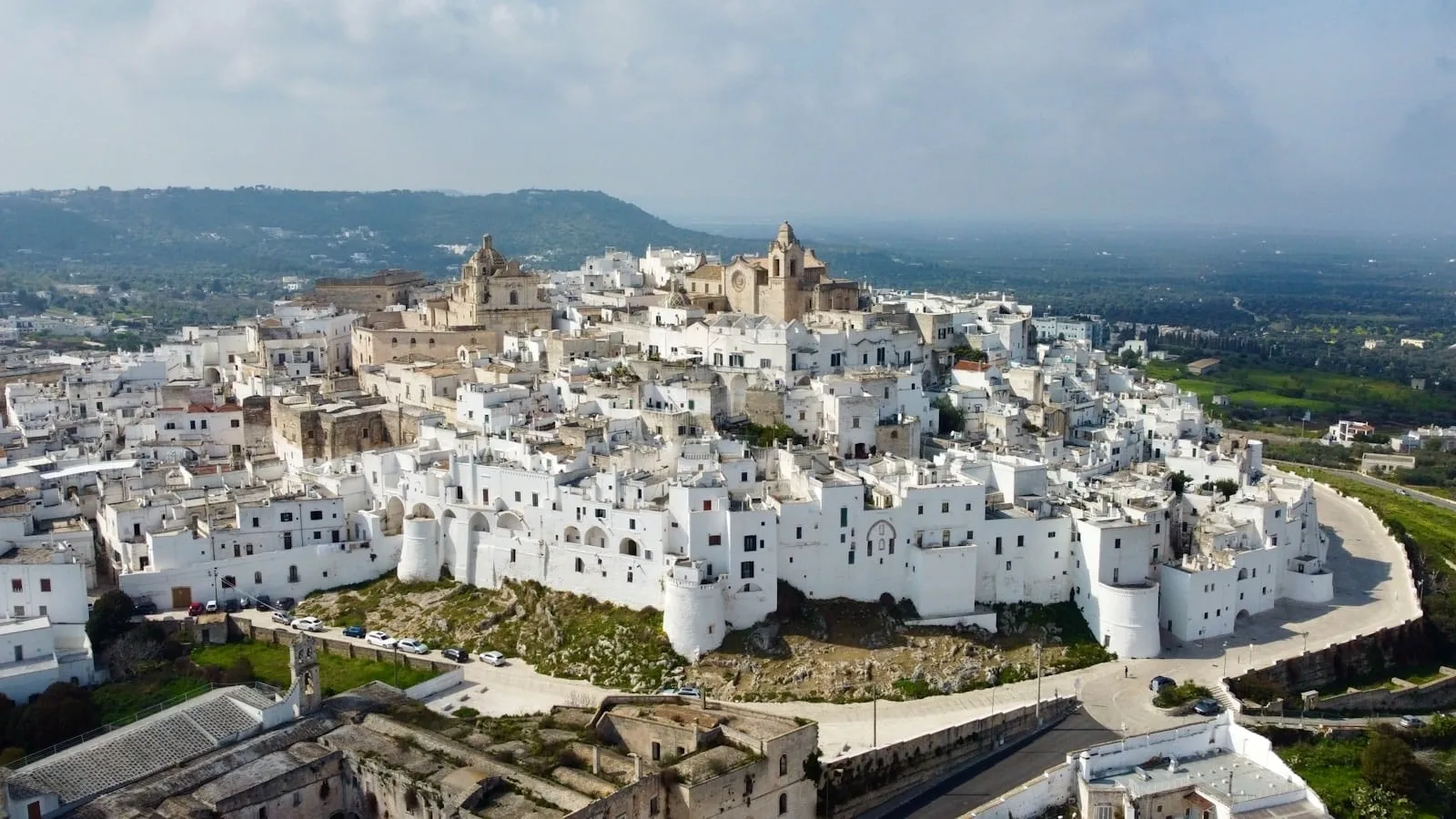
Tuscany pairs naturally with Umbria; the Lakes pair with Piedmont since the Langhe sit just southwest. Those combinations keep daily drives short and the route coherent — which matters more on a honeymoon than ticking off a checklist. (For a comparable drive-the-countryside trip, our self-drive honeymoon in Ireland guide uses the same approach.)
Sample self-drive honeymoon routes in Italy
Three routes we build often, each keeping daily drives short and the romance high. Treat them as starting points — every Juniper honeymoon is built from scratch around your dates, pace, and taste.
The classic: Tuscany & Umbria — 10 days
Florence, vineyard country, and the quieter hill towns of Umbria, bookended by two great cities.
- Florence — 2 nights, no car. Arrive, settle in, see the city on foot.
- Chianti / Val d'Orcia — 3 nights. Pick up the car as you leave Florence; base at a vineyard agriturismo. Drives between hill towns run about 1–1.5 hours.
- Umbria (Montefalco or Orvieto) — 2 nights. About a 1.5-hour drive; Tuscany's romance with fewer crowds.
- Rome — 3 nights, no car. Drop the car before the city — or return it and take the train — and finish car-free.
Northern romance: the Lakes & Piedmont — 9 days
Grand lake villages and Barolo's wine hills — gentle roads, low traffic, big views.
- Lake Como — 3 nights, no car. Let the boats move you between Bellagio, Varenna, and Menaggio.
- Piedmont / Langhe — 3 nights. Pick up the car and drive to Barolo country (about 2.5–3 hours); base at a wine estate.
- Turin — 2 nights, no car. Return the car and end in an elegant, underrated city.
Peaks & vines: the Dolomites & Lake Garda — 10 days (summer)
Italy's most dramatic driving paired with a soft landing on the lake. Best late June–September.
- Venice — 2 nights, no car. A car-free start.
- Dolomites (Val Gardena or Cortina) — 4 nights. Pick up the car and drive up (about 3 hours); alpine spa hotels and the Great Dolomites Road.
- Lake Garda — 3 nights. Descend to the lake (about 2–2.5 hours) for a warm, relaxed finish before flying out of Verona or Milan.
Where to stay on an Italy self-drive honeymoon
The car's real payoff is the kind of place you can stay — rural retreats the train can't reach. The most romantic options by region:
- Agriturismo (Tuscany, Umbria, Piedmont). A working farm or vineyard estate, often with a pool, cellar dinners, and a view down the valley — the signature countryside-honeymoon stay.
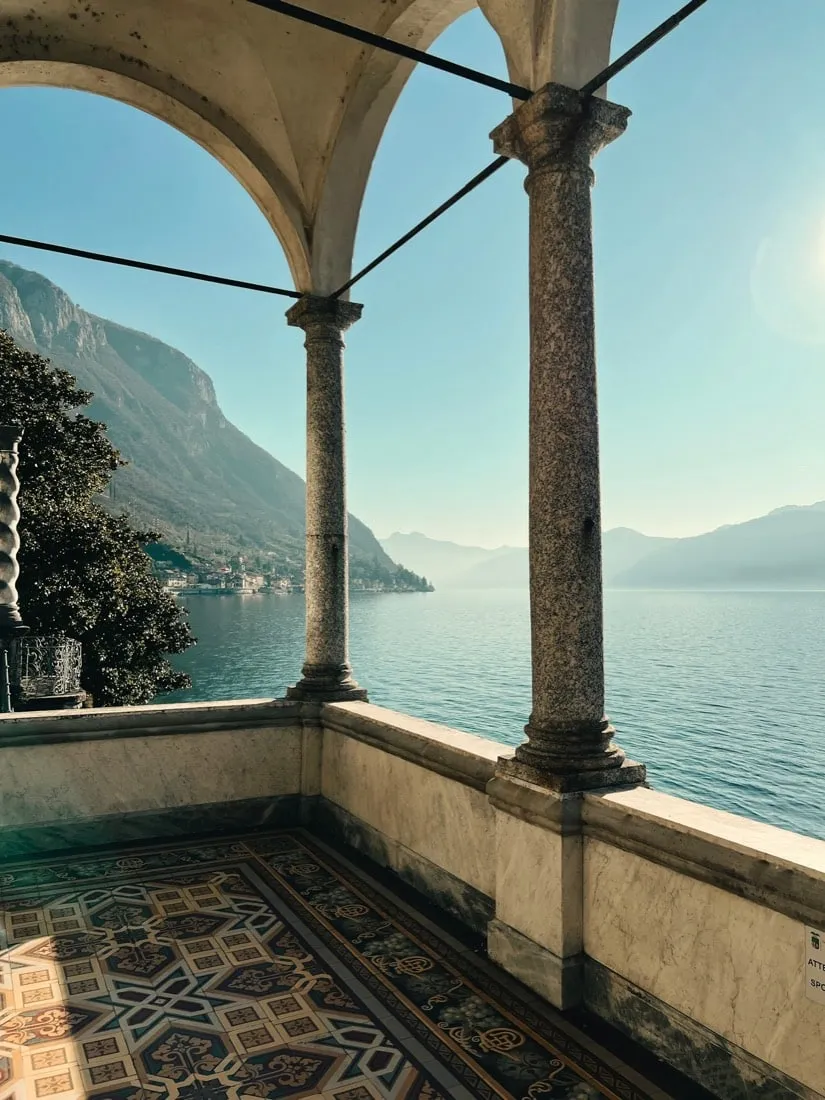
- Villa or villa-hotel (the Lakes). Grand lakeside houses turned intimate hotels, with terraces over the water and old-world service.
- Masseria (Puglia). A whitewashed fortified farmhouse among olive groves, frequently with a spa and a quiet pool.
- Historic relais (hill towns). A handful of rooms inside a restored palazzo or convent, steps from the piazza.
- Alpine spa hotel (the Dolomites). Wood-and-stone lodges with saunas and mountain-view soaking pools after a day on the passes.
Want a route built around the two of you?
Tell us your dates and what you picture, and our Italy specialist will shape a private self-drive honeymoon — the right regions, the right stays, and the driving handled around you. The first consultation is free.
Book a free consultation Get a quoteShould you drive the Amalfi Coast on your honeymoon, or take the ferry?
Take the ferry, the SITA bus, or hire a private driver — do not self-drive the Amalfi Coast in peak season. The SS163 is one of the most congested, narrow, blind-curve coastal roads in Europe from June through September, with almost no parking and tour buses inching around the same hairpins. It's genuinely stressful for visiting drivers.
This is the single piece of advice we give most often and the one most generic blogs bury. The coast is only reasonable to drive in the off-season (roughly mid-October to April) and only for confident drivers. On a honeymoon, let someone else handle the road so you can actually look at the water. If Amalfi is a must, we build it as a car-free stretch with a private driver and ferries — paired with a Tuscany or Lakes self-drive segment.
How many days do you need for an Italy self-drive honeymoon?
Plan 7–10 days for one or two adjacent regions, or two weeks to combine three. The math that makes a honeymoon relaxing is simple: keep daily drives under two to three hours and resist over-packing. A focused week in Tuscany and Umbria, or the Lakes and Piedmont, beats a frantic fortnight covering the whole country.
A two-week grand circuit is doable, but only with slack for weather and short legs. For most couples, depth beats breadth. Our Italy honeymoons and broader honeymoon & couples travel pages show how we phase these so the driving never overwhelms the trip.
When is the best time of year for an Italy honeymoon road trip?
Late spring (May) and early fall (September) are the sweet spot — warm, long days, lighter crowds, and far more manageable traffic than peak July and August. April and early October also work well in central and southern Italy. The Dolomites are the exception: their driving window runs roughly late June through September, since the high passes can be snowbound earlier.
July and August are hot, crowded, and the most expensive time to rent. If your wedding date locks you into summer, lean toward the Lakes, the Dolomites, or Puglia, where heat and crowds are more bearable than a baking Florence.
Do Americans need an International Driving Permit to drive in Italy?
Yes. US, Canadian, Australian, and other non-EU/UK license holders are legally required to carry an International Driving Permit (IDP) alongside their home license. In the US, AAA issues one for about $20 (Canadians get theirs through the CAA, Australians through a state automobile association), and you must get it before you fly — you cannot buy a legitimate IDP once you're in Italy. Without it, you risk fines, being refused the rental car, and potentially voided insurance after an incident. It's a five-minute errand; put it on the pre-honeymoon checklist.
Is it hard to drive in Italy, and what are ZTL zones?
Driving in the Italian countryside is straightforward; the real hazard is the ZTL zone. ZTL (Zona a Traffico Limitato) zones are camera-enforced limited-traffic areas covering the historic centers of Florence, Siena, Rome, Pisa, Milan, Bologna, Naples, and many towns. Cross one without authorization and you'll get a fine of roughly €80–100+ per camera — each camera counts separately — billed by mail months later with a rental admin fee on top.
The fix: treat every historic center as car-off-limits. Park in a signposted edge-of-town lot and walk in. If your hotel is inside a ZTL, give them your plate ahead of time to register it. A few more things worth knowing:
- Tolls: most autostrade are toll roads — take a ticket at entry, pay at exit. Use white lanes for cash, blue for cards/contactless; never enter a yellow Telepass-only lane.
- Parking: white lines are free, blue are paid (pay at the meter, display the ticket), yellow are residents-only.
- Roundabouts: circulating traffic has the right of way; signal only as you exit.
What is it actually like to drive in Italy?
On country roads, easier than most visitors expect — the learning curve is the rules around the driving, not the driving itself. A few things to know before you go:
- Italy drives on the right, with the wheel on the left — straightforward for North Americans, an adjustment if you're used to driving on the left.
- Autostrade vs. back roads. The tolled autostrade (A-roads) are fast for covering ground; the strade statali and provinciali (SS/SP) are slower and far prettier — the honeymoon drive is on the back roads.
- Fuel: petrol or diesel. Confirm which your rental takes at pickup — benzina is petrol, gasolio is diesel. Stations are fai-da-te (self-serve, cheaper) or servito (an attendant fills it).
- Speed cameras are everywhere. Fixed autovelox and the Tutor average-speed system on the autostrade are strict — set the cruise and don't push your luck.
- Download offline maps and add an eSIM for data. Note that navigation apps don't reliably warn you about ZTL zones, so treat every historic center as off-limits regardless of the route they suggest.
Renting a car in Italy: what honeymooners should know
Book early, keep the car small, and read the insurance line carefully — those three moves prevent almost every rental headache. The essentials:
- Age & license. The usual minimum is 21, with a young-driver surcharge under about 25. Bring your home license plus your International Driving Permit — agencies can refuse the car without it.
- You'll need a credit card in the main driver's name for the security hold; debit cards are often rejected.
- Reserve an automatic early. Manuals dominate and are cheaper; automatics cost more and sell out, especially in peak season.
- Pick up at the airport or edge of town, never deep in a city center — you'd be collecting the car inside a ZTL.
- Watch one-way drop fees. Returning the car in a different city or region can add a meaningful charge; we plan routes to minimize it.
- Consider zero-deductible coverage. Standard CDW still leaves you liable for roughly €1,000–1,800; on Italy's narrow lanes, the upgrade buys real peace of mind.
Should you rent a manual or automatic car in Italy?
Rent an automatic if either of you isn't completely confident on a stick — and reserve it early, because automatics cost more and sell out fast. A hill-town incline or a Dolomites switchback is not where you want to relearn a clutch on your honeymoon. One insurance note: basic mandatory liability does not cover damage to your own rental car, and standard CDW deductibles run roughly €1,000–1,800. On Italy's narrow streets, zero-deductible coverage is worth the peace of mind.
How much does an Italy self-drive honeymoon cost?
Rental cars run roughly $45–75 a day depending on car and season (July the priciest, often above $50/day); autostrada tolls add €20–30 across a regional loop, plus fuel and parking. The trip total depends mostly on your stays — a vineyard agriturismo, a Lake Como villa-hotel, and a Puglian masseria sit at very different price points.
For a fully private, custom Italy honeymoon, most couples we work with budget $5,000–$15,000+ per person depending on region, season, and properties. The consultation to scope it is free; if you move forward, a $100 deposit covers the custom itinerary planning and is applied to your trip.
| What you pay for | Typical range | Notes |
|---|---|---|
| Rental car | $45–75 / day | Higher in July–August; automatics cost more |
| Autostrada tolls | €20–30 / regional loop | Pay at exit; back roads are free |
| Fuel | Varies by distance | Self-serve (fai-da-te) is cheaper |
| Parking | A few € / hour in towns | Blue lines paid, white free, yellow residents-only |
| International Driving Permit | ~$20 (US, via AAA) | Required; get it before you fly |
| Zero-deductible coverage | Optional add-on | Removes the ~€1,000–1,800 CDW liability |
| ZTL fine | €80–100+ per camera | Entirely avoidable — park outside the center |
| Full private, custom honeymoon | $5,000–$15,000+ / person | Driven mainly by your choice of stays |
What couples say about planning with Juniper
"My wife and I used them to plan our honeymoon to Italy. And I must say it was perfect. The lady that worked with me on the trip was absolutely amazing."
— Eric Robertson · ★★★★★"SARAH at Juniper travel was wonderful. She planned the trip of a lifetime for us in Italy."
— Jean Wawrzyniak-Fry · ★★★★★Let's design your Italy self-drive honeymoon
Every Juniper Tours Italy honeymoon is fully private and fully custom — no group tours, no pre-set packages. Our Italy specialist maps which regions to drive, where to go car-free, and where to stay, then handles the cars, the ZTL details, and the reservations. The first consultation is free.
Book a free consultation Get a quoteItaly self-drive honeymoon FAQ
Is it safe to self-drive in Italy on a honeymoon?
Yes, in the countryside. Tuscany, Umbria, the Lakes, Piedmont, and Puglia have manageable, scenic roads. Avoid driving the Amalfi Coast in summer and the historic centers of big cities — go car-free and use trains, ferries, or a private driver.
What's the biggest mistake couples make driving in Italy?
Accidentally racking up ZTL fines. These camera-enforced limited-traffic zones ring most historic centers, and the bills — roughly €80–100+ per camera — arrive months later with rental admin fees added. Always park outside the center and walk in.
Do I really need an International Driving Permit for Italy?
Yes, if you hold a US, Canadian, Australian, or other non-EU/UK license. It's legally required alongside your home license, costs about $20 from AAA in the US, and must be obtained before you leave home.
What are the best regions for an Italy self-drive honeymoon?
Tuscany, Umbria, the Italian Lakes, Piedmont's Langhe wine country, the Dolomites, and Puglia. Each pairs easy-to-drive roads with romantic agriturismo, villa, and masseria stays. Tuscany pairs well with Umbria; the Lakes pair with Piedmont.
Should I get a manual or automatic rental car in Italy?
Get an automatic if either driver isn't fully comfortable with a manual, and book it early — automatics cost more and sell out. Italian hill towns and Dolomites passes are not where you want to be learning a stick shift.
How long should an Italy self-drive honeymoon be?
Seven to ten days for one or two adjacent regions, or about two weeks to combine three. Keep daily drives under two to three hours so the trip stays relaxing.
What side of the road does Italy drive on?
Italy drives on the right, with the steering wheel on the left. That's intuitive for North American drivers and an adjustment for anyone used to driving on the left, such as UK, Irish, and Australian travelers.
Is parking hard in Italy?
In cities and historic centers, yes — and much of the center is a no-drive ZTL anyway, so park in a signposted lot on the edge and walk in. In the countryside it's rarely a problem; most rural hotels and agriturismi have their own parking.
Do you need to speak Italian to drive in Italy?
No. Road signs follow standard European symbols, and rentals and navigation are easy in English. A few Italian words help at the fuel station — benzina is petrol, gasolio is diesel.
What's the best navigation app for driving in Italy?
Google Maps or Waze both work well — download offline maps before you go and use an eSIM or local SIM for data. One caveat: navigation apps don't reliably warn you about ZTL zones, so treat every historic center as off-limits regardless of the route.
Is a self-drive honeymoon in Italy expensive?
The driving itself is modest — roughly $45–75 a day for the car, plus tolls and fuel. The cost is in where you stay; most couples we work with budget $5,000–$15,000+ per person for a fully private, custom honeymoon. The consultation is free, and a $100 deposit covers the custom itinerary planning and is applied to your trip.