
Portugal throws a party in every season. Carnival masks in February, candlelit processions at Easter, a month of street parties in June, running bulls in July and a horse fair in November — and almost every one is rooted in a saint’s day or a centuries-old local custom. Here are the festivals worth planning a trip around, in calendar order.
Carnaval
When: February or early March (the days before Ash Wednesday, so the dates move with Easter)
Carnaval is the country’s biggest street party. Torres Vedras, north of Lisbon, bills itself as the most Portuguese carnival in Portugal, with satirical floats and costumed crowds. Ovar and Loulé run Brazilian-style parades, and Funchal on Madeira stages one of the most lavish.
For something older and stranger, go to Podence in the far northeast. Its Caretos — masked figures in fringed red, green and yellow suits who rattle cowbells through the village — were added to UNESCO’s list of Intangible Cultural Heritage in 2019.
Holy Week (Semana Santa)
When: March or April, the week before Easter
Braga, Portugal’s religious capital, is the place to see it. The city is decked in purple, and its processions are the most solemn in the country — above all the Ecce Homo procession on Maundy Thursday night, when barefoot, hooded penitents carry torches through the old streets.
Smaller towns across the north hold their own processions, so ask your specialist what falls along your route.
Madeira Flower Festival (Festa da Flor)
When: spring, usually a few weeks after Easter
Funchal fills with flowers for this one: carpets of petals on the streets, floats covered in blooms, and the Wall of Hope, where children each add a flower to a wall in the main square. It is the best reason to visit Madeira in spring, when the island is at its greenest.
Santo António and the Festas de Lisboa
When: all of June, peaking on the night of 12–13 June
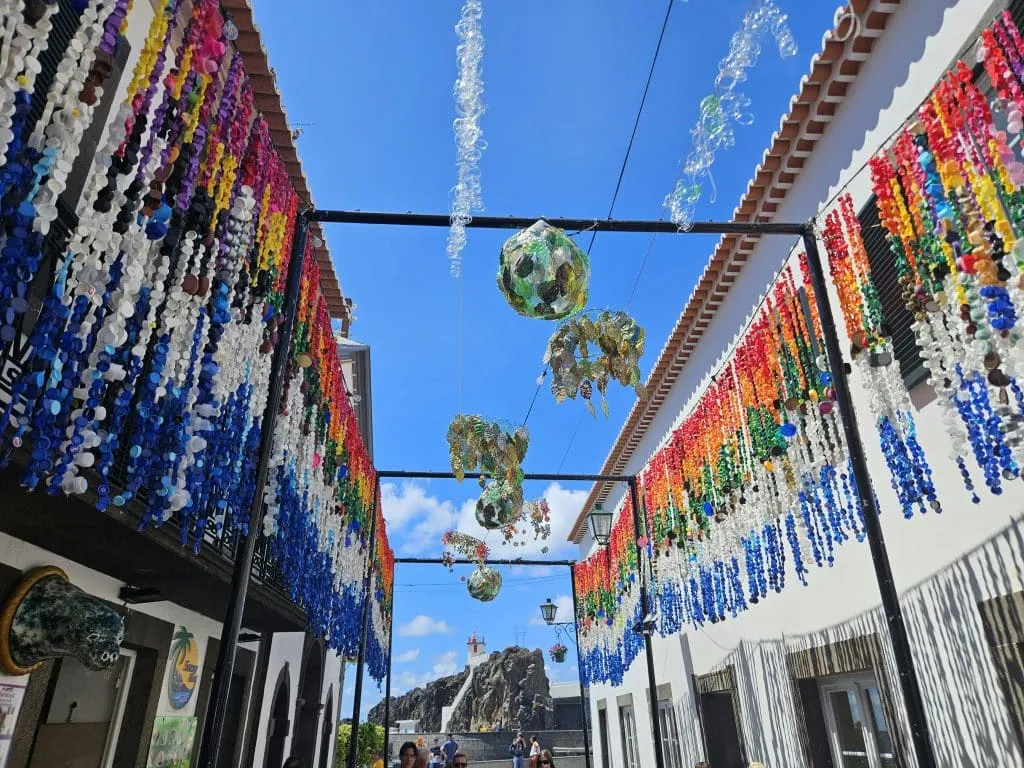
Lisbon spends June celebrating its favourite saint, Anthony, and the night of the 12th is the biggest of the year. Each neighbourhood’s marcha parades down Avenida da Liberdade in costume, while Alfama, Mouraria and Graça turn into open-air parties with strings of lights, grilled sardines and live music until dawn.
Santo António is also the city’s matchmaker. Couples marry in the Santo António weddings on the 12th, and sweethearts exchange manjericos — small pots of basil with a paper carnation and a short love verse. Between parties, the fado houses of Alfama are a short walk away.
Festa de São João
When: the night of 23–24 June
Porto’s answer to Lisbon is louder. On the eve of St John’s Day the whole city comes out: people tap strangers on the head with soft plastic hammers (or, traditionally, a stalk of garlic flower), grills smoke on every corner, and the night peaks with fireworks over the Douro at midnight.
Most of the crowd then walks down to the Ribeira or out to the seafront at Foz to watch the sun come up. If you want to see São João, book your Porto hotel early — the city fills for it.
Rock in Rio Lisboa
When: June, usually every other year
Despite the name, Lisbon has hosted its own edition of Brazil’s Rock in Rio since 2004, and it is one of the largest music festivals in Europe, run over two June weekends. Check the dates before you plan around it, as it does not run every year.
Festa dos Tabuleiros
When: July, once every four years
In Tomar, women in white process through the town carrying tabuleiros: towers of bread loaves as tall as the bearer, crowned with paper flowers and a dove. It happens only every fourth year, the most recent in 2023 — so a trip in July 2027 could line up with it. We cover it, along with Portugal’s other best-known holidays, in Top 5 Famous Holidays in Portugal.
Festival of the Red Waistcoat (Festa do Colete Encarnado)
When: early July
Vila Franca de Xira, on the Tagus upriver from Lisbon, honours its campinos — the Ribatejo horsemen who herd fighting bulls, dressed in their traditional red waistcoats. The three-day festival opens with a parade, and bulls are let loose to run through barricaded streets, Portugal’s version of a bull run. It is exciting and genuinely risky; watch from behind the barriers.
National Horse Fair (Feira Nacional do Cavalo)
When: November, around St Martin’s Day (11 November)
Golegã, in the Ribatejo, calls itself Portugal’s horse capital, and for ten days in November the town square becomes a showground for the Lusitano, the country’s own breed. Riders in traditional dress parade all day, and the fair coincides with São Martinho, when the whole country roasts chestnuts and opens the first of the new wine.
When is the best time to visit Portugal for festivals?
June. Between Santo António in Lisbon, São João in Porto and Dia de Portugal, the national holiday on 10 June, the country is in festival mode for most of the month — and the weather is warm without the heat of August.
The trade-off is crowds and prices, so book early. For quieter travel with a festival to anchor it, Holy Week in Braga or the Golegã fair in November are good choices.
How do you plan a trip around a Portuguese festival?
Start with the city. Our Lisbon City Stay and Porto & the Douro Valley itineraries are easy to time for Santo António or São João, and our guides to Portugal’s major cities and Northern Portugal and the Douro Valley help with the rest of the route.
Every Juniper Tours trip is private and built around your dates. Book a free consultation and a Portugal specialist will plan your trip around the festival you want to see.


