
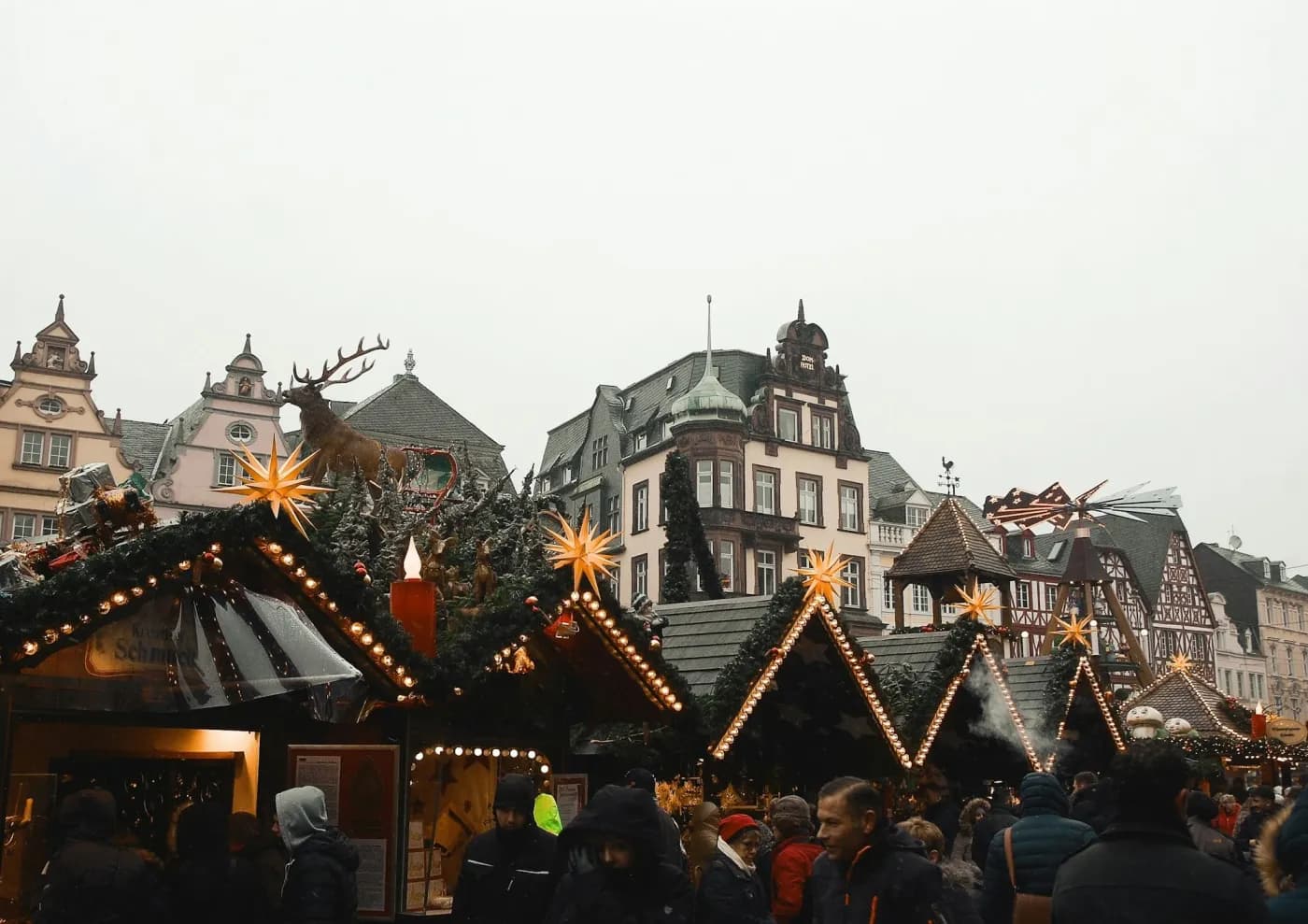
The short answer: Germany's Christmas markets do not run on the same dates. In 2026 they open across a twelve-day spread — Cologne from around 16 November, Nuremberg not until 27 November — and they close on three different days. The only window when all eight major markets are running at once is 27 November to 22 December 2026. Book either side of it and you will arrive to find at least one market you flew for either not yet open or already dismantled.
Almost every guide online states or implies that the markets run “late November to Christmas Eve.” That is true of three of them. Below are the confirmed 2026 dates from each city's own tourist office, the two scheduling traps that catch people out, and how we sequence these markets for travelers — including the constraint that has nothing to do with the markets and everything to do with where you sleep.
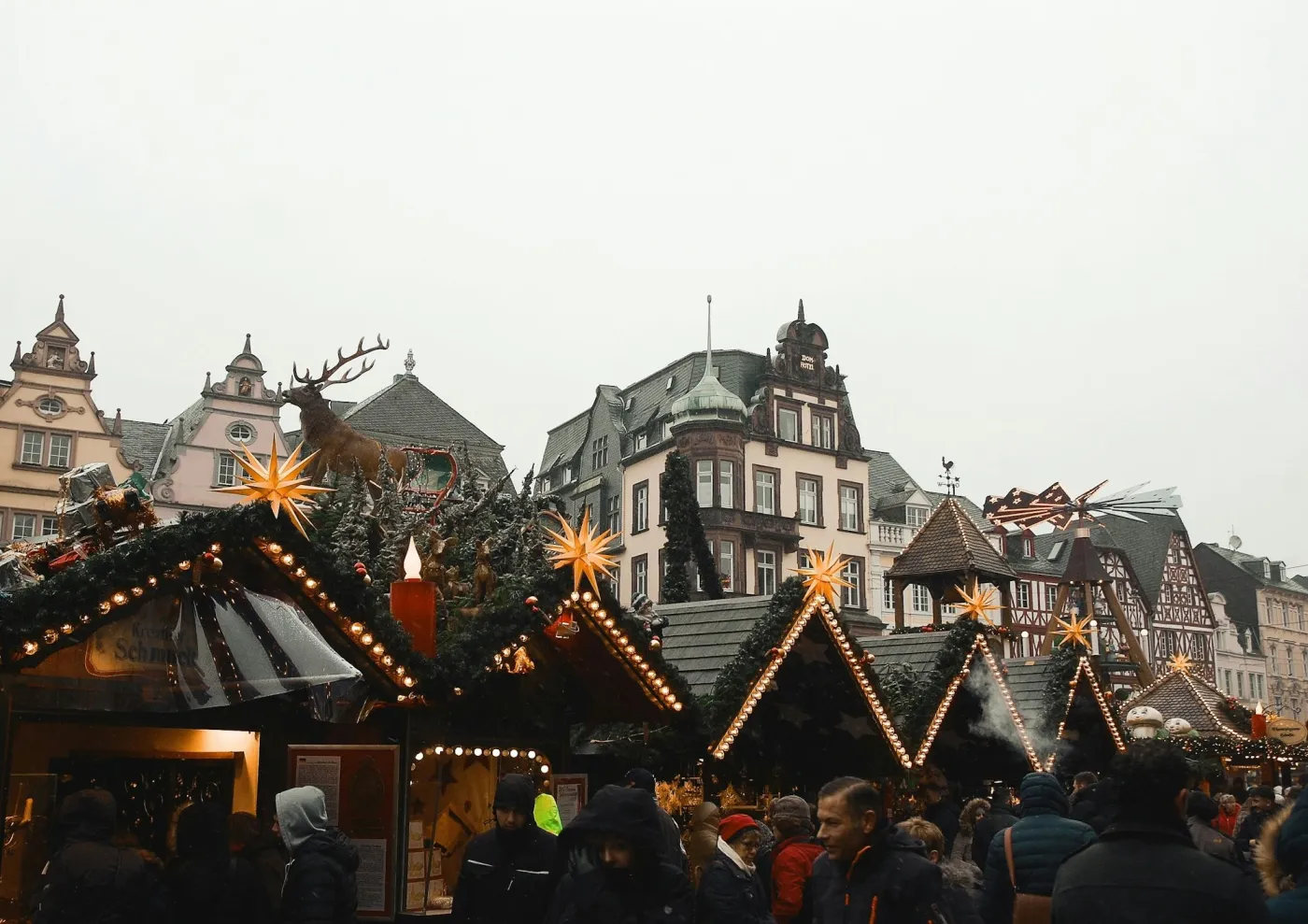
Confirmed 2026 German Christmas market dates
| Market | Opens 2026 | Closes | Worth knowing |
|---|---|---|---|
| Cologne — multiple markets | approx. 16 Nov | varies | The Heumarkt market runs to 10 January 2027 — the only major market open after Christmas |
| Munich Christkindlmarkt | 20 Nov | 24 Dec | Marienplatz and Rindermarkt |
| Rothenburg ob der Tauber Reiterlesmarkt | 20 Nov | 23 Dec | Closed 22 November. Sun–Thu 11am–7pm, Fri–Sat 11am–8pm |
| Frankfurt | 23 Nov | 22 Dec | The first major market to close — two days before the others |
| Leipzig | 24 Nov | 23 Dec | Seven separate market areas across the centre |
| Dresden Striezelmarkt | 25 Nov | 24 Dec | 592nd edition. Opening day 4–9pm; then daily 10am–9pm; 24 Dec 10am–2pm |
| Stuttgart | 25 Nov | 23 Dec | One of the largest in Europe by stall count |
| Nuremberg Christkindlesmarkt | 27 Nov | 24 Dec | The last major market to open. Ceremony 27 Nov, 5:30pm; daily 10am–10pm; 24 Dec 10am–2pm |
Dates confirmed from each city's official tourist board: christkindlesmarkt.de, striezelmarkt.dresden.de, muenchen.de, cologne-tourism.com, rothenburg-tourismus.de, frankfurt-tourismus.de, leipzig.travel and stuttgart-tourist.de. Smaller village markets set their own dates independently — confirm any specific town on your route before fixing flights.
The two scheduling traps
Trap one: the opening stagger. There are eleven days between Cologne opening and Nuremberg opening. A trip built around a 20 November arrival gets Cologne, Munich and Rothenburg — and misses Nuremberg, Dresden, Stuttgart and Leipzig entirely. Nuremberg is the market most Americans name first when they picture Germany at Christmas, and it is the last one to open.
Trap two: the closing stagger, which catches more people. The markets do not all run to Christmas Eve. Frankfurt closes on 22 December. Rothenburg, Stuttgart and Leipzig close on 23 December. Only Munich, Dresden and Nuremberg trade on Christmas Eve itself, and those three close at 2pm. A traveler arriving 22 December expecting three more days of markets has, in practice, one.
Put the two together and the safe window for a multi-market trip in 2026 is 27 November to 22 December. Everything outside it involves a deliberate trade.
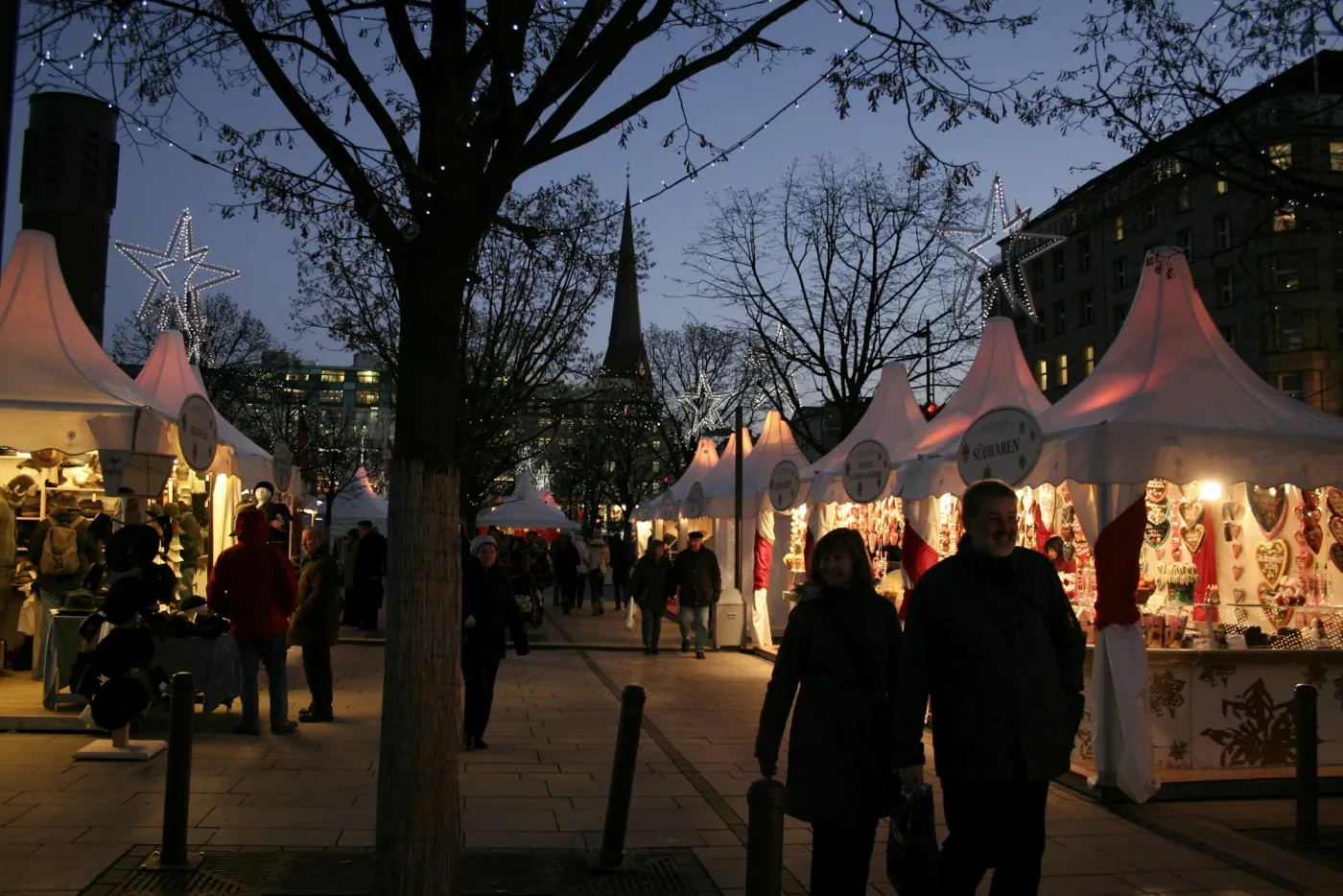
When should you actually travel?
Inside that window, the week you pick changes the trip more than the cities you pick.
- 27–30 November. Everything is open, stalls are fully stocked, and the crowds have not yet arrived. The shortest-notice risk is weather; the reward is space to move.
- First two weeks of December. The peak. Also, honestly, the most atmospheric — the markets look the way they look in photographs because they are full. Plan Nuremberg and Dresden for midweek; their weekends are shoulder-to-shoulder in a way that is genuinely unpleasant with young children or limited mobility.
- 15–22 December. Quieter than expected as German families turn toward their own Christmas. The trade-off is that markets start closing around you, beginning with Frankfurt.
- After 24 December. Effectively over — with the single exception of Cologne's Heumarkt market, which runs to 10 January 2027. If your dates are locked to the New Year, Cologne is the trip.
Which markets are actually worth your days?
Most lists treat these as interchangeable. They are not, and the differences are large enough to change an itinerary.
Nuremberg is the most famous and the most tightly controlled — the market has long-standing rules about what may be sold, which is precisely why it still feels like a Christmas market rather than a fairground. It is also the densest crowd on this list. Go, but go on a weekday morning.
Dresden's Striezelmarkt is the oldest, now in its 592nd year, and the one we point history-minded travelers to first. The rebuilt Baroque city around it does as much work as the market itself.
Rothenburg ob der Tauber is the postcard — a walled medieval town that looks, in December, exactly as people imagine Germany at Christmas. It is also the clearest argument against planning this trip by train, and the reason is below.
Munich pairs Marienplatz with the easiest access to the Bavarian Alps, which is why it tends to anchor the start or end of a route rather than the middle.
Cologne is the practical anchor: several distinct markets within a compact centre, the cathedral overhead, and by far the longest season. If your dates fall outside everyone else's window, build around Cologne.
Stuttgart, Leipzig and Frankfurt reward travelers who want size and variety over the fairytale image — Stuttgart is among the largest in Europe by stall count, Leipzig spreads across seven separate market areas.
Why this trip works better with a driver than a rail pass
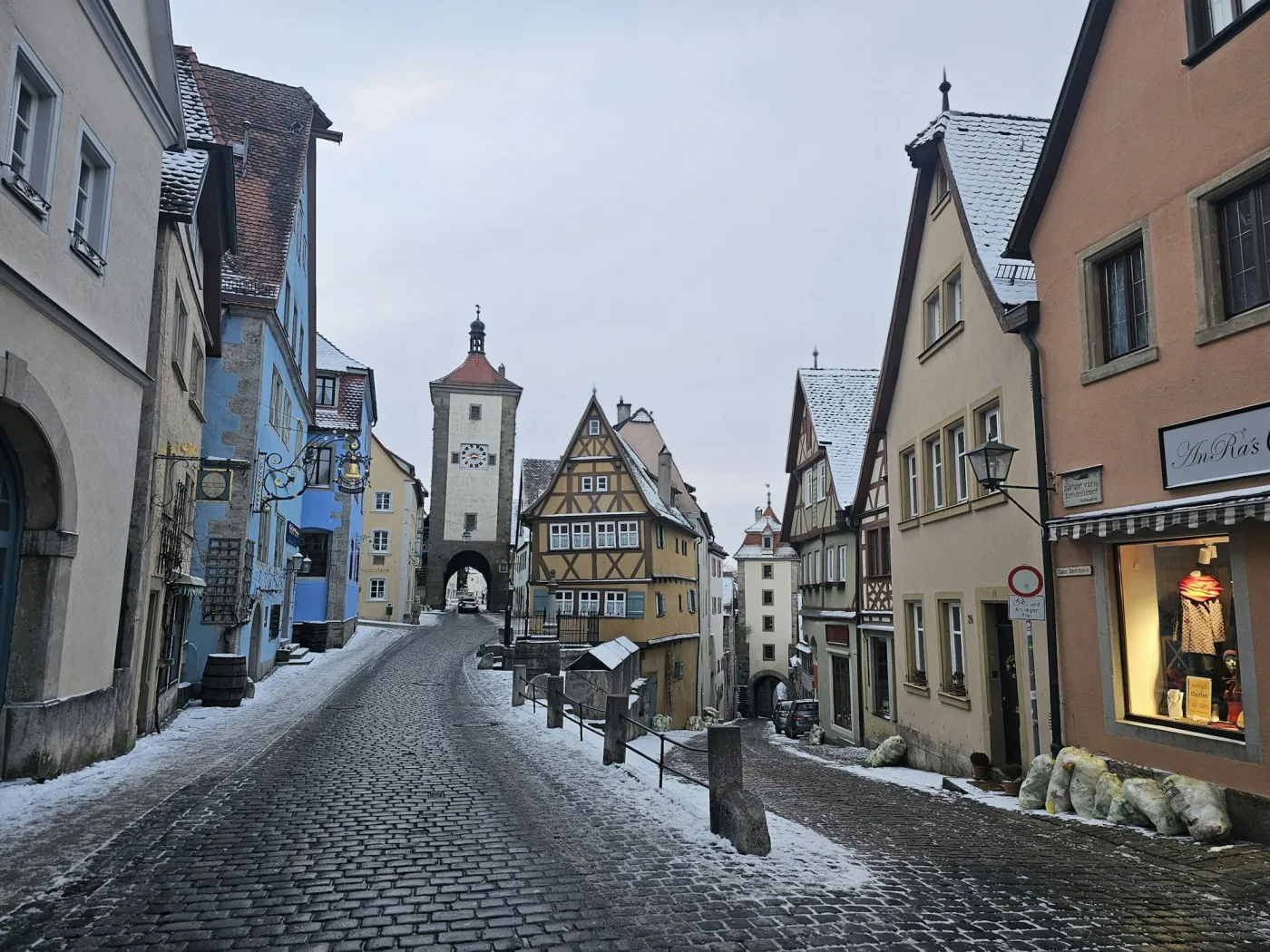
Germany's rail network is excellent between the big cities, and if your list is Munich, Nuremberg, Dresden and Cologne, trains will serve you well. The problem is that the markets travelers rate highest afterwards are rarely the big-city ones. They are Rothenburg and the small Franconian and Bavarian towns — and those are not on the fast rail spine. Reaching Rothenburg by train involves a regional connection and a schedule that eats the short winter afternoon, which is the only part of a December day when the market is both open and lit.
The second reason is more mundane: you will be carrying things. Markets are where people buy the ornaments, the Stollen and the hand-carved pieces they came for, and moving that between four cities on regional trains in winter is a genuinely miserable experience that nobody plans for.
The constraint nobody plans for: where you sleep
The market towns are small — that is the entire appeal — and the supply of good hotels within walking distance of the market square is therefore fixed and limited. Rothenburg's historic centre holds a handful of characterful properties. Nuremberg and Dresden have more, but the ones actually on the old town are a short list.
Those rooms are the first thing to sell out for the season, and they sell out earlier than flights do, because the inventory is small rather than because demand is exceptional. Every year the same pattern repeats: travelers secure flights in the autumn, then discover the walkable hotels went months ago and the choice is a property on the ring road or a change of dates.
Which is why this is published in August rather than November. If you are planning a 2026 Christmas market trip now, you are on time.
How we build it
Juniper's 8-day German Christmas Markets itinerary is designed around the overlap window above, with a private driver rather than rail, because the small-town markets are the ones people remember and the hardest to reach independently. Every trip is private and fully custom — the fixed points are the market calendars, not our route. Your dates, your pace, your list of markets.
If you would rather see what Germany offers outside December, our custom Germany tours cover the Rhine, Bavaria and the Black Forest year-round, and the luxury custom travel process is the same in any season.
German Christmas market FAQs
When do the German Christmas markets open in 2026?
They stagger over eleven days. Cologne opens around 16 November, Munich and Rothenburg on 20 November, Frankfurt 23 November, Leipzig 24 November, Dresden and Stuttgart 25 November, and Nuremberg — the last major market to open — on 27 November 2026.
When do the German Christmas markets close in 2026?
They close on three different dates. Frankfurt closes 22 December; Rothenburg, Stuttgart and Leipzig close 23 December; Munich, Dresden and Nuremberg trade through 24 December but close at 2pm. Cologne's Heumarkt market is the exception, running to 10 January 2027.
What is the best week to visit the German Christmas markets?
For a multi-market trip, 27 November to 22 December 2026 is the only window when all eight major markets are open simultaneously. Late November is the quietest; the first two weeks of December are the busiest and the most atmospheric.
How many days do you need for a German Christmas market trip?
Eight days covers four to five markets at a comfortable pace with a private driver, including at least one small town. Under five days you are realistically choosing two cities.
Is it better to visit the German Christmas markets by train or private car?
Trains connect the major cities well. They do not reach Rothenburg ob der Tauber or the smaller Bavarian and Franconian towns conveniently, and those are the markets most travelers rate highest afterwards. A private driver also solves the problem of carrying purchases between cities.
Which German Christmas market is the oldest?
Dresden's Striezelmarkt, which reaches its 592nd edition in 2026.
Which German Christmas market is open after Christmas?
Cologne's Heumarkt market runs to 10 January 2027. Every other major market on this list has closed by the end of 24 December.
How far in advance should you book a German Christmas market trip?
Earlier than most travelers expect, and earlier than flights. The market towns are small, so the number of good hotels within walking distance of the market square is limited — those rooms sell out well before the season starts.