The short answer: Vietnam's northern rice terraces are photographed in two completely different states, and almost every guide only mentions one. The golden season runs September to October, when the rice ripens and the hillsides turn amber. The water-pouring season comes months earlier, from late May to early June, when farmers flood the terraces and each one becomes a mirror holding the sky.
They are the same fields, four months apart, and they look nothing like each other. If you have seen a photograph of Vietnamese terraces glowing gold and booked a trip expecting it, arriving in June means seeing something entirely different — beautiful, but not what you came for. Here is when each one happens, where to see them, and the practical reality of reaching these valleys.
The two seasons, side by side
| Water-pouring season | Golden season | |
|---|---|---|
| When | Late May – early June | September – October |
| What is happening | Farmers channel mountain water down into the furrowed fields to prepare for planting | The rice has ripened and stands heavy, just before harvest |
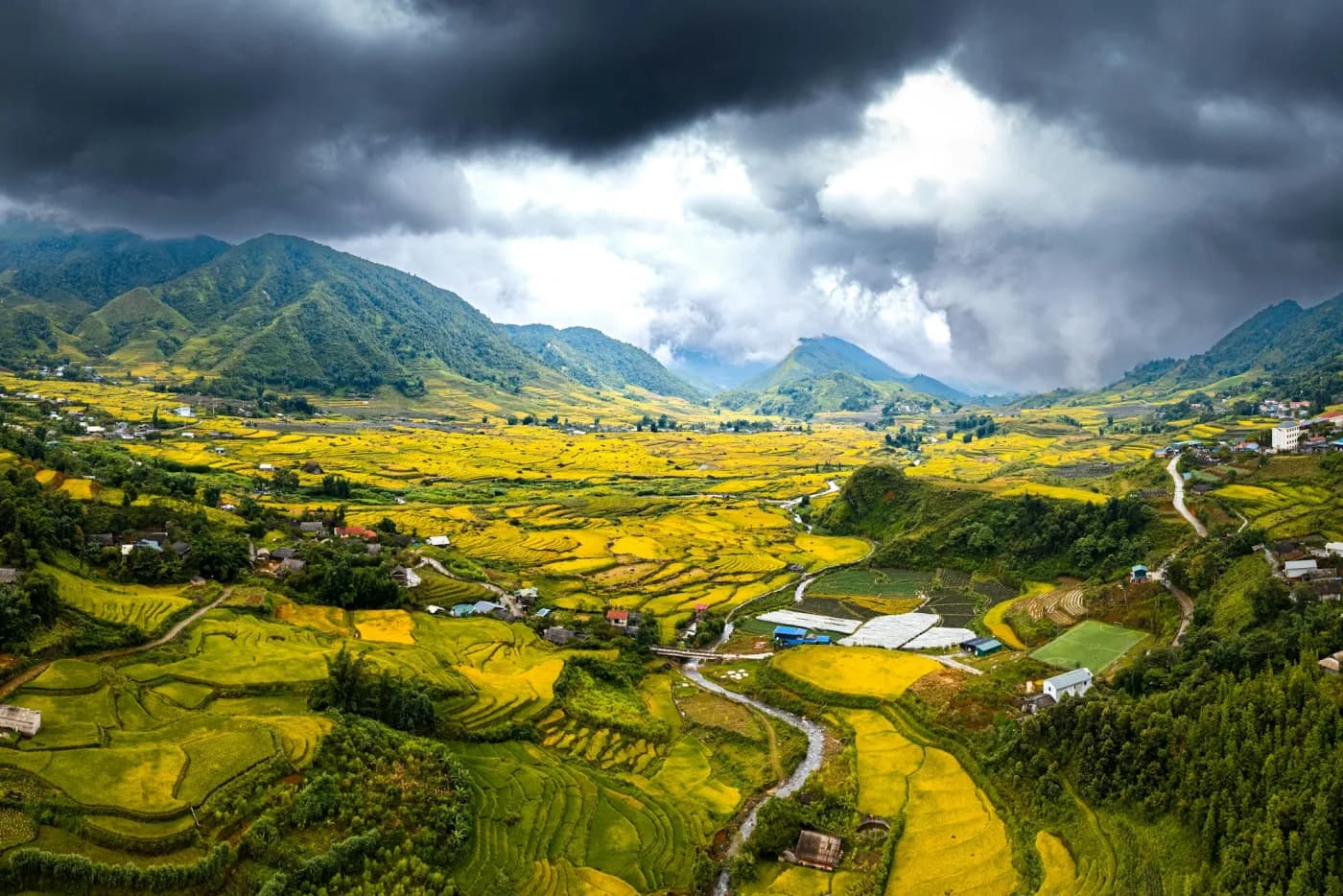
| What it looks like | Flooded terraces reflecting cloud, sky and sun — a mosaic of mirrors stacked up the hillside | Amber and gold terraces layered across the slopes |
| The catch | It follows the rains, so the exact window shifts year to year | Harvest timing varies by altitude and commune — higher fields turn later |
Season timing confirmed by Vietnam Tourism, the country's official tourism board.
The water-pouring season: late May to early June
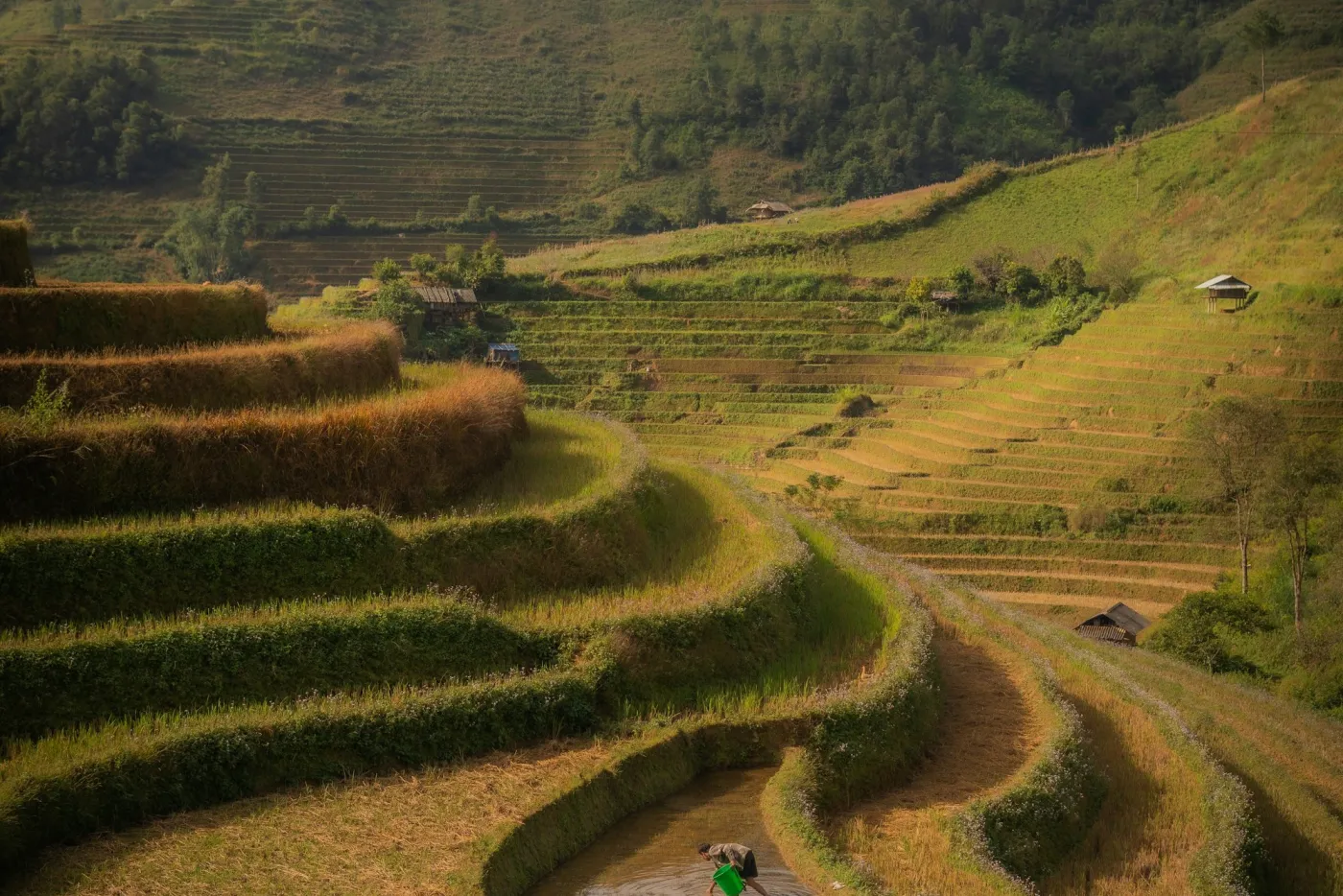
This is the one most travelers have never heard of. After the first rains, farmers in the northern highlands direct water down the mountainside into the terraces to soften the soil before seedlings go in. For a few weeks the fields hold still water, and the whole hillside becomes a stack of reflecting pools catching the sky.
In Mu Cang Chai, the communes of Che Cu Nha, La Pan Tan, Thai Nam Kim, Khao Pha and De Xu Phinh hold festivities during this season. The area is predominantly H'Mong, with Thai and Dao communities also living in the valleys.
The trade-off is precision. Because the season follows the rains rather than a calendar, the window moves from year to year. It is not a date you can book twelve months out and be certain of — it is a date you build a trip around with someone watching the ground conditions.
The golden season: September to October
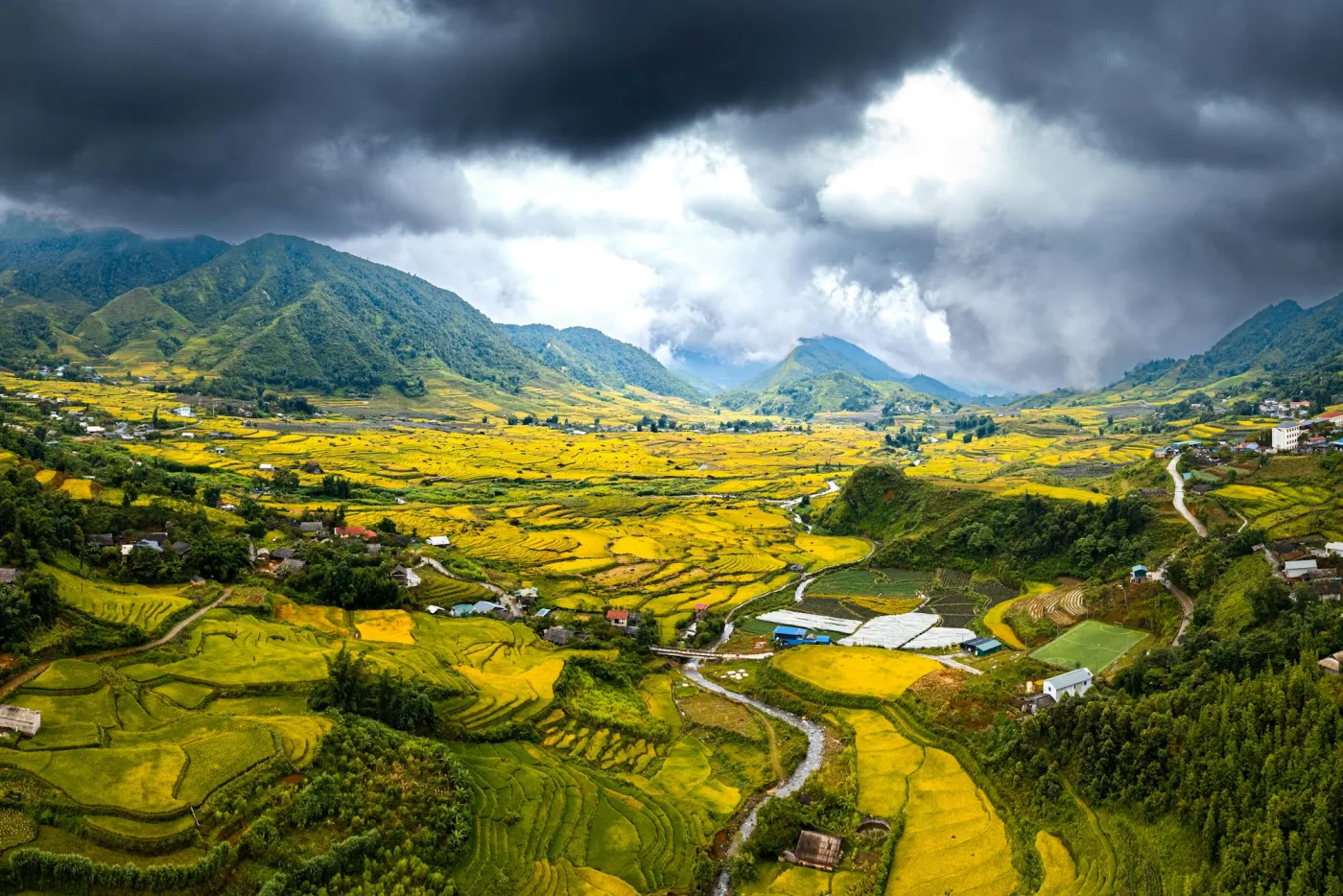
The better-known one, and the reason most photographs of Vietnam's terraces exist. Through September and October the stalks turn gold and heavy, and the terraces read as layered bands of amber up the slopes. Mu Cang Chai holds an annual paragliding festival in late September, timed to the ripest fields — which tells you something about when locals consider the peak.
Harvest is not simultaneous across the region. Altitude changes the timing, so lower fields can already be cut while higher terraces are still gold. That is a planning problem and an opportunity: with the right routing you can follow the harvest uphill and see both stages in one trip.
Where to see them
Mu Cang Chai is the headline. The terraces here are the ones on the postcards, and La Pan Tan is the commune most often singled out as the finest of them.
Pu Luong, in Thanh Hoa province, is the one we point travelers toward most often. Vietnam Tourism describes it as a microcosm of the north — the mountains of Sapa, the terraces of Mu Cang Chai and the cultural depth of Mai Chau in a single reserve. It is quieter than Sapa by a wide margin, and the walking between stilt-house villages, weaving families and waterfalls is the actual experience rather than a viewpoint you drive to.
Mai Chau is gentler country and the easiest introduction, with Thai stilt villages set in a broad green valley.
Sapa is the most famous and the most developed. It is worth seeing, and it is also where you will meet the most other travelers. Nearby, Fansipan — Vietnam's highest peak at 3,143 metres — can be reached by cable car in minutes or on foot over two days. Most visitors do not realise the second option exists.
The part that is harder than it looks
These valleys are not a day trip from Hanoi, whatever the tour listings suggest. The roads into Mu Cang Chai are mountain roads, and the driving times are long enough that a rushed itinerary spends its daylight in a vehicle rather than in the terraces — which is a poor trade when the light is the entire reason you came.
The other constraint is where you stay. The accommodation in these valleys is small-scale by nature: homestays, a handful of lodges, family-run guesthouses. There is no large hotel inventory to fall back on, so the good places are limited in number rather than merely popular, and both seasons concentrate demand into a few weeks.
And the experiences that make these regions memorable are relationship-based rather than bookable. A day with a farming family, an afternoon with weavers in a village, a guide who grew up in the valley and can tell you whose fields you are standing above — those are arranged through people on the ground, not through a booking platform.
How we plan it
Juniper's Vietnam itineraries are built privately with our in-country partners, which is how the terrace timing gets handled properly: the routing is set around where the harvest or the flooding actually is that year, not around a fixed departure date. Our Best of Vietnam itinerary covers the classic north-to-south route, and the northern terraces can be built into it or made the centrepiece.
If you are weighing Vietnam against elsewhere in the region, our custom Vietnam tours page covers the wider country, and the luxury custom travel process is the same wherever you go.
Vietnam rice terrace FAQs
When is the best time to see Vietnam's rice terraces?
It depends which version you want. September to October for the golden harvest, when the terraces turn amber. Late May to early June for the water-pouring season, when the flooded fields mirror the sky. Both are in the northern highlands, and they look completely different.
What is the water-pouring season in Vietnam?
It is the period from late May to early June when farmers channel mountain water into the terraces to prepare the soil for planting. The flooded fields reflect the clouds and sky, turning the hillsides into stacked mirrors. It is far less known among foreign visitors than the golden harvest.
Where are Vietnam's best rice terraces?
Mu Cang Chai is the most celebrated, with the commune of La Pan Tan singled out most often. Pu Luong Nature Reserve is quieter and combines terraces, mountains and village culture. Mai Chau is the gentlest and most accessible, and Sapa is the most famous and most visited.
Is Mu Cang Chai worth visiting?
If you are travelling for the terraces specifically, yes — it is the finest example in the country. It requires a real commitment of travel time from Hanoi over mountain roads, so it suits an itinerary with enough days to justify the journey rather than a quick add-on.
How do you get to Mu Cang Chai from Hanoi?
By road, over mountain routes. It is a long drive rather than a short hop, and the timing matters — arriving with daylight left is the difference between seeing the terraces and seeing the inside of a car.
Can you climb Fansipan instead of taking the cable car?
Yes. Vietnam's highest peak at 3,143 metres is reachable by cable car in minutes, but there is also a multi-day trekking route on foot from the Sapa side. Most visitors do not know the trek exists.
What is Pu Luong Nature Reserve?
A reserve in Thanh Hoa province that Vietnam Tourism describes as a microcosm of northern Vietnam — mountains, rice terraces and ethnic village culture together. Its terraces also turn gold in September and October, and it sees a fraction of Sapa's visitors.
Which ethnic communities live in the terrace regions?
Mu Cang Chai is predominantly H'Mong, with Thai and Dao communities also present. Mai Chau and Pu Luong have significant Thai populations. The terraces themselves are the work of these communities over generations.