Go in late September through October, or in May. Those are the months when Italy's weather works and its crowds don't: Rome averages a high of 80°F in September against 88°F in August, and October brings the vendemmia and white truffle season. Avoid August, when Italians take their own holidays around Ferragosto on August 15 and a large share of city restaurants close for two or three weeks. Winter is cheap, but half the coast is shut.
Key takeaways
- Late September and October are the best weeks of the Italian year. Rome runs 80°F in September and 72°F in October against 88°F in July and August, and rain isn't a real factor until November's 108 mm.
- May is the other answer, and it's the better one for the north. Milan and the Lakes peak at 76°F in May with the Alps still white behind them; Milan hits 87°F in July with humidity to match.
- August is the month to skip, and Ferragosto on August 15 is why. Italians take their own holidays in the two weeks around it, and city restaurants, workshops and family-run shops hang out a chiuso per ferie sign for ten days to a month.
- Italy is not one climate. Palermo averages 60°F in January and never freezes; Milan averages 45°F under weeks of gray cloud. A February trip to Sicily works; a February trip to the Lakes largely doesn't.
- The Amalfi Coast has a hard season. Most four- and five-star hotels close by the end of October, and the coastal ferries stop running from late October to early April.
- October is the food calendar's best month. The Alba white truffle fair ran October 10 to December 6 in 2026, and the Tuscan and Piedmontese grape harvest finishes through late September and October.
- Venice charges day-trippers on peak dates. In 2026 the fee applied on 60 days between April 3 and July 26, at €5 booked more than four days ahead or €10 inside that. Overnight guests are exempt.
When is the best time to visit Italy?
Late September to late October, then May. If you can only take one week and you want it to be the good week, make it the first two weeks of October.
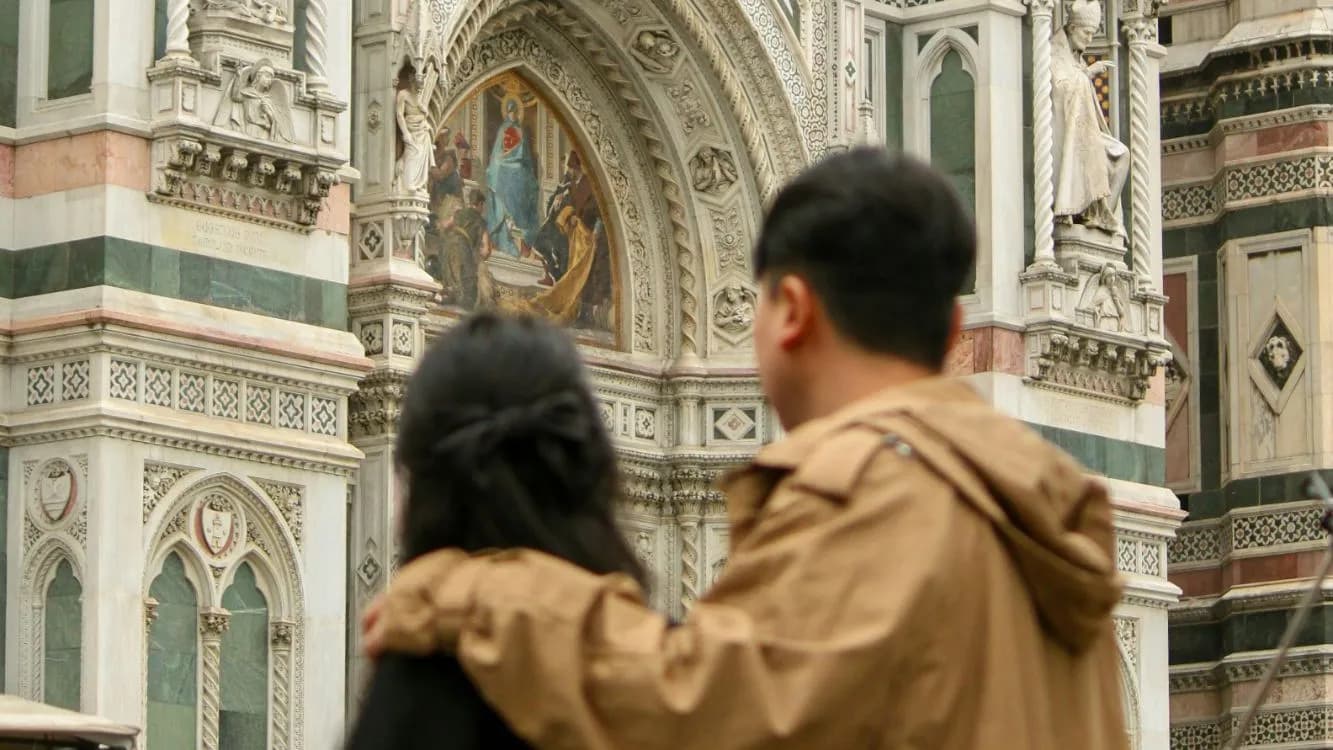
Most Americans miss this because the American vacation calendar and the Italian one are misaligned. Peak US demand lands in June, July and August; peak Italian quality lands either side of it. In September the sea off Amalfi and Sicily is still at its warmest of the year — around 79°F — while the air has dropped 8 to 10 degrees. In October you get the harvest, the truffles, the olive pressing, and a Florence where you can walk into the Uffizi in the afternoon.
May is the spring equivalent and slightly the better bet if your trip is weighted north — Milan, the Lakes, the Dolomite foothills, Venice. Rome in May averages a high of 74°F with 57 mm of rain across six days; by June it's 82°F and the piazzas have stopped being pleasant by eleven in the morning.
What does Italy look like month by month?
Temperatures are average daily highs. Rome stands in for central Italy; where the north or south diverges sharply, the notes say so.
| Month | Rome high / rain | What's on | Crowds |
|---|---|---|---|
| January | 53°F / 66 mm | Epiphany on the 6th, then the quietest weeks of the year. Sicily at 60°F is the only pleasant option. | Lowest |
| February | 55°F / 63 mm | Venice Carnival, ending on Shrove Tuesday — February 9 in 2027 | Low, spiking in Venice |
| March | 60°F / 59 mm | Easter falls on March 28 in 2027, pulling Holy Week and Rome's crowds into late March. | Low until Holy Week |
| April | 66°F / 69 mm | Wisteria and wildflowers, Liberation Day on the 25th. Amalfi hotels and ferries restart. | Building |
| May | 74°F / 57 mm | Best month in the north. Lakes at their greenest, valley trails open, Venice manageable. | Moderate to high |
| June | 82°F / 30 mm | Dolomite lifts and huts open from late June. Sea warm enough on the south coast. | High |
| July | 88°F / 20 mm | Palio di Siena on July 2. Hot, dry, expensive everywhere. | Peak |
| August | 88°F / 30 mm | Ferragosto on the 15th; cities empty of Italians and half-close. Second Palio on the 16th. Venice Film Festival from late August. | Peak on the coast, odd in the cities |
| September | 80°F / 65 mm | Warmest sea of the year, harvest starting, Milan Fashion Week. The best all-round month. | High, easing after the 15th |
| October | 72°F / 88 mm | Alba truffle fair, olive harvest, autumn color in Tuscany. Amalfi winds down from mid-month. | Moderate, then low |
| November | 62°F / 108 mm | Wettest month in Rome, peak truffle quality in Piedmont, high risk of acqua alta in Venice. | Low |
| December | 55°F / 98 mm | Christmas markets in the Alto Adige, presepi everywhere, La Scala opening on the 7th. | Low, spiking at Christmas |
Why does Italy close in August?
Because Italians go on holiday, all at once, and have done for a century. Ferragosto falls on August 15 and is a national holiday, but the practical effect is wider than one day. Small businesses — the trattoria you read about, the leather workshop, the family pasticceria — shut for two to three weeks around it, sometimes the whole month. The sign says chiuso per ferie: closed for holidays.
This doesn't shut down tourism — museums, hotels and the restaurants in tourist districts stay open. But it hollows out precisely the thing most people come for. A Rome where the good neighborhood places are dark and the visible ones are aimed at visitors is a worse Rome, and it costs the same as a better one.
It also pushes every Italian on holiday onto the coast at the same moment. Amalfi, Sardinia, Puglia and the Ligurian towns are at their most crowded and most expensive in the ten days either side of Ferragosto. If you must travel in August, the least bad version is the last week, once the domestic wave has broken.
Does the best time depend on the region?
More than in almost any other European country. Italy spans ten degrees of latitude and rises to 15,000 feet, and the calendar changes as you move down it.
- The north — Milan, the Lakes, Piedmont, Venice. Best in May, June and September. Milan runs 45°F in January under persistent gray, and many hotels on Como and Garda close from November until March. Venice adds acqua alta season, roughly October through January.
- The Dolomites. Two seasons, like any alpine region. Lifts and huts run late June to late September, then again for skiing from December. May and much of June are between-seasons up high.
- Central Italy — Tuscany, Umbria, Rome. The widest window: April through early June, then September through early November. Late October in the Val d'Orcia is the most reliably beautiful combination of weather, light and emptiness in the country.
- The south — Amalfi, Puglia, Sicily. The season is enforced by infrastructure, not weather: Amalfi's larger hotels close by end of October and the ferries stop from late October to early April. Sicily and Puglia stay livable year-round, but the beach towns shutter.
If your itinerary crosses regions — and most good Italian ones do — the shoulder months are the only ones that serve all of them at once. That's the practical case for late September, more than any weather statistic.
What is the cheapest time to visit Italy?
Mid-January through February, excluding the week either side of Carnival in Venice. Airfare from the US bottoms out then, and hotel rates in Rome, Florence and Venice can run 40–55% below their June rates.
November is second-cheapest and, for a certain traveler, the better deal. You lose the coast entirely but gain truffle season, near-empty museums and Piedmont and Tuscany at their most workmanlike. Rome gets 108 mm of rain across nine days in November — not a washout, but not a walking-tour month either.
What is genuinely not cheap is the shoulder season we're recommending. Late September and October now price close to summer in Florence and Rome, because the trade has caught on. What you're buying in October isn't a discount — it's a better trip at a similar price. See our guide to custom Italy vacations.
What is the best time to avoid crowds?
The first three weeks of November, and late January into February. If you want quiet plus workable weather, the honest answer is narrower: the last ten days of October. European schools are back, the American season has ended, the weather is still mild, and Tuscany, Umbria and Le Marche are close to empty.
There are structural crowd controls now too. Venice's day-tripper access fee applied on 60 dates between April 3 and July 26 in 2026, at €5 booked more than four days ahead and €10 inside that window; overnight guests are exempt. One more argument for sleeping in Venice rather than day-tripping into it, which was always the better trip.
When is harvest and truffle season?
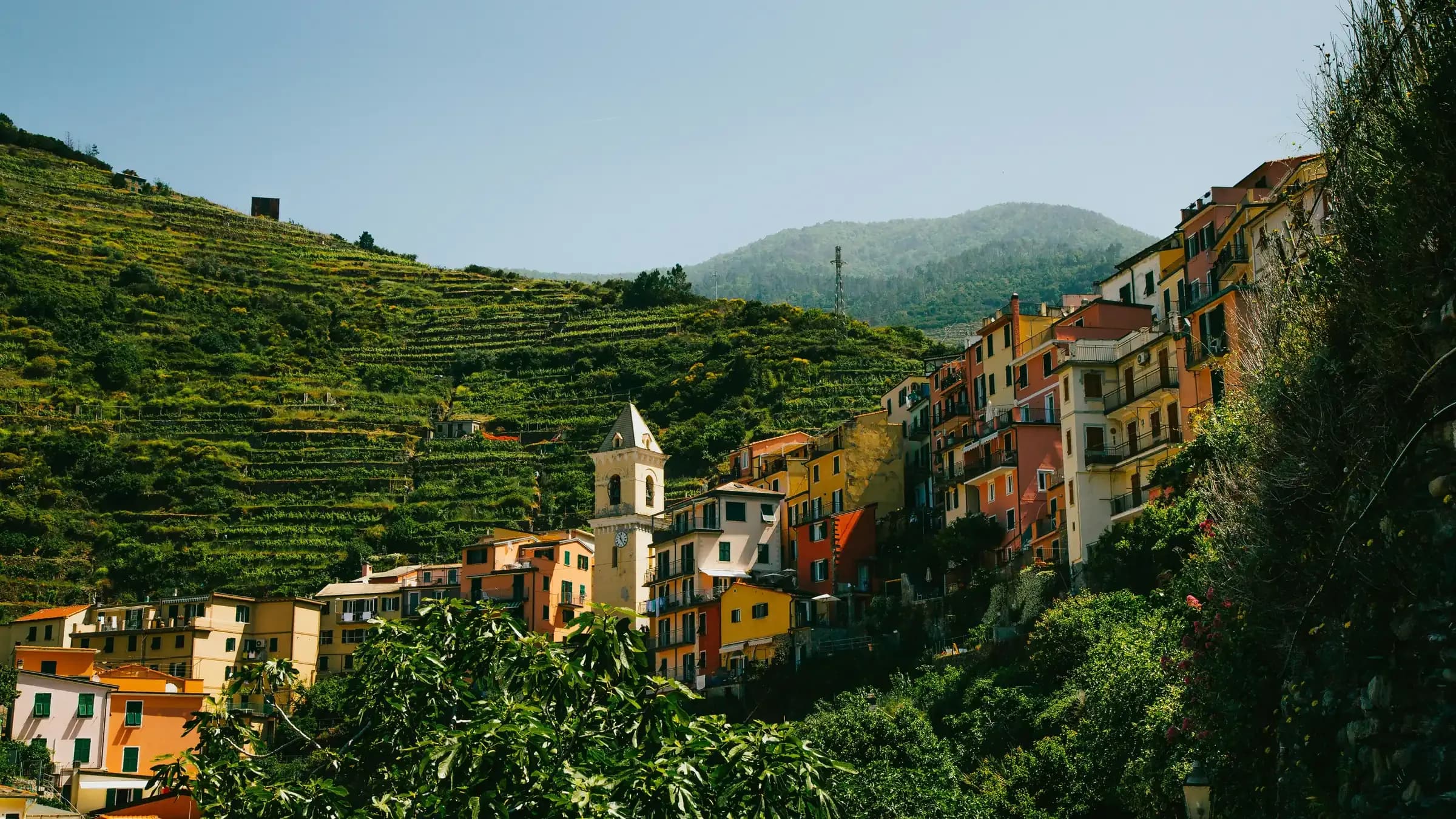
The vendemmia runs from mid-August in the hottest southern vineyards through late October for the late-ripening reds. In Tuscany, Sangiovese comes in through late September and early October; in Piedmont, Nebbiolo is usually last off the vine, into mid-October.
White truffle season overlaps it and runs roughly October to December, with the best specimens in November. The Alba International White Truffle Fair ran weekends from October 10 to December 6 in 2026; expect a comparable window in 2027. October weekends are quieter and combine naturally with harvest visits; November weekends have the better truffles and the bigger crowds.
The olive harvest is the third and most underrated: late October into November, when the frantoi are pressing and the new oil is on every table. The whole autumn calendar is in Italy's harvest season, and the wine regions in our guide to Italian wine tours.
So when should you go, for what you want?
| What you want | Go | Why |
|---|---|---|
| The best all-round trip | Mid-September to late October | Warm sea, mild air, harvest, and every region still open |
| Northern Italy and the Lakes | Mid-May to mid-June | 76°F in Milan, snow still on the Alps, gardens at peak |
| Swimming and the coast | Late June to mid-September | Sea reaches 79°F in August and holds through September |
| Food — harvest, truffles, new oil | Late September to November | Vendemmia, Alba truffle fair and olive pressing in one window |
| Fewest people | November, or mid-January to February | Off-season across the whole country; museums near-empty |
| Lowest prices | Mid-January to February | Cheapest airfare and city hotel rates of the year |
| Hiking the Dolomites | Late June to late September | Lifts and mountain huts operating; high trails clear of snow |
| Sicily and the deep south | April to early June, or October | Warm without the 87°F August heat and the domestic crush |
| Skiing | Late December to early April | Reliable snow in the Dolomites and the Aosta Valley |
Who this suits — and who it doesn't
Shoulder-season Italy is wrong for you if the beach is the point. In late October the sea off Amalfi is still around 72°F, but the beach clubs are dismantled, the ferries have stopped and the coast road is being repaved. If your image of Italy is a lounger and a lemon granita, you need June to early September, with the crowds and the price that come with it.
It's also wrong for travelers who need guaranteed sun. Rome gets 88 mm of rain in October and 108 mm in November. Italy in autumn is not Italy in a magazine; it rains, and the light is better for it.
It suits people who care more about food, wine, art and the ordinary texture of an Italian town than about weather — anyone who would rather have an October Tuesday in Siena with a table free at the good place than an August Saturday with a two-hour wait. And it suits couples, because the shoulder months are when the small properties — the eight-room converted convents, the vineyard estates — are actually gettable.
How far ahead should you book?
For May, September and October, nine to twelve months. These are the most contested months of the Italian year among people who plan carefully, and the constraint is never flights — it's the specific rooms. The best Tuscan estates and the Amalfi properties with the view have single- or low-double-digit room counts, and they sell their October first.
For June through August, six to nine months is usually enough, because the properties are bigger. The exception is anything on Amalfi or Capri in the Ferragosto fortnight, which needs a year. For November through March, three to five months is fine, and a February week in Sicily can be assembled in six if you're flexible on hotels.
Let our Italy specialist time your trip
Getting Italy right is almost entirely a timing problem, and the timing is regional: knowing that the Amalfi ferries stop in late October, that the Dolomite huts don't open until late June, that Holy Week lands in March in 2027 and will move Rome's crowds with it. Lexi Blade, our Florence-based Italy specialist, has run more than ten trips through the country and lives with that calendar year-round. Every Juniper trip to Italy is fully private and built from scratch around your dates — no group coaches, no fixed departures.
"Our recent trip to Italy was more than we could have wished for. Kaycee listened to us during the planning and created an experience that was personalized to our wishes." — Susan L., verified Google review
Italy itineraries with us typically run 10–14 days and between $5,000 and $15,000+ per person, with hand-selected four- and five-star stays, private guides and transfers arranged end to end. Start with our custom Italy trips, or, for two people, Italy honeymoons. If autumn is what you're weighing, read Italy's harvest season, or see how a Taste of Tuscany itinerary is built. When you're ready, book a free consultation — we'll tell you honestly whether the month you've picked will give you the trip you're imagining.