South Korea has two genuinely excellent windows and two hard ones. Go in early April for cherry blossom — Seoul's 2026 full bloom fell around April 10, roughly a week after first bloom — or from late October to mid-November for foliage, which peaks in Seoul around November 1–8, later than most people expect. Avoid July and August, when Seoul takes 415 mm of rain in July alone at 75 percent humidity, and January, when the average high is 36°F.
Key takeaways
- Two windows carry the country: April and late October into November. Everything else is a trade-off you should make deliberately.
- Cherry blossom moves south to north over about ten days. In 2026 first bloom hit Jeju and Busan on March 25, Gyeongju on March 28, and Seoul on April 3, with full bloom roughly a week later in each.
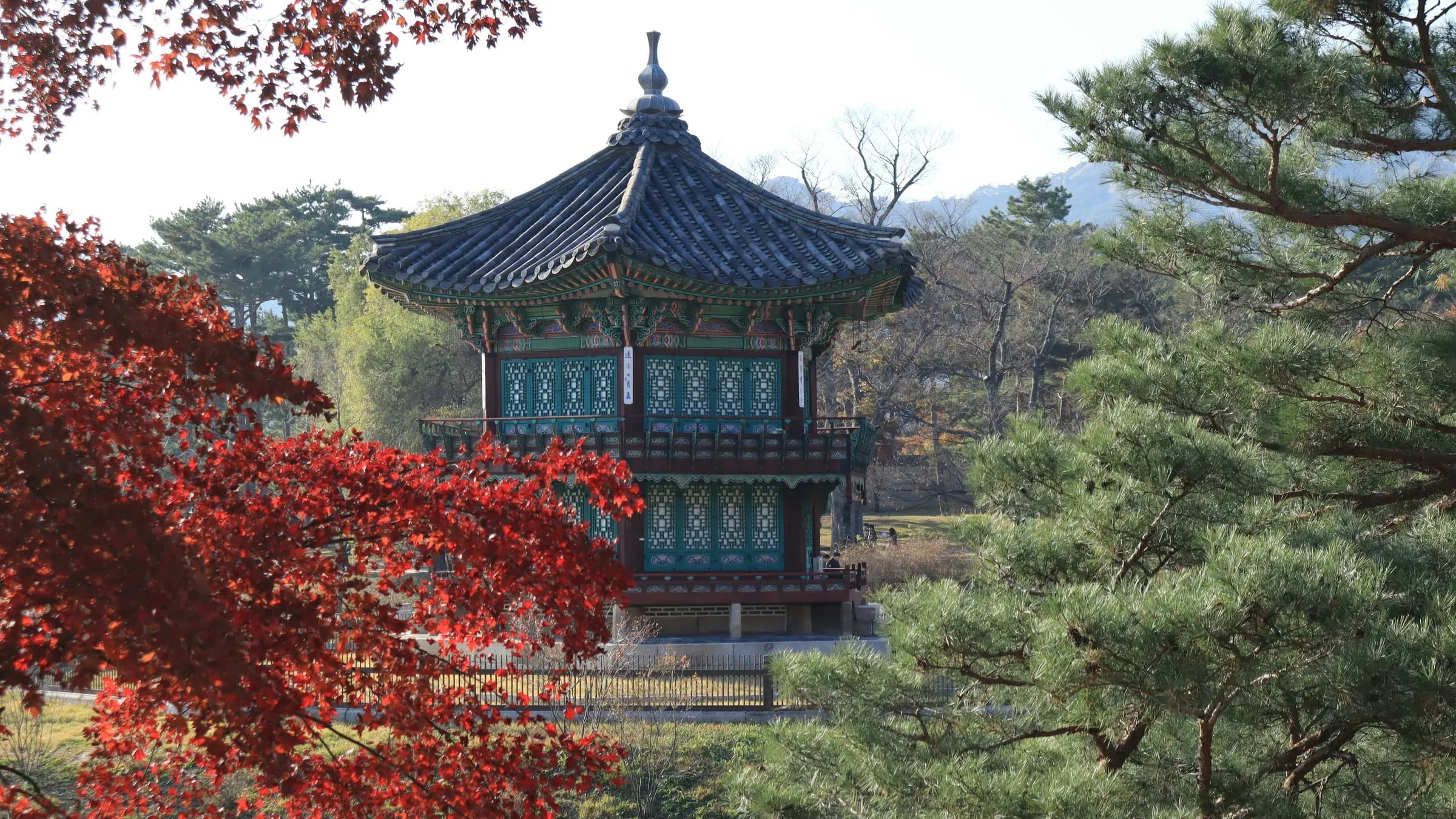
- Korean autumn color runs later than travelers assume. Seoraksan peaks October 12–25, but Seoul and Naejangsan peak October 28 to November 12, and Gyeongju does not peak until November 3–18.
- July and August are the monsoon. The jangma rain front reaches Seoul around June 25 and clears about July 26 on the long-term average, and July delivers 415 mm of rain against 50 mm in October.
- January is genuinely cold, not picturesquely cold. Seoul averages a high of 36°F and a low of 21°F, with only about 15 mm of precipitation — dry, clear, and biting.
- May and September are the quiet-value months, with warm, stable weather, far fewer domestic crowds, and hotel rates well below the two peak windows.
- Book the two peak windows 8 to 11 months out. Korea has a fraction of Japan's luxury room inventory, and blossom and foliage weeks sell first.
When is the best time to visit South Korea?
If you can travel any week of the year, take the last week of October into the first week of November. Autumn is the stronger of Korea's two great seasons: the weather is dry and stable, Seoul averages a high of 68°F in October, rainfall drops to about 50 mm for the month, and the foliage window is longer and more forgiving than the blossom window. You can be wrong by five days in autumn and still have a beautiful trip.
The second-best answer is early April. Cherry blossom in Korea is a real event — Jinhae, the palace grounds in Seoul, the tombs at Gyeongju — but the window is narrow. Full bloom lasts a few days, and a single day of hard rain ends it. April also brings 75 mm of rain to Seoul, more than double October's.
The two windows are not interchangeable. Blossom is a spectacle with a schedule. Autumn is a season you can live inside for three weeks. If this is your first Korea trip and you want the country rather than the photograph, take autumn.
What is South Korea like month by month?
| Month | Seoul high / low | What it's actually like | Verdict |
|---|---|---|---|
| January | 36°F / 21°F | Dry, bright, hard cold. Palaces empty. Ski season in Gangwon. About 15 mm precipitation. | Hard |
| February | 41°F / 25°F | Still cold but softening. Seollal (Lunar New Year) closes businesses and fills trains. | Hard |
| March | 52°F / 35°F | Raw and in-between. Blossom starts in the far south around March 25. | Mixed |
| April | 64°F / 45°F | Cherry blossom peak nationwide. Beautiful, busy, 75 mm of rain. | Excellent |
| May | 74°F / 55°F | Warm, green, stable. Buddha's Birthday lantern festivals. The underrated month. | Very good |
| June | 82°F / 65°F | Good until roughly June 25, when the jangma rain front arrives. | Mixed |
| July | 84°F / 72°F | Monsoon. 415 mm of rain, 73–75 percent humidity, typhoon season opens. | Hard |
| August | 86°F / 73°F | Hottest, still wet at 350 mm. Peak domestic holiday. Typhoon risk highest August–September. | Hard |
| September | 79°F / 63°F | Clears from mid-month. Warm, uncrowded, good value. Chuseok moves dates each year and closes things. | Very good |
| October | 68°F / 50°F | The best month. Dry (about 50 mm), clear, foliage building through the month. | Excellent |
| November | 53°F / 37°F | Foliage peak in Seoul and the south in the first half; cold and bare by the end. | Excellent then fading |
| December | 39°F / 25°F | Cold, dry, quiet. Good city month if you don't mind hats. | Mixed |
When do the cherry blossoms bloom in South Korea?
Blossom moves from south to north over roughly ten days. The Korea Tourism Organization's 2026 forecast put first bloom on Jeju and in Busan on March 25, Jeonju and Gyeongju on March 28, Gangneung on April 1, Seoul on April 3, and Incheon on April 7. Full bloom follows roughly a week after first bloom in each place — Jeju around April 1, Seoul around April 10.
Two things to hold lightly. First, 2026 ran two to seven days earlier than the long-term average, which tells you how much the forecast moves. Second, the official forecast is released in late winter, and it is the only figure worth planning against — anything published a year ahead, including the dates above, is a guide to the shape of the season, not a booking date.
The practical planning move: book a trip that runs April 2 to 12 and includes both Seoul and somewhere south. If Seoul is late, Gyeongju or Busan will already be out. If Seoul is early, you catch it on arrival. Chasing a single city's peak week is how people miss it entirely.
When is the best time to see autumn colors in South Korea?
Later than you think, and this is the single most useful thing in this piece. Most travelers book Korea for mid-October on the assumption that it behaves like New England or Kyoto. It does not. Color starts in the northeastern mountains and takes about a month to reach the southern coast.
| Region | Peak window | Best single week |
|---|---|---|
| Seoraksan and the Gangwon mountains | October 12–25 | October 15–22 |
| Jirisan | October 20 – November 5 | October 25 – November 1 |
| Seoul (Bukhansan, Namsan, the palaces) | October 28 – November 12 | November 1–8 |
| Naejangsan (Jeolla) | October 28 – November 12 | November 1–8 |
| Gyeongju | November 3–18 | November 5–12 |
| Jeju and Hallasan | November 8–22 | November 10–17 |
So a trip built to catch Seoul's palace gingkos at their best should start around October 30, not October 15 — and if it then runs south to Gyeongju and Busan, it will track the color wave down the peninsula rather than arriving after the leaves have dropped. Weather events can shift these windows by three to five days, so build in a couple of days of slack.
How bad is the summer monsoon, really?
Bad enough to plan around. Korea's jangma rain front arrives on long-term average around June 19 on Jeju, June 23 in the south, and June 25 in Seoul and the center, lasting about 31 to 32 days in each region. Seoul receives 415 mm of rain in July and 350 mm in August, against 50 mm in October. Humidity sits at 73 to 75 percent. Typhoon season runs July through September, with the strongest storms usually in August and September.
It is not a continuous downpour — it is heavy bursts between humid, overcast stretches, and Korean cities handle rain very well. If July or August is your only option, the trip still works, but it should be built differently: more Seoul, more indoor culture and food, fewer mountain temples and coastal drives, and flexible days you can move.
Is winter worth it in South Korea?
For a specific traveler, yes. Seoul in January is dry, sharply clear, and almost empty at the palaces, with an average high of 36°F and a low of 21°F and only about 15 mm of precipitation for the month. Gangwon province has a real ski season, and the food — hot soups, grilled meat, market stalls — is at its best when it is cold out.
But this is a city-and-food trip, not a landscape trip. The countryside is brown, the mountain trails are icy, and Jeju is windy and grey. Two dates to avoid: Seollal, the Lunar New Year, and Chuseok in autumn. Both move each year, both close family businesses for several days, and both put the entire country on the road at once.
What is the cheapest time to visit South Korea?
Late November through February, excluding Seollal. Hotel rates in Seoul fall well below the two peak windows, and the top-tier rooms that go for ₩1,000,000 in blossom week are attainable. The genuine sweet spot for value without hardship is mid-September: the monsoon has cleared, temperatures sit in the high 70s, foliage crowds have not started, and rates have not yet climbed.
Does the best time depend on where you're going?
Yes, more than in most countries, because Korea is long and mountainous. Jeju is milder year-round and holds its color into mid-November, which makes late autumn a strong island window. Busan stays warmer and drier than Seoul at the shoulders. Gyeongju is at its best in the first half of November, when the royal tombs sit under yellow gingko. Seoraksan is the exception in the other direction — go there in mid-October or not at all. We work the geography through in detail in our 10-day itinerary beyond Seoul.
Who this suits — and who it doesn't
Autumn Korea suits walkers, eaters, and people who want a country at its most photogenic without Japan's crowds. Spring suits anyone who has always wanted to see blossom and is willing to accept that the forecast might beat them.
Neither window suits travelers who need warm swimming water — Korea does not have it in April or November, and honestly barely has it at all in the way a Southeast Asia traveler means. It does not suit people who cannot commit to dates until three months out, because the two peak windows are exactly the weeks that sell out first. And if your priority is guaranteed sunshine on a fixed week, Korea is the wrong country: this is a place where the weather is part of the story, which is a fair thing to want and a fair thing to skip. If you are weighing Korea against Japan on timing, our guide to the best time to visit Japan makes the comparison directly.
How far ahead should you book?
For April blossom or the late-October to mid-November foliage window, 8 to 11 months. Korea has far less luxury hotel inventory than Japan, and Gyeongju in particular has only a handful of properties worth the name — those go first, and the best English-speaking guides go before the hotels do. For May, September, or a winter city trip, 4 to 6 months is comfortable.
Two things not to rush. KTX reservations open about 30 days ahead and fares are fixed, so there is no early-booking discount. Domestic flights to Jeju are cheapest booked 3 to 6 weeks out. Your specialist times both.
Let our South Korea specialist time your trip
Cherisse Liptzin plans our South Korea itineraries. Raised in one of the country's largest Korean-American communities and a self-described foodie who has explored 21 countries, she builds trips around what is actually good on a given week — which flowers are out, which markets are in season, which mountain is still holding color. Every Juniper trip is fully private and built from scratch: no group coaches, no fixed departures.
Everything planned by Juniper Tours went incredibly smoothly. Every driver and guide was wonderful. — Hailey M., verified Google review
Tell us the weeks you can travel and what you most want to see, and we will tell you honestly whether those dates work. Start with our South Korea destination page, read our honest answer on Korean honeymoons and the South Korea honeymoons page if you are traveling as a couple, then book a free consultation.