For raw aurora odds, northern Norway wins. Tromsø sits at 69.65°N, inside the auroral oval, where a Kp of 1 can put lights directly overhead; Reykjavík at 64.13°N generally needs Kp 2–3 for a reliable show. For everything else, Iceland wins. It's a 5.5-hour nonstop from New York versus roughly 10 hours and a connection to Tromsø, and its 821-mile Ring Road gives you plenty to do on the many nights the sky closes in.
Key takeaways
- Tromsø is 5.5 degrees of latitude farther north than Reykjavík — 69.65°N against 64.13°N — which is the single biggest reason its aurora odds are better on any given clear night.
- Iceland is dramatically easier to reach. Nonstop New York–Keflavík runs about 5 hours 35 minutes. Reaching Tromsø means Newark–Oslo at roughly 7 hours 50 minutes on SAS, then a 2-hour 8-minute domestic hop.
- Both are cloudy, and Tromsø is cloudier. Coastal fjord weather means clouds are the limiting factor far more often than solar activity is.
- Tromsø gives you about 18 hours of darkness in January versus roughly 14 in Reykjavík — more hours in which a display can happen.
- Aurora season runs roughly late September to mid-April in both countries. Tromsø's window opens slightly earlier, from late August.
- Solar maximum has passed. The Met Office puts Solar Cycle 25's peak in 2024–2025, with the sun now in its declining phase — historically the period that still produces the strongest individual storms.
- Juniper's own published ranges are similar: about $5,000–$12,000 per person for custom Iceland, $5,000–$15,000+ per person for Norway.
Iceland or Norway for the northern lights — which is actually better?
The honest answer is that they are better at different things, and the question you should be asking is not "where are the lights stronger" but "what am I doing for the six days the sky is overcast."
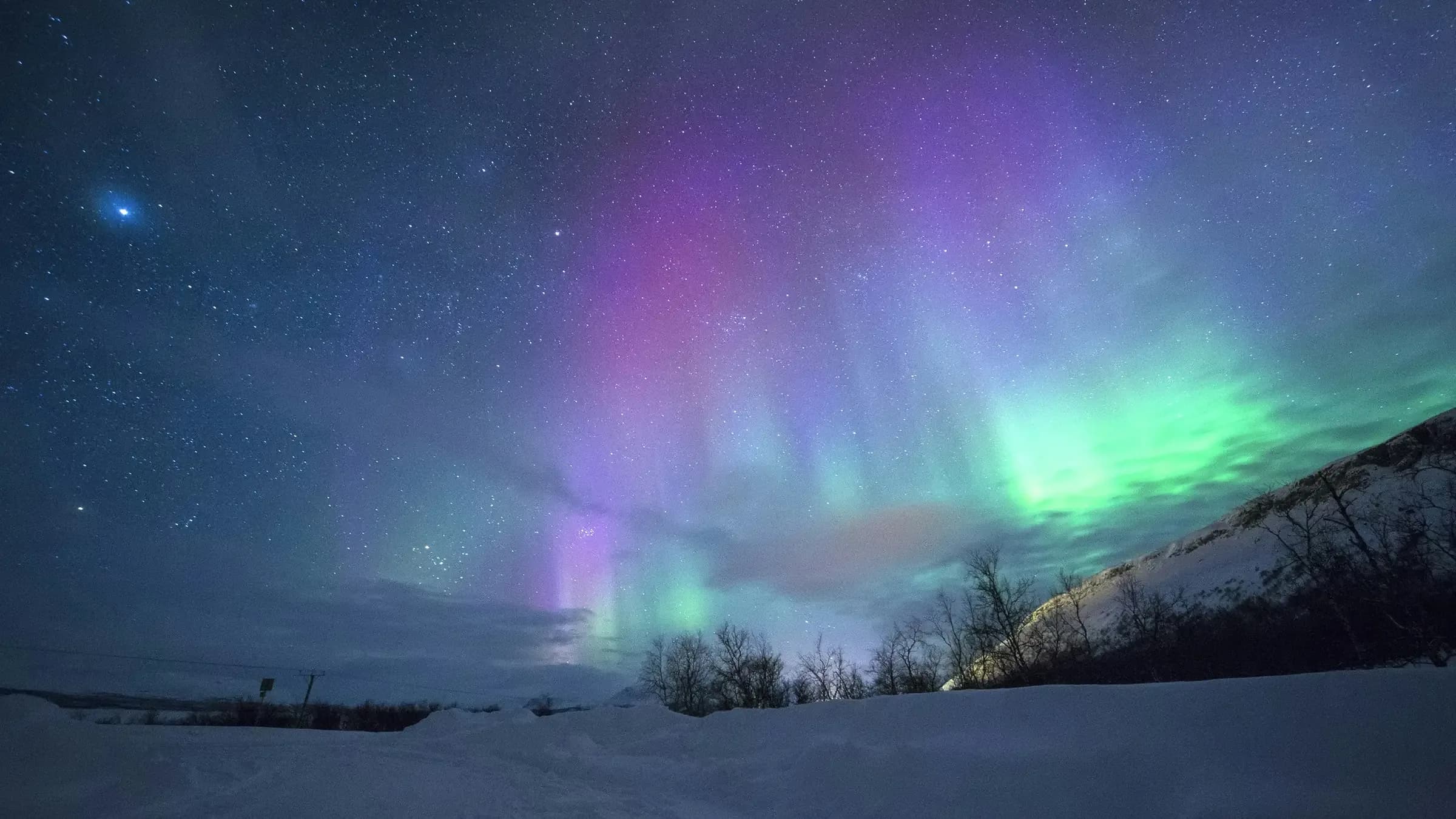
Norway's northern coast is the stronger aurora bet on physics alone. The auroral oval — the ring of atmosphere where charged particles collide with gas and glow — sits over roughly 65–72°N during typical activity. Tromsø is inside it. Reykjavík is under its southern edge, which means Iceland needs a slightly more active night to deliver the same overhead display. Practically, that shows up as Tromsø producing something visible at Kp 1 and Reykjavík wanting Kp 2–3.
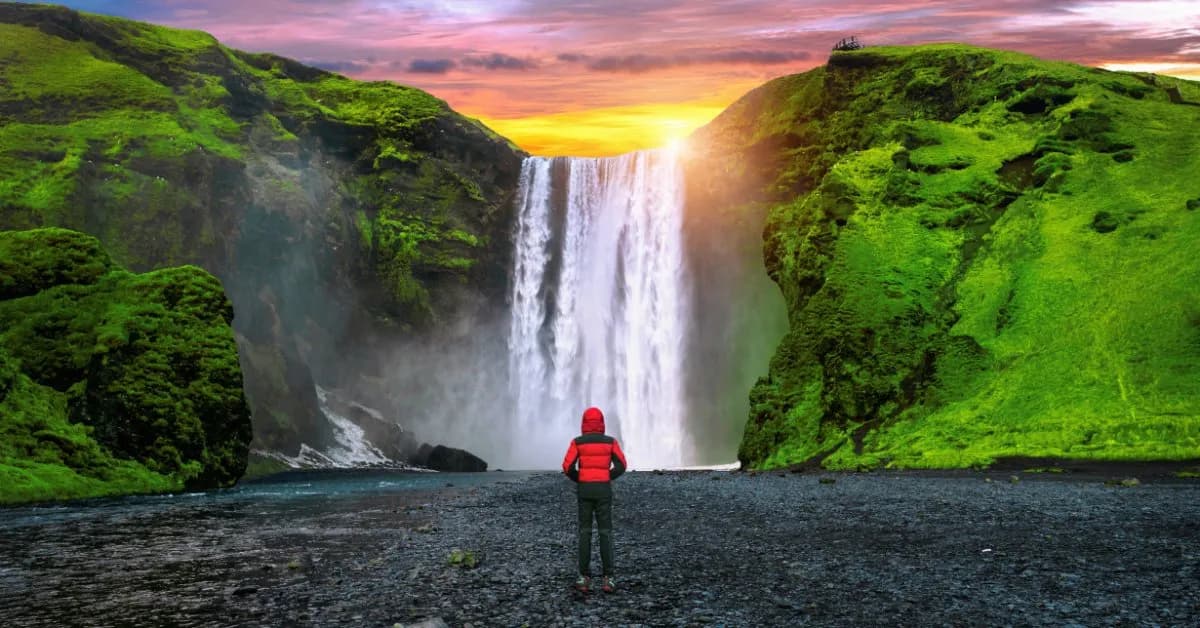
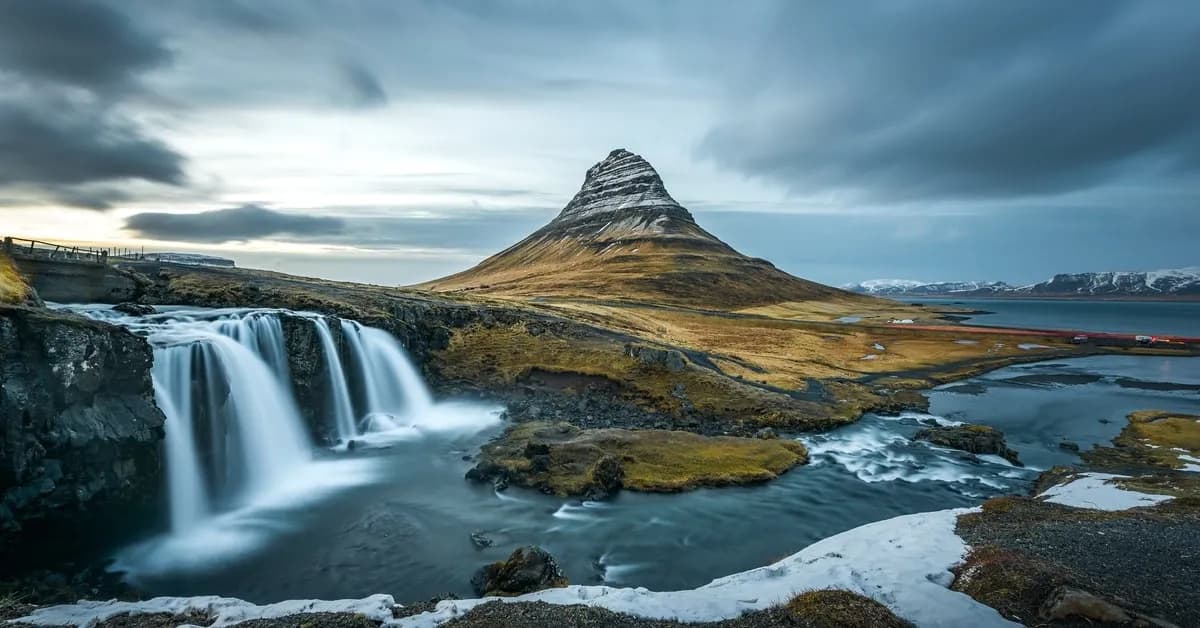
Iceland's advantage is that it is a complete trip with the aurora as a bonus. You are 5.5 hours from the US East Coast, you can drive yourself, and the waterfalls, glacier lagoons, geothermal lagoons and black-sand coast are all there on a cloudy Tuesday. Tromsø is a genuinely excellent aurora base and a small, pleasant Arctic city — but its non-aurora program is thinner, and the polar night from late November to mid-January means you are seeing a lot of it in the dark.
How do Iceland and Norway compare head to head?
| Criterion | Iceland (Reykjavík base) | Northern Norway (Tromsø base) |
|---|---|---|
| Latitude | 64.13°N — under the oval's southern edge | 69.65°N — inside the auroral oval |
| Activity needed for a good show | Kp 2–3 for something reliable | Kp 1 for overhead; Kp 3 for a strong display |
| Aurora season | September to mid-April | Late August to mid-April |
| Dark hours in January | About 14 | About 18 |
| Cloud cover | Moderate but highly variable; you can outdrive weather | High — coastal fjord climate; you chase inland instead |
| Nonstop from US East Coast | Yes — about 5h 35m New York–Keflavík | No — Newark–Oslo about 7h 50m, plus 2h 8m to Tromsø |
| Ease of driving in winter | Ring Road is 821 miles, plowed daily, but ice and wind are real | Possible, but most travelers use guided chase vehicles |
| What else there is to do | Glacier lagoons, geothermal spas, waterfalls, ice caves, the south coast | Whale watching, dog sledding, Sámi culture, Lofoten, Senja |
| Food | Strong Reykjavík scene; thin once you leave it | Excellent Arctic seafood; small number of restaurants |
| Juniper's published range | About $5,000–$12,000 per person | About $5,000–$15,000+ per person |
What does latitude actually do for your odds?
It changes how much solar activity you need. The aurora is not "stronger" farther north — the oval simply sits over you rather than off on your horizon. From Tromsø, a quiet night still produces an overhead band. From Reykjavík, that same quiet night puts a faint arc low on the northern horizon, where haze, light pollution and a hill can hide it entirely.
That difference compounds over a week. On a seven-night trip with, say, four clear nights, Tromsø is likely to turn all four into a sighting. Reykjavík might turn two or three. Both are good outcomes. Neither is a guarantee, and any operator promising you one is not being straight with you.
The other latitude effect is darkness. Tromsø's polar night runs roughly late November to mid-January, and even outside it you get about 18 hours of usable dark in January against Reykjavík's 14. More dark hours means more chances per night.
Which one has worse cloud cover?
Tromsø, and it isn't close. Both destinations sit in North Atlantic storm tracks, but Tromsø's fjord-and-mountain setting is described consistently as high cloud cover, while Reykjavík's is moderate and variable. This is the fact that most northern-lights marketing quietly skips.
The mitigation is different in each place. In Norway, the standard answer is to be driven — Tromsø's chase operators will take you two or three hours inland toward the Finnish or Swedish border, where the continental climate is drier and skies clear more often. In Iceland, the answer is to be positioned: staying multiple nights away from Reykjavík, on the south coast or in the north near Akureyri, so a front passing over one side of the island doesn't cost you the whole trip. Juniper's Iceland page makes the same point — unhurried itineraries with several nights in remote locations are how you buy yourself more chances.
How long does it really take to get there from the US East Coast?
Iceland is the shortest transatlantic flight there is. New York to Keflavík is about 5 hours 35 minutes nonstop, on Icelandair and several partners, and you land in the early morning. From Boston it's closer to five hours. You can leave work on a Thursday and be at a hot spring on Friday morning.
Norway has no nonstop service to Tromsø from the US. SAS flies Newark to Oslo in about 7 hours 50 minutes — a 3,707-mile leg — and then it's 2 hours 8 minutes on to Tromsø with SAS, Norwegian or Widerøe. With the connection and the airport time, that's a full travel day each way. It is entirely doable. It just eats two days of a seven-day trip in a way Iceland does not.
Which costs more, Iceland or Norway?
Day to day, Iceland. Restaurant meals, groceries and car rental all run higher in Iceland than in mainland Norway, and cost-of-living comparisons put the gap somewhere near 35–40% . Norway's own reputation for expense is real, but it is largely an Oslo-and-alcohol reputation.
At the level Juniper works, the gap narrows and can reverse. Iceland's published guidance is $5,000–$12,000 per person for a complete custom itinerary; Norway's is $5,000–$15,000+ per person. Norway trends higher not because Norway is dearer per night but because the trips are longer — you have added a connection, and most travelers who go that far add Lofoten, Senja or a coastal voyage rather than sitting in Tromsø for six nights.
One real Iceland saving: you can drive yourself. A self-drive itinerary strips out guide and driver costs that a Norwegian aurora week generally keeps.
What do you do when the sky is cloudy?
This is the question that decides most of these trips, and it is where Iceland pulls ahead.
Iceland's daytime program is genuinely full in winter. Ice caves under Vatnajökull are a winter-only experience. Seljalandsfoss and Skógafoss run all year. The Blue Lagoon, Sky Lagoon and the newer geothermal baths in the north are all better in bad weather, not worse. Snowmobiling, glacier walks and the Golden Circle all work under cloud.
Tromsø's daytime program is good but shorter: whale watching from November into January when the herring are in, dog sledding, reindeer sledding with Sámi hosts, the Arctic Cathedral, the Fjellheisen cable car. If you're basing there for a week and the weather sits on you, you will run through it. That's the argument for pairing Tromsø with Lofoten or Senja rather than staying put.
Does 2027 still work, now that solar maximum has passed?
Yes. The Met Office describes Solar Cycle 25's maximum as all but confirmed to have occurred across 2024 and 2025, with the sun now in its declining phase. That sounds like bad news and mostly isn't: historically, some of the strongest geomagnetic storms on record have arrived after maximum, during exactly this part of the cycle.
What changes is consistency. Expect fewer nights of blanket high activity and more of a pattern of quiet stretches punctuated by strong events. That argues for two things: book at least five or six nights in aurora country rather than three, and give preference to the higher-latitude option if raw odds are your priority — which is the case for Tromsø.
Could you do both in one trip?
You can, and it is more practical than it sounds, because Icelandair and SAS both connect through hubs that make the routing sane. The clean version is Iceland first for four to five nights, then Reykjavík to Oslo (about 3 hours), then Oslo to Tromsø for four nights, home from Tromsø via Oslo. Call it 11 to 12 nights door to door.
Two caveats. First, this is a January-or-February trip: doing it in September or April means you are burning your best aurora nights on flights. Second, it is not a cost saving — you are paying two countries' worth of hotel rates and adding four flight segments. Do it because you want both landscapes, not because you think it doubles your odds.
Who this suits — and who it doesn't
Iceland is wrong for you if the aurora is genuinely the only reason you're going and you'd consider the trip a failure without it. Iceland's latitude makes that a coin flip on a short trip, and the honest advice is to go to Tromsø instead.
Norway is wrong for you if you have seven days total, hate connections, or are traveling with someone who needs a full daytime program. It is also wrong if you want to self-drive: winter driving in Troms and Finnmark is a different proposition from the Ring Road, and most travelers there are better off with a driver.
Neither is right for anyone unwilling to accept a real chance of not seeing anything. There is no destination on earth where the northern lights are guaranteed. If that's a dealbreaker, the honest recommendation is to pick a trip where the scenery is the point and the aurora is upside — which, again, is Iceland.
How far ahead should you book?
For aurora-season travel in 2027, start 10 to 12 months out. Northern Norway's supply is the constraint: Tromsø has a limited hotel inventory, the best chase operators and Lofoten properties sell out for January and February by the previous spring, and the good ones do not release more.
Iceland is more forgiving — eight to ten months is usually enough for winter — but the specific rooms people want are not. Ice-cave permits, the small south-coast hotels and anything with a private geothermal setup go early. If you are targeting the New Year period in either country, treat that as a 12-month booking.
Doing both countries in one trip? Book at 12 months. You are constrained by the tighter of the two calendars, which is always Norway's.
Let our Iceland specialist plan your northern lights trip
Taryn Harrison is Juniper's most tenured specialist, with 25 years designing European itineraries and a Certified Master Specialist credential in the Celtic Countries. She has been building Iceland itineraries for years alongside her Ireland and UK work, and she plans aurora trips the way they should be planned — multiple nights in more than one region, so a single weather front can't take the whole trip with it. Norway itineraries are built by the same Northern Europe team. Every Juniper trip is fully private and built from scratch: no group coaches, no fixed departures, no shared minibus of forty people at the same pull-off.
"Taryn and Juniper Tours was incredible start finish planning our trip to Iceland!" — Autumn H., verified Google review
If you're weighing the two, start by reading the destination pages side by side: luxury Iceland tours and custom Norway trips. Couples should look at Iceland honeymoons and Norway honeymoons, both of which are built around slower pacing and better-positioned lodges. For the practical side of an Iceland trip, our guides to self-drive honeymoons in Iceland and the best time to see the northern lights in Iceland go deeper on routing and timing. When you're ready to put dates on it, book a free consultation and we'll tell you honestly which of the two fits the trip you're describing.