Most of Iceland shuts hard for about 36 hours. Shops and restaurants close between noon and 2 p.m. on December 24 and stay closed through Christmas Day; supermarkets reopen December 26 and everything is shut again on January 1. Reykjavík gets roughly four and a quarter hours of usable daylight around the solstice. In exchange you get thirteen Yule Lads arriving one per night from December 12, and a New Year's Eve unlike anywhere else.
Key takeaways
- The thirteen Yule Lads arrive one per night from December 12 to December 24 and leave in the same order, thirteen days later, the last one departing on January 6. Children leave a shoe on the windowsill; good behavior earns a small gift, bad behavior a raw potato.
- December 24 is the hard stop, not December 25. Christmas in Iceland begins at 6 p.m. on Christmas Eve, and shops close from around noon to 2 p.m. to make it. Bónus closes at 14:00, Krónan at 15:00.
- Everything is closed on December 25 and January 1. All four major supermarket chains shut both days. Hotel restaurants and a handful of cafes are the exception, and they book out weeks ahead.
- Þorláksmessa on December 23 is the best night to be in Reykjavík. Shops stay open late, the whole city is out on Laugavegur, and the traditional dish is kæst skata — fermented skate, whose smell is genuinely difficult and part of the point.
- Jólabókaflóð, the Christmas book flood, is real and dates to 1944. A free catalogue of the year's new titles goes to every household, books are the default gift, and Christmas Eve is spent reading them.
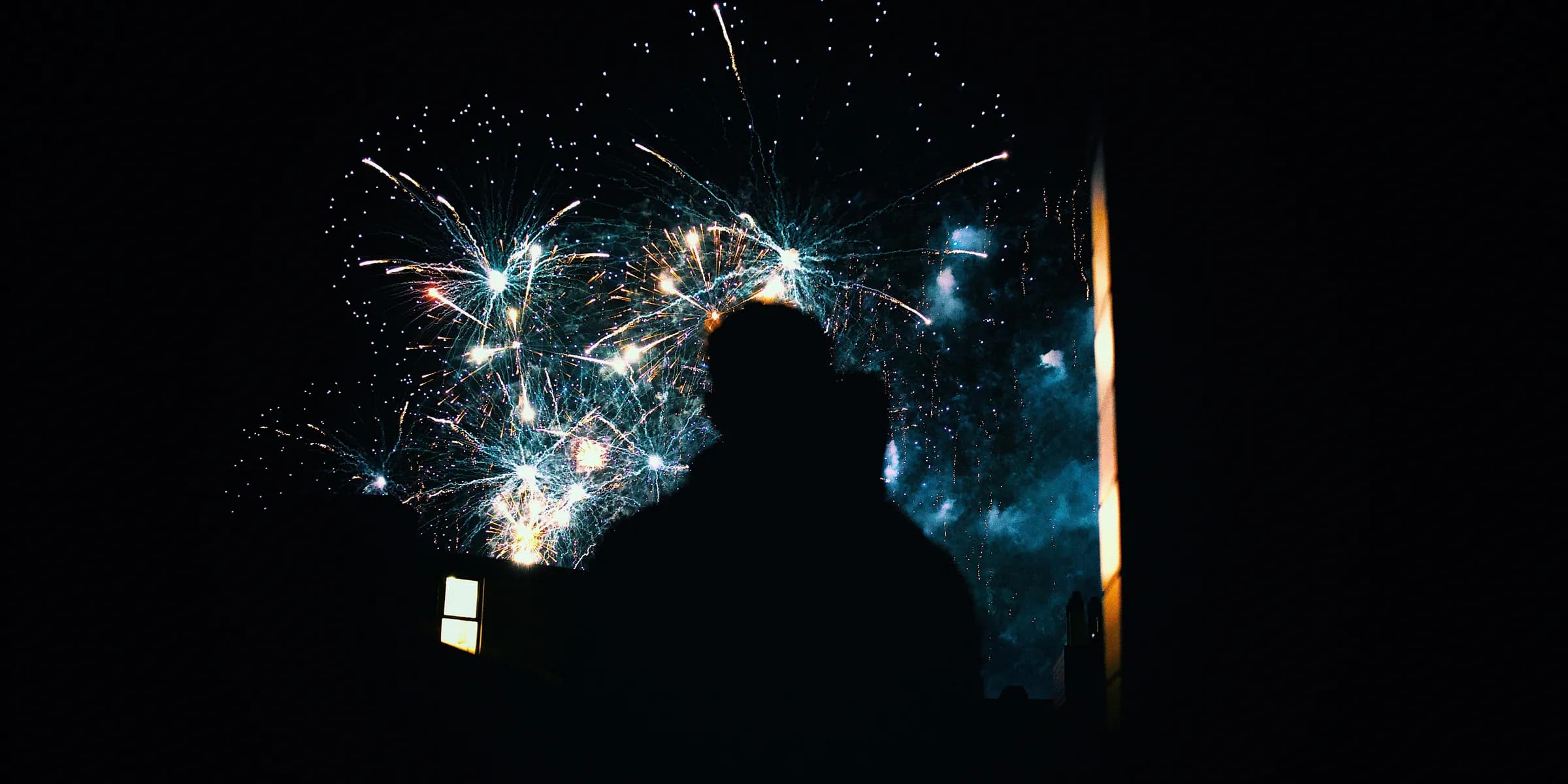
- New Year's Eve runs on bonfires and private fireworks. Around ten official brennur light across Reykjavík at 20:30, the nation watches the satirical review Áramótaskaup from about 22:30, and at midnight a 30–45 minute barrage goes up from every street at once.
- Daylight is the constraint that decides the itinerary. Sunrise near 11:20 a.m., sunset near 3:45 p.m. That is one substantial thing per day, not three.
Who are the thirteen Yule Lads, and when does each one arrive?
They are the sons of Grýla, a mountain ogress who eats badly behaved children, and Leppalúði, her lazy husband. The family also keeps the Jólakötturinn, the Yule Cat, which is said to devour anyone who doesn't get new clothes for Christmas — the reason Icelandic children reliably receive a jumper.
The lads come down from the mountains one at a time, thirteen nights before Christmas, and each stays thirteen days. Modern versions are mischievous; the older ones were closer to trolls.
| Yule Lad | English name | Arrives | Leaves | What he is said to do |
|---|---|---|---|---|
| Stekkjarstaur | Sheep-Cote Clod | Dec 12 | Dec 25 | Harasses sheep in the fold and tries to drink their milk. Stiff peg legs make him clumsy at it. |
| Giljagaur | Gully Gawk | Dec 13 | Dec 26 | Hides in gullies waiting to sneak into the cowshed and steal the froth off the milk. |
| Stúfur | Stubby | Dec 14 | Dec 27 | Abnormally short. Steals pans to scrape and eat the burnt crust from the bottom. |
| Þvörusleikir | Spoon-Licker | Dec 15 | Dec 28 | Steals and licks the wooden stirring spoon. Thin and permanently underfed. |
| Pottasleikir | Pot-Licker | Dec 16 | Dec 29 | Waits for an unattended pot and licks out the leftovers. |
| Askasleikir | Bowl-Licker | Dec 17 | Dec 30 | Hides under the bed and takes the askur, the lidded wooden bowl people once ate from. |
| Hurðaskellir | Door-Slammer | Dec 18 | Dec 31 | Slams doors through the night purely to keep everyone awake. |
| Skyrgámur | Skyr-Gobbler | Dec 19 | Jan 1 | Goes straight for the skyr and eats the lot. |
| Bjúgnakrækir | Sausage-Swiper | Dec 20 | Jan 2 | Hides in the rafters and steals smoked sausages hung to cure. |
| Gluggagægir | Window-Peeper | Dec 21 | Jan 3 | Looks in through windows for anything worth taking. |
| Gáttaþefur | Doorway-Sniffer | Dec 22 | Jan 4 | Has an enormous nose and follows the smell of fresh laufabrauð to the door. |
| Ketkrókur | Meat-Hook | Dec 23 | Jan 5 | Lowers a hook down the chimney to snag the smoked lamb. |
| Kertasníkir | Candle-Beggar | Dec 24 | Jan 6 | Follows children to steal their tallow candles, which were once edible. |
The shoe-in-the-window custom is the part your children will care about: from the night of December 12, a shoe goes on the sill, and each lad leaves something small in it. January 6 — Þrettándinn, the thirteenth day — is when Kertasníkir leaves, the trees come down, and there are bonfires and elf processions in some towns.
What actually closes over Christmas in Iceland?
More than most visitors expect, and earlier. The critical fact is that Icelandic Christmas begins at 6 p.m. on December 24, when the church bells ring and families sit down to eat. Everything commercial is built around clearing the decks before then.
- December 23 (Þorláksmessa): the longest trading day of the year. Bónus 10:00–21:00 with some stores to 23:00, Krónan 09:00–22:00, Hagkaup to 23:00 or midnight depending on branch.
- December 24: Bónus 10:00–14:00, Krónan 09:00–15:00, Hagkaup 09:00–14:00 with some to 16:00. Most restaurants and all museums close; hotel restaurants serve a set Christmas dinner.
- December 25: all four supermarket chains closed. Almost every restaurant, shop, museum and tour operator closed. Hotel dining and a small number of cafes only.
- December 26: reopening begins. A limited set of Bónus stores run 12:00–18:00, several Krónan branches 10:00–19:00, Nettó from 09:00. Restaurants largely back.
- December 31: normal morning, early close. Bónus 10:00–16:00, Krónan 09:00–16:00.
- January 1: all supermarkets closed. Effectively a second Christmas Day.
The planning consequence: if you're in Iceland across December 24–26, your evening meals on the 24th and 25th need to be booked before you arrive, and a hotel with a serious restaurant stops being a preference and becomes the deciding factor in where you stay. Self-catering apartments are a bad idea for those two nights specifically.
Tours are the other thing to check. Most day operators run a reduced schedule from about December 23 to 26 and again on January 1. Glacier and ice-cave operators tend to keep running; small-group Golden Circle and South Coast departures thin out. Book the days you actually want rather than assuming availability — the same logic we set out in Iceland with teenagers.
What is Þorláksmessa, and why does Reykjavík smell like that on December 23?
December 23 is St Thorlak's Day, named for Iceland's patron saint, a twelfth-century bishop. It became the country's biggest shopping night in the mid-twentieth century and it has stayed that way. Laugavegur closes to traffic, shops trade late, people walk the length of it drinking hot chocolate and running into everyone they know. If you have one night in Reykjavík in December, make it this one.
The smell is kæst skata: skate fermented for weeks until it develops a high ammonia note. It originated in the Westfjords as a way of using an unloved fish, it is boiled and eaten with potatoes and melted tallow, and it is followed by a shot of brennivín. The smell carries several streets. Many Icelanders eat it once a year out of stubbornness rather than appetite, and a fair number of them will tell you so.
You can try it — Sægreifinn, Múlakaffi and Þrír Frakkar are the usual places — and you should probably try it once. Bring clothes you can wash, because the smell stays in wool.
What is Jólabókaflóð?
The Christmas book flood. It started in 1944: Iceland came out of the war with money and severe import restrictions on most goods, but paper was less restricted, so books became the default gift and the publishing industry moved its entire year to the autumn.
Eighty years later the structure is unchanged. A free catalogue of the year's new titles, Bókatíðindi, is delivered to every household in the country; new books arrive in bookshops in a compressed wave from October; you give books, you receive books, and on Christmas Eve, after the 6 p.m. meal, people read the ones they were given. It is a genuine cultural habit rather than a tourist-board invention, though it's fair to say the internationally circulated version — everyone in a blanket with hot chocolate — is the prettiest possible reading of what is also a retail season.
For a visitor, the practical version is that Reykjavík's bookshops in December are worth an hour of your time, and that an Icelandic novel in English translation is the best souvenir available in a country where most souvenirs are puffins.
How much daylight do you actually get?
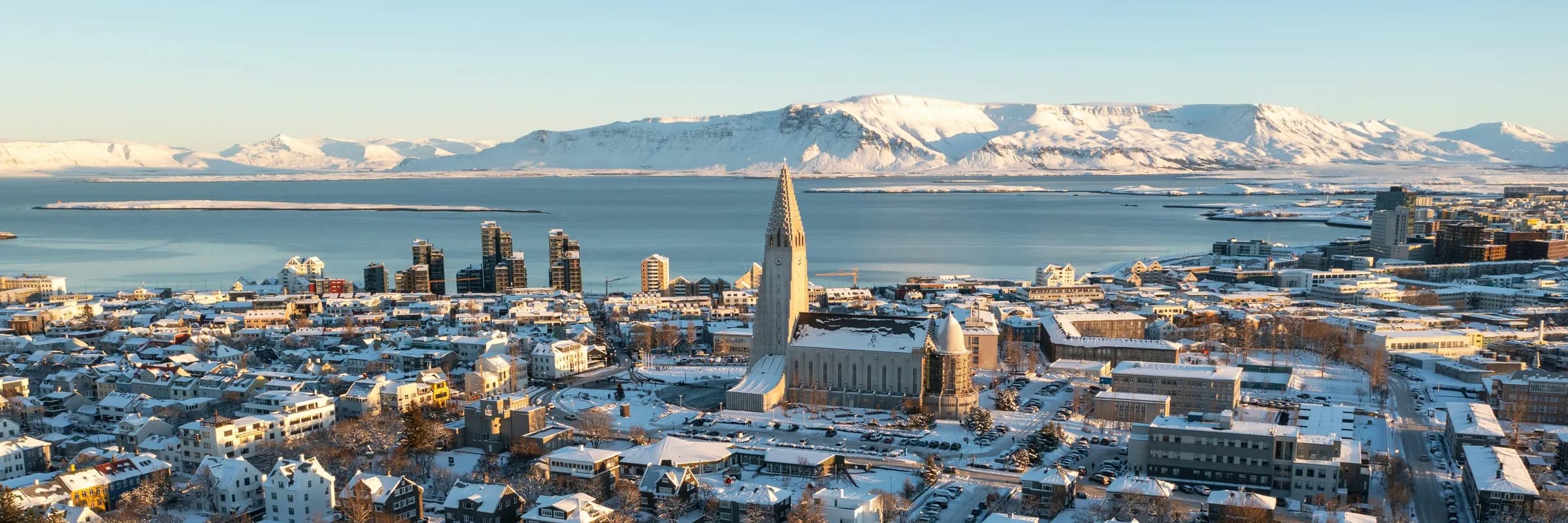
Around four and a quarter hours at the solstice. Reykjavík's sun comes up close to 11:20 a.m. and goes down close to 3:45 p.m. in the last ten days of December. It climbs barely above the horizon, which means the entire day is a long low golden light — genuinely beautiful, and photographically the best light in the Icelandic year.
It also means one thing per day. A Golden Circle loop with three stops fills the light completely. The South Coast to Vík and back is a full day and part of it will be in the dark. Any itinerary that assumes summer distances will have you driving icy roads at night, which is the single most common mistake on a winter Iceland trip.
The compensation is the aurora window, which is fully open from mid-afternoon. We go through the forecast and the geography in the best time to see the northern lights in Iceland and in our winter 2026/27 aurora guide.
What happens on New Year's Eve in Reykjavík?
Three acts, in order, and they're all worth staying up for.
Bonfires from 20:30. Around ten official brennur are lit across the capital area at the same time, the biggest at Geirsnef and Gufunes. These are neighborhood gatherings, not spectacles — people stand around, sing, drink something warm. Go to a smaller one.
Áramótaskaup from about 22:30. A satirical review of the year, broadcast on RUV, watched by something close to the entire country at once. The streets empty for it. You won't follow the jokes, but the fact that a nation stops for the same television program is itself the thing to see.
Fireworks at midnight, for 30 to 45 minutes. There is no municipal display. Instead, fireworks are sold by ICE-SAR, the volunteer search and rescue association, as its main annual fundraiser, and Icelanders buy an extraordinary quantity of them. At midnight they all go up at once from every street, garden and hillside in the city. Hallgrímskirkja, Perlan and the Öskjuhlíð slopes are the standard vantage points; a hotel with a roof terrace is better.
Be aware of the trade-off: the smoke can be thick enough by 00:30 to obscure the view, and the noise is continuous for the better part of an hour. It is not a gentle evening.
What can you still do between the closures?
Plenty, if you plan around the two dead days. Geothermal lagoons generally run reduced holiday hours rather than closing entirely, though December 24 and 25 vary by site. Reykjavík's municipal swimming pools are the local answer to Christmas week and are the best cheap thing in the city. Ice caves, glacier walks and aurora hunts run through most of the period.
What doesn't work is a driving-heavy Ring Road plan. In late December the north and east are dark, wind-exposed and prone to road closures, and the daylight budget doesn't cover the distances. A Christmas trip should be Reykjavík plus the South Coast plus the Golden Circle, with a private driver-guide rather than a rental car — the reasoning and the cost difference are in how much an Iceland trip costs.
Who this suits — and who it doesn't
Iceland at Christmas is wrong for anyone who wants a Christmas market trip. There isn't a market circuit here in the European sense — there are small craft fairs and a Christmas village outside the city, and that's about it. If markets are the trip, go to Switzerland, Alto Adige or Scotland instead.
It's wrong for travelers who need a full day of activity to feel like they got value. Four hours of light, two closed days, and weather that will cancel something is not a schedule you can fill. And it's wrong for anyone who wants a quiet New Year: December 31 in Reykjavík is loud, smoky and crowded, by design.
It suits families with young children, because the Yule Lads are a genuinely magical thirteen-night structure and the shoe on the windowsill travels well. It suits couples who want the aurora and don't mind a slow pace. And it suits anyone who has been to Iceland in summer and wants to see how different the same country is when there are almost no other visitors in it.
How far ahead should you book?
Nine to twelve months for December 20 to January 2. This is the tightest window in the Icelandic year outside high summer, and the constraint is not flights — it's the small number of good hotels with a restaurant that serves on Christmas Eve and Christmas Day, and the even smaller number of rooms with a New Year's Eve view.
Twelve months if New Year's Eve is the reason you're going. Reykjavík's better hotels sell those two nights first, often with a minimum stay attached. Five to seven months is workable for the first half of December, which is quieter, cheaper and still has the Yule Lads arriving. Private driver-guides for the holiday week book out well before the hotels do.
Let our Iceland specialist plan your Icelandic Christmas
This is a trip with a lot of small closed doors in it — a restaurant that stops serving at noon on the 24th, a tour that doesn't run on the 26th, a lagoon on holiday hours, a driver who is already booked. Taryn Harrison, our Iceland specialist, has 25 years in the business, has traveled 41 countries and is a Certified Master Specialist in the Celtic Countries; the holiday calendar is exactly the kind of detail she checks before anything is confirmed. Every Juniper trip to Iceland is fully private and built from scratch around your dates — no group coaches, no fixed departures.
"Taryn and Juniper Tours was incredible start finish planning our trip to Iceland! We will definitely be using her in the future for any travel!" — Autumn H., verified Google review
Iceland itineraries with us typically run 6–9 days and between $5,000 and $15,000+ per person, with hand-selected hotels, private driver-guides and every holiday-week reservation held before you fly. Start with our custom Iceland trips, or, for two people, Iceland honeymoons. If you're costing it out, read how much an Iceland trip costs; if you're travelling with older children, Iceland with teenagers covers the winter version in detail; for month-by-month timing, see the best time to visit Iceland. When you're ready, book a free consultation — we'll map your days against what's actually open before we quote.
Planning a trip to Iceland
Juniper Tours designs private, custom Iceland itineraries — never group tours, never fixed departures. Most run 7–12 days and fall between about $5,000 and $15,000+ per person, with hand-selected 4- and 5-star stays, private guides and transfers arranged end to end. Planned by Taryn Harrison and Cherisse Liptzin. The 30-minute consultation is free; a $100 planning deposit begins your itinerary. See our private Iceland tours →