Iceland is the best country in the world for teenagers, and the Ring Road is usually the wrong way to see it. The full loop is 1,322 km (821 miles) and about 17 hours of pure driving, needing six to eight days minimum. A South Coast base delivers more per day. Know the age floors before you promise anything: Silfra snorkeling is 12+, diving is 17+, snowmobile passengers are 8+ and drivers 17+ with a licence.
Key takeaways
- The full Ring Road is 1,322 km and roughly 17 hours of driving. Operators recommend a minimum of six to eight days for the circuit, which means most of your week goes on repositioning rather than doing things.
- A South Coast base out-delivers the loop for a one-week trip. Waterfalls, black sand, a glacier lagoon and glacier walks all sit within reach, and you unpack twice instead of six times.
- Silfra has two different age floors. Snorkeling requires a minimum age of 12, a height of at least 150 cm and a weight of at least 45 kg. Diving requires 17 by Icelandic law, plus dry suit certification or 10 logged dry suit dives in the last two years, plus PADI Open Water or equivalent. Water is 2–4°C year-round.
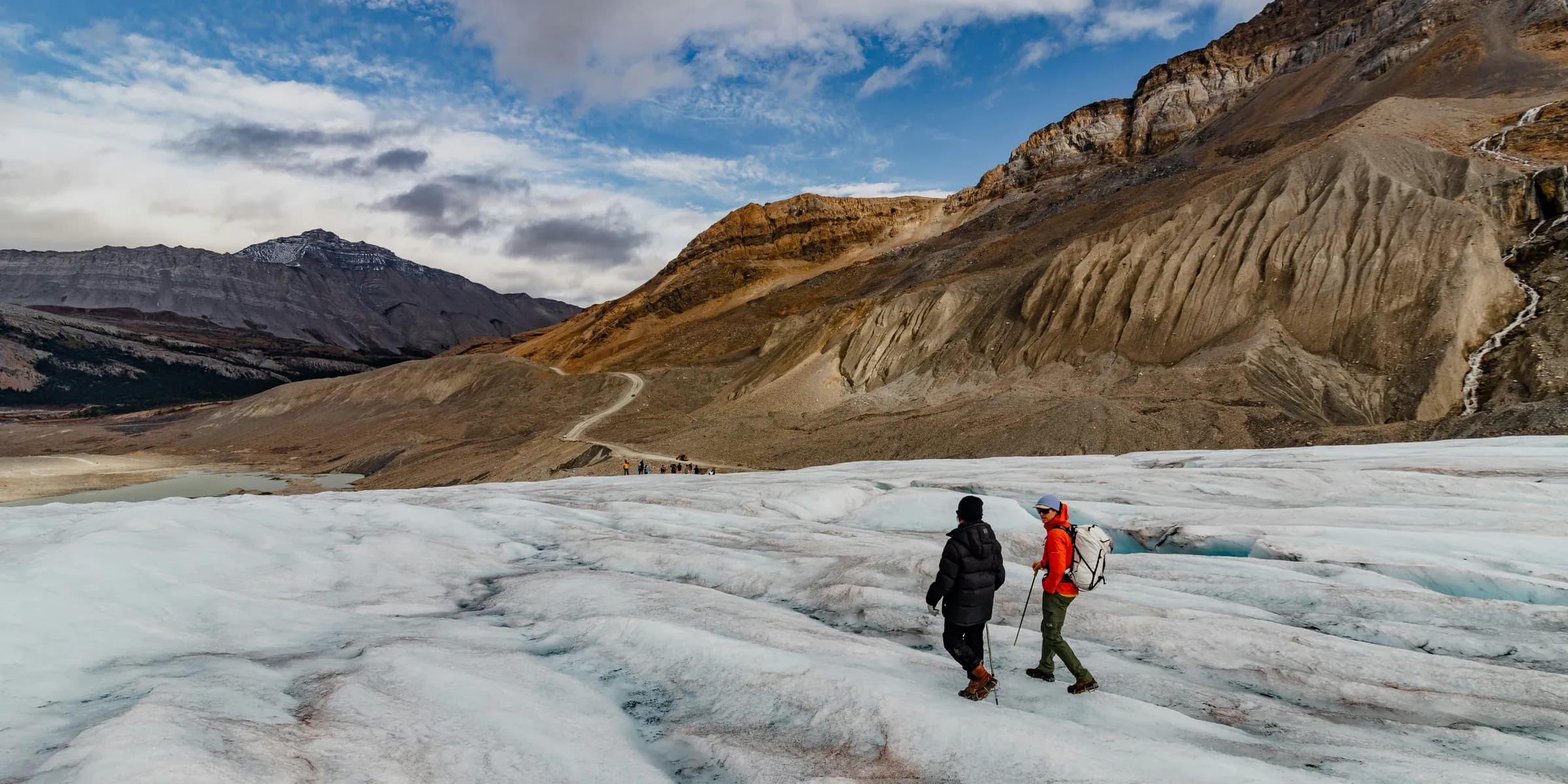
- Glacier walks start at about 8. Family walks run three to five hours including gearing up, and children need balance, stable footing and stamina on uneven ice.
- Snowmobiling splits the group by licence, not by age. Passengers can be 8 and up, but drivers must be 17 or older with a valid licence, and the number of guests without licences cannot exceed those with them.
- Winter daylight is the real constraint. December gives about 4.5 to 5 hours, with sunrise near 11:20 a.m. and sunset near 3:45 p.m. January starts at 4.5 hours and reaches 7 by month's end.
- Budget $5,000 to $15,000+ per person for a fully private custom Iceland itinerary with four- and five-star stays, private guides and transfers.
Why is Iceland so good with teenagers?
Because it is the rare destination where the teenager is not being asked to appreciate something. Most family itineraries are passive — look at this building, listen to this guide — and teenagers are bad at passive, not wrongly. Iceland is almost entirely active: you walk on a glacier, float in a drysuit between two tectonic plates, drive a snowmobile, go behind a waterfall. The headline experiences are things you do with your body, which is exactly the register a fifteen-year-old wants.
Iceland is also photogenic in a way teenagers care about and adults underestimate. Reynisfjara's basalt columns, the ice on Diamond Beach, the interior of a glacier cave — these are places a teenager wants to be seen in, and that is most of the difference between engagement and sulking.
And it is safe enough to loosen the leash: giving a sixteen-year-old and a fourteen-year-old three hours to themselves in Reykjavik buys enormous goodwill. The honest caveat: Iceland is expensive, weather can flatten a day, and if your teenager's main interest is nightlife or shopping, the country will not serve it.
Should you drive the full Ring Road or base on the South Coast?
For a first trip of a week or less, base on the South Coast; drive the Ring Road only with ten days or more. The loop is 1,322 km (821 miles) and, as one Icelandic operator puts it, "you could tour the entire Ring Road in about 17 hours' driving time" — technically. The recommended minimum is six to eight days, and that assumes you are content to see things from a car park rather than do them. A seven-day Ring Road trip is a driving holiday with sightseeing attached; a seven-day South Coast trip is an activity holiday.
| Full Ring Road | South Coast base | |
|---|---|---|
| Distance | 1,322 km (821 miles) minimum, more with detours | Roughly 200 km of core corridor, driven repeatedly |
| Minimum days | 8 to 10 to do it properly; 6 as a hard minimum | 5 to 7 |
| Hotel changes | 5 to 7 | 2 to 3 |
| Typical driving day | 2.5 to 4 hours | 45 to 90 minutes |
| Activities per day | One, usually | Two, comfortably |
| What the other doesn't give you | The East Fjords, Mývatn, Akureyri, the north | More time on glaciers, in water, and hunting aurora |
| Winter viability | Risky — northern and eastern passes close | Good — the best-maintained corridor in the country |
| Best for | Ten-plus days, summer, a group that likes driving | Teenagers, activities, any winter trip |
The South Coast version that works: two nights in Reykjavik with the Golden Circle, three or four based between Hvolsvöllur and Vík, then one or two further east near Jökulsárlón if you want the glacier lagoon without a five-hour round trip. Seljalandsfoss, Skógafoss, Reynisfjara, Sólheimajökull and Skaftafell all sit in that corridor. If you do drive the loop, do it in summer, never in under eight days, and accept that the East Fjords are a long, sparsely serviced stretch where teenagers get bored. Our Iceland self-drive tour shows how the legs get spaced.
What are the minimum ages for the activities teenagers actually want?
| Activity | Minimum age | Other requirements |
|---|---|---|
| Snorkeling Silfra | 12 | At least 150 cm and 45 kg; must be able to swim and be comfortable in water; water is 2–4°C year-round |
| Diving Silfra | 17, by Icelandic law | PADI Open Water or equivalent, plus dry suit certification or 10 logged dry suit dives in the last two years, plus a signed medical statement |
| Glacier walk | About 8 | Crampons, helmet and sometimes a harness provided; needs balance and 3–5 hours of stamina including gear-up |
| Snowmobiling — passenger | 8 | Rides behind a licensed driver |
| Snowmobiling — driver | 17 | Valid driver's licence; the number of guests without licences cannot exceed those with them |
| Ice cave tour | Varies by operator | Natural winter caves require a glacier approach; the man-made Langjökull tunnel is easier |
| Whale watching | No minimum | Long, cold and potentially rough; not for anyone prone to seasickness |
| Geothermal lagoons | Check per operator | Armbands are required for younger children at most lagoons |
12 and 17 are the two hinges. A twelve-year-old unlocks Silfra snorkeling, the best single experience in Iceland for that age; a seventeen-year-old unlocks driving a snowmobile and diving. A family with a thirteen-year-old and a seventeen-year-old will find some activities split the group, and planning for that beats discovering it at the desk. Two honest notes: Silfra in 2–4°C water is genuinely cold, and a child who dislikes cold water will not enjoy it regardless of the marketing; and glacier walks have a floor about capability rather than age, since a confident eight-year-old walker manages while one who is not will slow a roped group for three hours. Our guide to the Silfra fissure covers what it is actually like.
How much daylight will you have?
| Month | Daylight | Sunrise and sunset |
|---|---|---|
| December | About 5 hours at the start, 4.5 at the solstice | Sunrise 10:45–11:20 a.m.; sunset around 3:45 p.m. |
| January | 4.5 hours rising to 7 | Sunrise 11:20 a.m. falling to 10:15 a.m.; sunset 3:40 p.m. rising to 5:10 p.m. |
| February | 7 hours rising to 10 | Sunrise 10:10 a.m. to 8:40 a.m.; sunset 5:15 p.m. to 6:45 p.m. |
| March | 10 hours rising to 13.5 | Sunrise 8:35 a.m. to 6:45 a.m.; sunset 6:45 p.m. to 8:15 p.m. |
| June | 20 to 21 hours | Sunrise around 3:20 a.m.; sunset around 11:30 p.m. |
| July | 21 hours falling to 18 | Sunrise 3:05 a.m. to 4:30 a.m.; sunset 11:55 p.m. to 10:30 p.m. |
In December and January you get one activity per day and it must start at 10 or 11 a.m. There is no such thing as an afternoon plan. The compensation is real — aurora season and ice caves that only exist in winter — but a family arriving in December expecting the South Coast and the Golden Circle in three days will do both in the dark. February and March are the best winter compromise: seven to thirteen hours of light, ice caves still open, and a strong aurora window. June and July give 20 hours, which changes the arithmetic entirely — you can drive at 9 p.m., the Ring Road becomes plausible, and teenagers who will not get up at 8 can start at noon and still do everything, at the cost of no northern lights and busier sites. Our guides to the best time to visit Iceland and the northern lights go month by month.
How do you build a split day with teenagers?
Teenagers and grandparents want almost opposite things in Iceland, which makes the split day mandatory rather than optional. Start together at breakfast, split for the main activity, reconvene for dinner and the aurora hunt.
- Sólheimajökull. Teenagers and one parent do the three-hour glacier walk. Everyone else drives 20 minutes to Skógafoss, where you can stand at the base of the falls from a flat car park, then to Vík for the black sand. Reconvene for lunch in Vík.
- Þingvellir. Teenagers over 12 snorkel Silfra. Grandparents walk the Almannagjá rift path, which is paved and downhill from the upper car park. Everyone meets at the visitor centre.
- Reykjavik. Give the teenagers three hours on Laugavegur with a meeting time and a phone. The adults take Harpa, the Settlement Exhibition or a long lunch. This is the highest-value split of the trip.
The requirement, as always, is a second vehicle or a driver. In Iceland there is an added wrinkle: winter driving on the South Coast is genuinely demanding — wind, ice and occasional closures — and a guide-driver is worth more here than in most countries.
What are the car and lodging logistics for a group of six to ten?
Two 4x4 SUVs beat one minibus: the split day needs two vehicles. In winter take a larger vehicle class than you think you need, confirm winter tires, and take full insurance including sand and ash protection — an Iceland-specific cover for paint stripped by wind-driven volcanic grit on the South Coast, and a frequently claimed risk rather than an upsell. Check road.is and vedur.is every morning: the correct response to an orange wind warning is to change the plan.
On lodging, the constraint is inventory rather than shape. Outside Reykjavik hotels are small — a 30-room country hotel is normal — and a group of nine can consume a third of a property. South Coast country hotels must be booked very early for summer and have limited family rooms. A rented house or lodge is excellent for eight or more, particularly with a hot tub, which is a teenage highlight and an aurora-watching platform at once. Reykjavik apartments cost less and give you a kitchen, worth real money given Icelandic restaurant prices. Food is where Iceland costs more than families expect and rural options are thin — in some South Coast stretches there is one place to eat within 30 minutes. Book dinners ahead for any group over six and use Bónus or Krónan for lunches.
Which Iceland activities suit which ages?
| Activity | Young kids (3–8) | Teens | Adults | Grandparents with limited mobility |
|---|---|---|---|---|
| Golden Circle (Geysir, Gullfoss, Þingvellir) | Good | Good | Excellent | Good — main viewpoints have paved access |
| Seljalandsfoss and Skógafoss | Excellent | Excellent | Excellent | Good at the base; the Skógafoss stairs and the Seljalandsfoss walk-behind are not |
| Reynisfjara black sand beach | Good with close supervision — sneaker waves are lethal | Excellent | Excellent | Good from the car park |
| Jökulsárlón lagoon and Diamond Beach | Excellent | Excellent | Excellent | Good — level, though the beach is loose sand |
| Silfra snorkeling | Not permitted under 12 | Excellent at 12+ | Excellent | Not advisable |
| Snowmobiling | Passenger at 8+ | Passenger at 8+, driver at 17+ with licence | Excellent | Passenger only, and cold |
| Geothermal lagoon or spa | Excellent | Excellent | Excellent | Excellent — check for step-free water entry |
| Northern lights hunt | Hard — late and cold | Excellent | Excellent | Good from a vehicle or a hot tub |
Who this suits — and who it doesn't
Iceland with teenagers is wrong for you if the budget is tight. It is one of Europe's most expensive countries, and the activities that make it worth the trip — glacier walks, Silfra, snowmobiling, ice caves — are individually costly and add up fast across a family of five. A trip where you drive to free waterfalls and cannot afford the activities is much weaker than the brochures imply.
It is wrong for a group with significant mobility limitations if the itinerary is activity-led, because the headline activities are physical by definition. Iceland can still be excellent for a grandparent — the lagoons, Jökulsárlón, the Golden Circle viewpoints and the aurora are all accessible — but plan for two trips happening in parallel.
It is wrong in December if seeing the country is the point: 4.5 hours of daylight is a constraint, not a quirk. And it is wrong for a teenager whose interests are urban. Reykjavik is charming and small; it is not a city with a scene.
Who it does suit: a family with children over about twelve who will get in cold water, walk on ice, and stay up until 1 a.m. looking at the sky. For that family, no other destination we plan comes close.
How far ahead should you book?
For 2027, nine to twelve months for summer and eight to ten for the February and March aurora window. The constraint is neither flights nor cars but rooms: rural South Coast hotels are small, and a group of nine needs three or four out of thirty. Summer sells out first, and anything near Jökulsárlón or Vík goes earliest. Small-group glacier walks and Silfra tours in July should be secured three to four months out, and private guide-drivers booked alongside the hotels. Book accommodation before flights, and the far-eastern nights before the Reykjavik nights — Reykjavik has depth of inventory; Höfn does not.
Let our Iceland specialist plan your family's trip
Taryn Harrison is our Iceland and Ireland specialist, with 25 years planning travel, 41 countries visited, a CMSC credential and a background as a Peace Corps volunteer. She will tell you before you book that your thirteen-year-old cannot dive Silfra and your seven-year-old cannot walk on Sólheimajökull — and then build the day so neither is left in a car park. Cherisse Liptzin also plans Iceland and builds itineraries around food, which matters where dinner options between towns are scarce. Every Juniper trip is fully private and built from scratch — no group coaches, no fixed departures.
"The trip to Iceland for our family of 11 was incredible." — Debra W., Custom Trip
Start with custom Iceland tours. If you want the loop, our Iceland self-drive tour shows the honest daily distances, and the Golden Circle itinerary is the base-and-day-trip alternative. For timing, see the best time to visit Iceland and when to see the northern lights. Teenagers who came for the scenery will want the film and TV locations. Couples travelling separately should see Iceland honeymoons. For the same puzzle in gentler terrain, read Ireland with kids and grandparents and Costa Rica for multigenerational families. When you want a real answer for your children's ages, book a free consultation.