Machu Picchu admits 4,500 visitors a day, rising to 5,600 on designated high-season dates, split across three circuits and ten named routes. Inca Trail permits are capped at 500 people a day including porters and guides — roughly 200 trekkers — and the trail closes all February. For June–August 2027, assume Circuit 2 morning slots and Inca Trail permits are the two things that disappear first, and plan 10–12 months ahead.
Key takeaways
- There is no single "Machu Picchu ticket." There are three circuits and ten routes, and a date can show availability while the route you actually want is already sold out.
- Huayna Picchu is Route 3-A. Huchuy Picchu is Route 3-D. Both sit inside Circuit 3, not Circuit 2 — the most common and most expensive booking mistake travelers make.
- Daily caps in 2026 were 4,500 standard and 5,600 on high-season dates (January 1; April 2–5; June 19–November 2; December 30–31). The 2027 figures had not been officially confirmed at the time of writing.
- 2026 tickets went on sale November 17, 2025. Peru's Ministry of Culture had not published a 2027 release calendar as of late 2026, so treat any site advertising a confirmed 2027 on-sale date with suspicion.
- Inca Trail permits release for the following year in roughly the first week of October and peak-season dates go within days. The 4-day trail allows 500 people daily including staff; the 2-day trail allows 250.
- The Inca Trail closes for the whole of February for maintenance. Machu Picchu itself stays open.
- Train class is a separate, separately limited booking. The Hiram Bingham costs roughly $460–$650 one way and does not include your Machu Picchu entrance ticket.
When do Machu Picchu tickets sell out for 2027?
For the peak window — roughly mid-June through August — the honest answer is that the routes worth having sell out within weeks of release, not months before travel. Morning entry slots on Circuit 2 and the 350 daily Huayna Picchu places go first. Shoulder months (May, September, October) hold up for four to six months. The November–March low season is genuinely flexible, and dates two to four weeks out are often still bookable.
The trap is that "sold out" is route-specific. The official calendar can show a June date with hundreds of tickets remaining, all of them on Route 1-B or 2-B at 2pm, while every morning slot on 2-A and every Huayna Picchu place has been gone since the day inventory opened. If you have a photograph in your head of the classic view with morning light on it, you are shopping for a specific route at a specific hour, and that is a much smaller pool than the headline number suggests.
What are the Machu Picchu circuits, and which one do you want?
The site is organized into three circuits subdivided into ten routes. Some routes operate only in high season. Durations are enforced.
| Route | Circuit | What it includes | Max time inside | Availability |
|---|---|---|---|---|
| 1-A | 1 — Panoramic | Machu Picchu Mountain summit hike plus upper terraces | 7 hours | Year-round |
| 1-B | 1 — Panoramic | Upper terrace and the classic postcard viewpoint | 2.5 hours | Year-round |
| 1-C | 1 — Panoramic | Inti Punku, the Sun Gate | 4 hours | High season only |
| 1-D | 1 — Panoramic | The Inca Bridge | 3 hours | High season only |
| 2-A | 2 — Classic | Guard House viewpoint plus the urban sector, temples and plazas | 2.5 hours | Year-round |
| 2-B | 2 — Classic | Lower terrace route through the citadel, no Guard House | 2.5 hours | Year-round |
| 3-A | 3 — Royalty | Huayna Picchu summit plus the lower citadel | 6 hours | Year-round |
| 3-B | 3 — Royalty | Royalty route through the lower citadel; the circuit Inca Trail arrivals now receive | 2.5 hours | Year-round |
| 3-C | 3 — Royalty | The Great Cavern (Temple of the Moon) | 7 hours | High season only |
| 3-D | 3 — Royalty | Huchuy Picchu, the short peak | 3.5 hours | High season only |
For a first visit with one entry, Route 2-A is the one you want. It is the only route that combines the Guard House view most people are picturing with a walk through the temples and plazas. Circuit 1 gives you the view without the urban sector. Circuit 3 gives you the citadel without the classic panorama. If you can only do one, do 2-A, and if you can do two entries across two days, pair 2-A with 3-A for Huayna Picchu.
Which circuit includes Huayna Picchu, and which includes Huchuy Picchu?
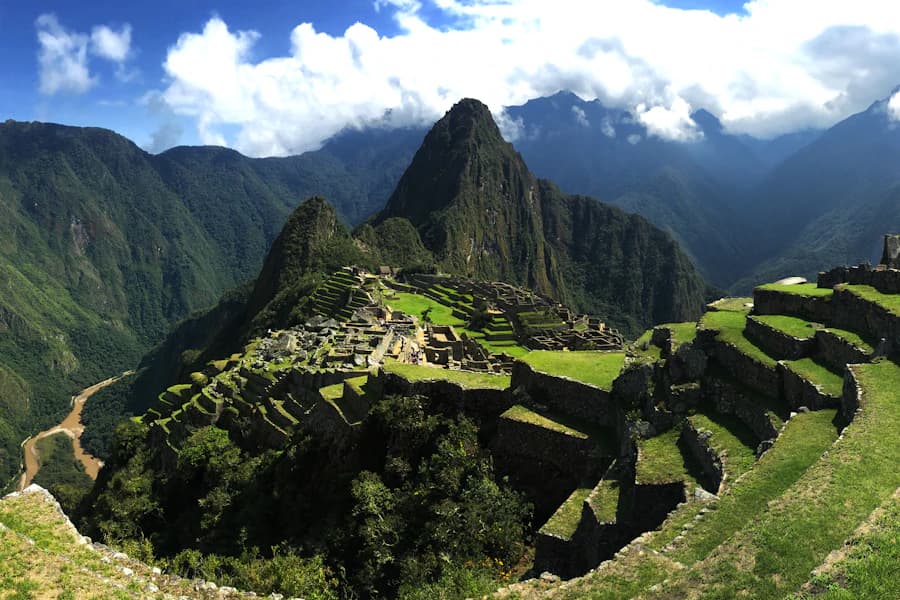
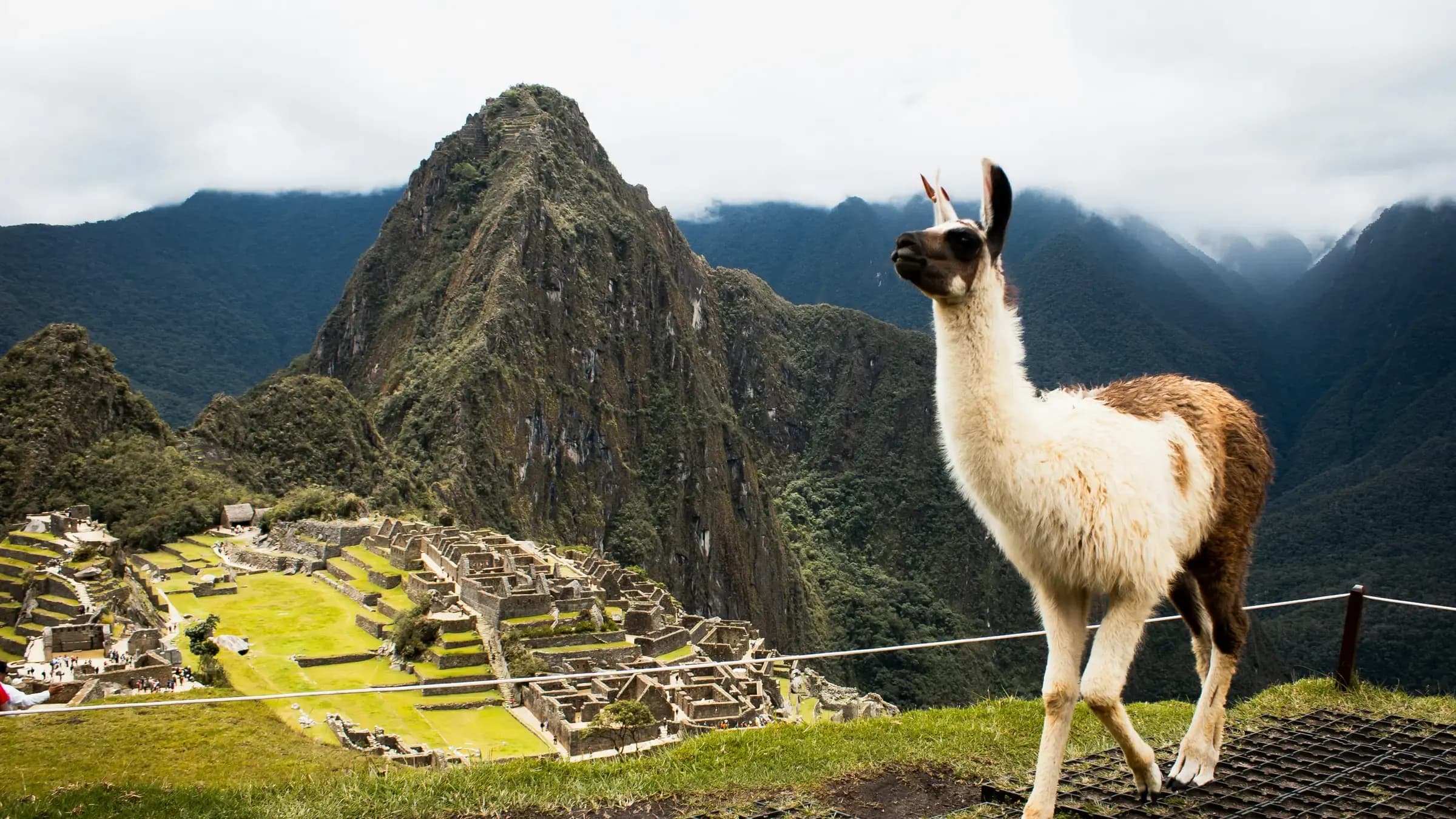
Both are in Circuit 3. Huayna Picchu is Route 3-A — the steep peak behind the citadel in every photograph, roughly a two-to-three-hour round trip on exposed stone steps with chains in places. Capacity is reported at 175 places at 07:00 and 175 at 10:00, 350 a day , and it is available year-round.
Huchuy Picchu is Route 3-D, the much smaller hill next to it — about 45 minutes up, far gentler, and a legitimate option if you want a summit without the exposure. It is high season only, with roughly 25 places a day . Twenty-five is not a typo, and it is why we rarely build an itinerary around it.
Machu Picchu Mountain, the third summit option, is Route 1-A in Circuit 1 — longer, higher, less vertiginous than Huayna Picchu, and much easier to get.
What are the daily caps, and when is high season?
In 2026 the site operated a base cap of 4,500 visitors a day, raised to 5,600 on designated high-season dates: January 1; April 2–5; June 19–November 2; and December 30–31. Entry runs from 06:00 to 17:30 with fixed time slots, a last entry at 15:00, and a roughly 30-minute tolerance on your stamped slot.
For 2027, the correct statement today is that capacity is pending official confirmation . Capacity has been revised upward more than once in recent years, and high-season date ranges shift. Anyone quoting you a firm 2027 cap right now is extrapolating.
When do 2027 permits actually go on sale?
Machu Picchu entry tickets for 2026 went on sale on November 17, 2025, through the official platform, tuboleto.cultura.pe. That followed a Ministry of Culture announcement in early November confirming the process. As of late 2026, no official 2027 release calendar had been published . A late-2026 release consistent with the previous year is the reasonable planning assumption, and it is an assumption, not a fact.
Inca Trail permits are a separate system on a separate calendar. Permits for the following year are normally released in the first week of October. That timing is the thing to actually diary. If you want the classic 4-day trek in June or July 2027, the decision needs to be made before that October window, not after it.
How many Inca Trail permits are there, and how fast do they go?
The classic 4-day Inca Trail is capped at 500 people per day, and that number includes porters, guides, and cooks. Because support staff account for roughly 300 of them, about 200 trekker places exist per day. The 2-day Short Inca Trail is capped at 250 people a day, also including staff.
Peak-season dates go within days of release, and popular departure dates within hours. Realistic guidance: book 6–12 months ahead for May–September, and treat the October release as a hard deadline rather than an opening bell you can respond to at leisure. From 2026, Inca Trail permits include both the trail entrance fee and access to Circuit 3-B at the citadel — worth knowing, because it means trekkers do not arrive on the classic 2-A route, and a second entry the following day is the only way to get it.
And the closure: the Inca Trail is shut for the entire month of February while trails, bridges, and campsites are repaired after the heaviest rains. Machu Picchu itself remains open, reached by train. Alternative treks such as the Salkantay and Lares routes are not government-permitted in the same way and stay open, which is why February trekkers get pushed toward them.
Vistadome or Hiram Bingham — which train is worth it?
| Service | Operator | One-way fare | What you get |
|---|---|---|---|
| Expedition | PeruRail | $51–$75 | Comfortable seats, windows, snacks for purchase. Perfectly fine. |
| Voyager | Inca Rail | $54–$63 | Inca Rail's equivalent entry service from Ollantaytambo. |
| Vistadome | PeruRail | $75–$122 | Panoramic roof panels, onboard snack service, textile show on the return. |
| 360° | Inca Rail | $77–$86 | Curved glass ceiling, open-air observation car, light meal. |
| Vistadome Observatory | PeruRail | $120–$180 | Larger windows, better seats, an elevated observation deck. |
| First Class | Inca Rail | $120–$180 | Three-course meal, premium bar, wider seats, observation car. |
| Hiram Bingham | Belmond | $460–$650 | 1920s Pullman carriages, brunch out, four-course dinner back, open bar, guided citadel visit, shuttle bus, tea at Sanctuary Lodge. Entrance ticket not included. |
Our view: the Vistadome or Inca Rail 360° is the right answer for most people. The glass roof genuinely changes the ride through the Urubamba gorge, and the money saved against the Hiram Bingham buys two nights in a better Sacred Valley hotel. The Hiram Bingham earns its price when it is the day — a slow, well-fed round trip rather than a transfer — most often on a honeymoon or an anniversary.
Two practical notes. The Ollantaytambo departure takes about 1 hour 40 minutes; Poroy near Cusco takes about 3 hours 20 minutes, and Poroy typically closes January through April for rainy-season track work . And train seats are their own limited inventory. A confirmed entry ticket with no train to match it is a common and entirely avoidable failure.
Who does the Inca Trail suit — and who should skip it?
The classic trek suits fit hikers who are comfortable with four days of camping, two genuinely hard passes — Dead Woman's Pass tops out near 13,800 feet — and shared campsites with a shared toilet. It is a superb trip and it is the only way to arrive at Machu Picchu on foot through the Sun Gate.
It is the wrong trip for a lot of people who book it anyway. If you have not slept in a tent since childhood, if you are traveling with anyone who has a knee that complains on stone descents, if you get four days off and want to see Cusco and the Sacred Valley too, or if this is a honeymoon and you would rather not spend it unwashed — skip it without guilt. The Short Inca Trail gives you the Sun Gate arrival in a single day. The Lares route trades ruins for weaving villages and hot springs and is far less crowded. And arriving by train, well-rested, at 6am on Route 2-A is not a lesser way to see Machu Picchu. It is just a different one.
How far ahead should you book?
| Travel window | Machu Picchu entry | Inca Trail | Trains and hotels |
|---|---|---|---|
| June–August 2027 | Buy the day inventory opens; 10–12 months out | Book before the October 2026 release closes; 10–12 months | 6–9 months |
| May, September, October | 4–6 months | 6–8 months | 4–6 months |
| April (shoulder) | 3–5 months | 5–7 months | 3–5 months |
| November–January | 2–4 months | 4–6 months | 2–3 months |
| February | 2–4 weeks | Closed | 2–4 weeks |
One sequencing rule that saves people repeatedly: fix the Machu Picchu entry first, then build the itinerary around it. Hotels are flexible, trains are semi-flexible, and the citadel is not. If you plan the trip and then shop for a ticket, you will end up on Route 1-B at 2pm in the rain wondering why.
Let our Peru specialist secure your permits
Allison Tucker plans Peru at Juniper Tours, with 25 years in the business and dual US/UK citizenship. Permit work is unglamorous and it is where a specialist earns their keep: watching for the release, holding the right route at the right hour, matching the train to the entry slot, and rebuilding the day when the Ministry of Culture changes the rules mid-year, which it does. Every Juniper trip is fully private and built from scratch — no group coaches, no fixed departures.
Absolutely phenomenal experience! From beginning to end, every part of the process was seamless. — Nathaniel C., verified Google review
See how a first Peru trip fits together on our Peru destination page, or the Grand Tour of Peru for the 25-day version with the Amazon and Lake Titicaca. Couples planning around a Machu Picchu morning should read Peru honeymoons, and everyone should read Cusco Altitude: An Honest Guide to Your First 48 Hours before deciding which day to spend climbing Huayna Picchu. When your dates are close to firm, book a free consultation and we'll start with the permit calendar.