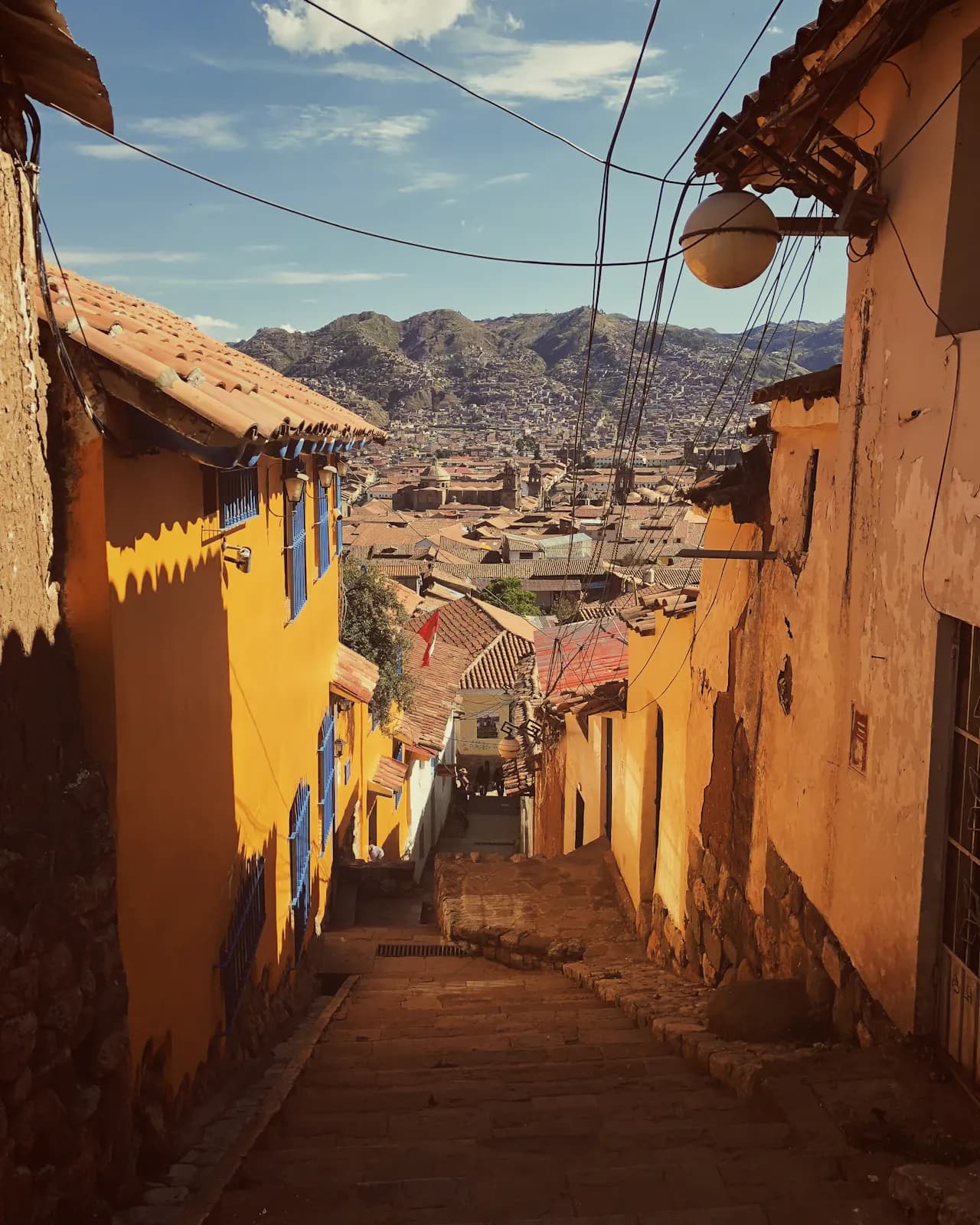
For the Andes and Machu Picchu, the best time to visit Peru is the dry season — roughly May through September — with April, October and early November as the quieter, cheaper shoulder. But Peru is not one climate, and the honest answer depends on which Peru you are going for: the Andes, the Amazon and the coast peak at different times, and one of them runs directly opposite to the others.
What is the Andean dry season actually like?
Clear skies, strong sun, and genuinely cold nights. May through September is the classic window for Cusco, the Sacred Valley, Machu Picchu and Lake Titicaca, and it is the season the whole region is set up for.
The thing to plan for is not rain but temperature swing. At 11,000 feet the difference between direct sun at midday and open air after dark is dramatic, and it catches people out on the altiplano in particular. This is a layers destination, not a warm one.
What about the rainy season?
November through March is the wet season in the highlands, peaking in January and February. It rains most days, usually in the afternoon rather than all day, and the landscape is green in a way the dry season never is.
It is not a write-off. Machu Picchu in the wet season is quieter, greener and frequently dramatic, with cloud moving through the site. The trade is that views are less reliable, trails are muddier, and the Inca Trail is unavailable for part of it.
When does the Inca Trail close?
The entire Inca Trail network closes from 1 to 28 February every year for maintenance and conservation, reopening on 1 March. The closure covers the trail and the archaeological sites along it, so that drainage, walls, bridges and campsites can be repaired after the wettest months.
Machu Picchu itself stays open all February. This is the most misunderstood point in Peru planning: February closes the trail, not the citadel. If February is your only window, you travel — you simply arrive by train rather than on foot.
When is the Amazon best?
The Peruvian Amazon is warm and humid year-round, so the question is water level rather than temperature.
The drier months, roughly May to October, mean lower water, more exposed trails and easier walking, with wildlife concentrated around the remaining water — generally the better window for seeing things on foot. The wetter months bring high water, which opens up creeks and flooded forest to boat travel and gets you into places you cannot otherwise reach.
Neither is wrong. Conveniently, the drier Amazon window overlaps the Andean dry season, so a combined trip does not force a compromise.
What about Lima and the coast?
Here is the inversion that surprises people, and it is worth knowing before you build a route. Lima runs opposite to the Andes.
From roughly May to November the coast sits under garúa — a persistent low grey fog that can hang over the city for weeks. That is precisely the Andean dry season. Conversely, December through April is Lima’s bright, warm, genuinely coastal season, which is exactly when the highlands are wet.
The practical consequence: on a dry-season trip, treat Lima as a food-and-culture city rather than a beach one and give it a couple of days at either end. If a sunny coast matters to you, you are looking at a different trip built around a different season.
When is Machu Picchu busiest?
June through August, comfortably. That is peak dry season, peak northern-hemisphere holidays and peak demand for the early entry slots.
Because admission is legally capped — the standard limit is 2,244 visitors per day, lifted in defined peak windows — a busy month does not mean a more crowded site so much as a harder-to-get ticket. The scarcity shows up in which time slot and circuit you can book, not in the number of people beside you.
Which months are the best value?
April, October and early November. They sit either side of the dry season, are still largely dry in the highlands, cost noticeably less, and put fewer people between you and the stonework.
If your dates are flexible, these are the months we would steer you toward. The weather is a small step down from June; the experience is often a step up.
Month by month
| Month | Andes & Machu Picchu | Worth knowing |
|---|---|---|
| January | Wet, green, quiet | Peak highland rain; Lima is warm and bright |
| February | Wettest month | Inca Trail closed all month; citadel open |
| March | Wet, easing late | Trail reopens 1 March; green and uncrowded |
| April | Drying out, green | Excellent value shoulder — a strong pick |
| May | Dry season begins | Clear skies, landscape still green |
| June | Dry, cold nights | Peak begins; Inti Raymi in Cusco |
| July | Dry, busiest | Book entry slots months ahead |
| August | Dry, busy | Peak pricing; excellent Amazon walking |
| September | Dry, easing | Peak conditions without peak crowds |
| October | Shoulder, occasional rain | Quiet and good value |
| November | Rain returning | Early November still rewarding |
| December | Wet, festive | Lima warms up; highlands green |
So when should you actually go?
If you want the highest chance of clear skies over the citadel and you can book early: May, June or September. If you want most of that weather with fewer people and a lower price: April or October. If your dates are fixed in the wet season, go anyway — but arrive by train, expect afternoon cloud, and take the greenness as the compensation it is.
The one date to plan around deliberately is February, and only if the trek matters to you.
Planning yours
Season shapes a Peru trip more than most destinations, because it interacts with altitude, entry caps and the trail calendar all at once. See custom Peru trips for how we sequence around it, or the Grand Tour of Peru for a fully built route.
For the decisions either side of this one, our guides to visiting Machu Picchu, what a Peru trip costs and Peru honeymoons cover the rest.
Peru is designed by Allison Tucker and Cherisse Liptzin — book a call.