You reach Machu Picchu by rail to Machupicchu Pueblo and a short bus up the switchbacks, on a timed ticket that names one of three circuits — and almost everything that goes wrong on a Machu Picchu visit is a booking problem rather than a travel problem. Entry is legally capped, tickets are circuit-specific, and re-entry is not permitted. Here is how it actually works in 2026 and 2027.
How do you actually get there?
There is no road to Machu Picchu. Every visitor arrives one of two ways: by train, or on foot.
The rail route runs through the Urubamba gorge to Machupicchu Pueblo, the town below the site, from stations in the Sacred Valley or from Cusco. Trains run in service tiers, and the premium services are a genuinely different journey rather than a wider seat — panoramic glass, a proper meal, and observation cars. From the town, a bus climbs the switchbacks to the entrance in around 25 to 30 minutes.
On foot means the Inca Trail or one of its alternatives, which is a separate decision covered below.
Where do you buy tickets — and where should you not?
The only official place to buy entry tickets is the Peruvian Ministry of Culture’s own platform, machupicchu.gob.pe. You choose the date, time, route and quantity, and pay on the same platform; a reservation is held for five hours while you complete payment.
A great deal of what is sold elsewhere online is a marked-up resale of exactly the same government ticket. That is not always a scam — a legitimate operator bundling entry with rail, transfers and a guide is doing real work — but paying a premium for the ticket alone gets you nothing extra.
There is also an in-person channel: 1,000 tickets are sold each day at the Ministry’s ticket office in Machupicchu Pueblo, from 3:00pm to 10:00pm, for the following day, on presentation of ID or passport. It is a genuine fallback, not a plan — it requires already being in the town with no guarantee of the circuit or time you want.
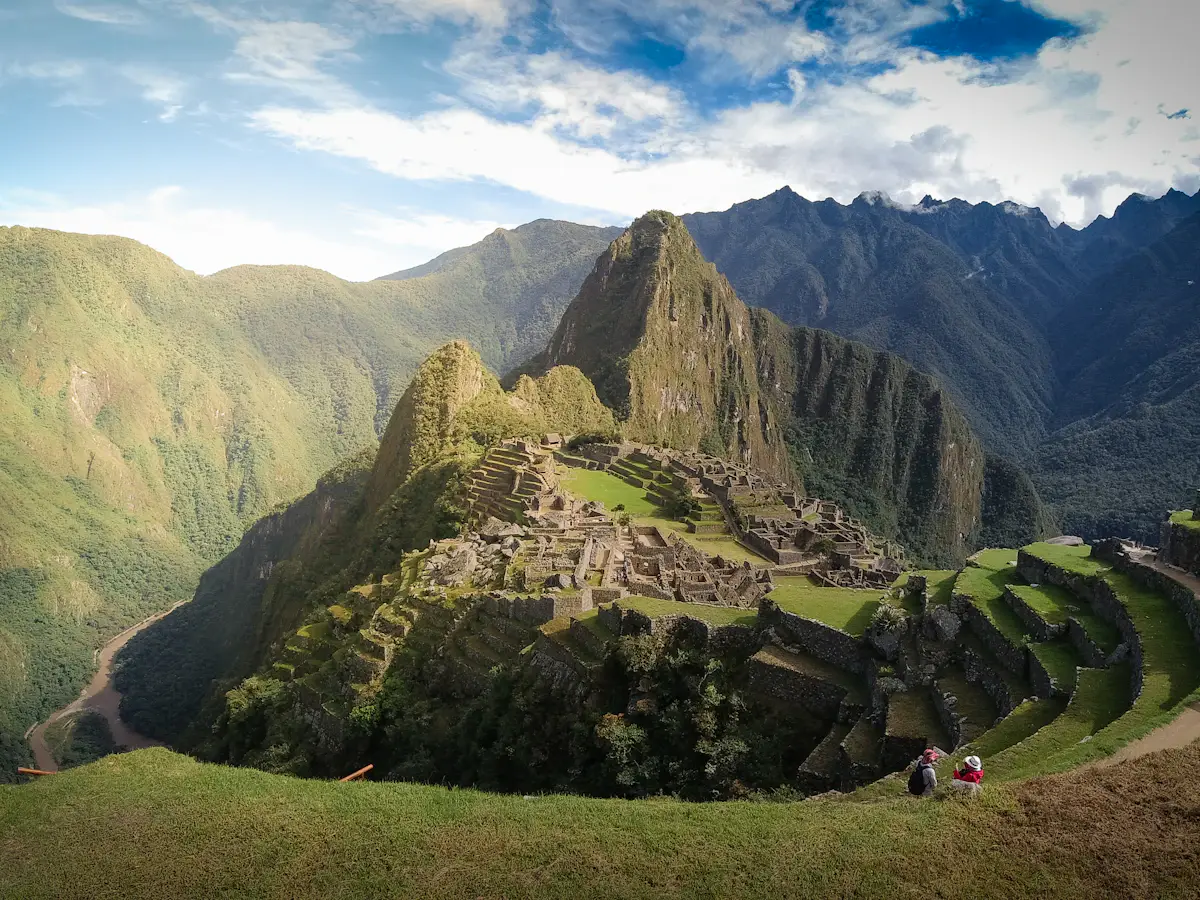
What are the circuits, and which should you choose?
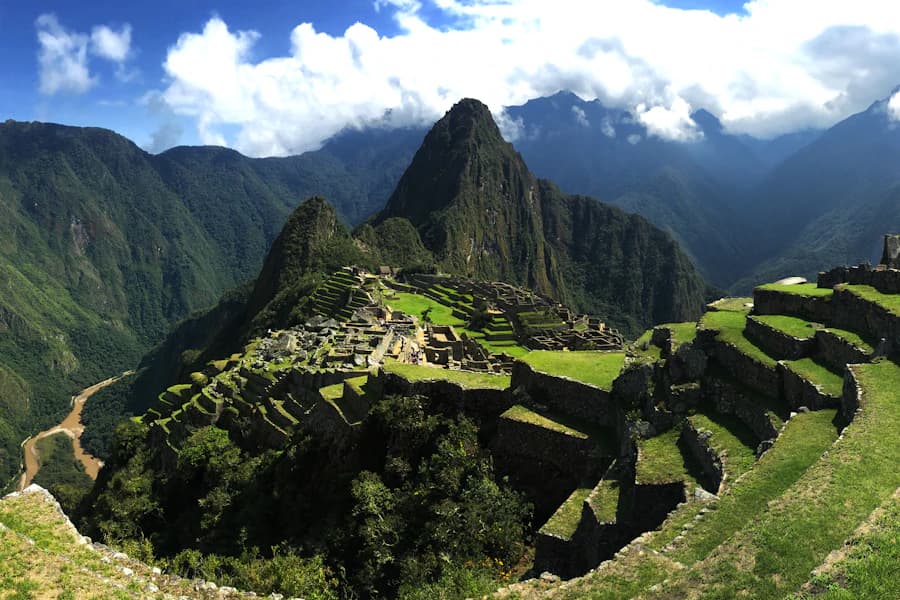
This is the part most older guides get wrong. Since June 2024 the site has run on three circuits grouping ten routes, and your ticket admits you to one specific route. You cannot buy a general ticket and wander; the flow through the site is one-way by design.
Circuit 1 — Panorámico. The upper terraces and the classic elevated view. This is the postcard photograph, and the routes within it include the Machu Picchu Mountain climb.
Circuit 2 — Machupicchu Clásico. The most complete visit, descending into the urban sector among the buildings themselves. If you are coming once and want to see the citadel properly rather than photograph it, this is usually the answer.
Circuit 3 — Realeza. The lower route through the royal sector, and the circuit paired with the Huayna Picchu climb on some routes.
The practical advice: if it is your only visit, take a Circuit 2 route. Circuit 1 gives you the view; Circuit 2 gives you the place. Couples and first-time visitors who choose on photograph alone often come away having seen the site from above and never walked through it.
Can you re-enter, or change your ticket?
Re-entry is not permitted, with a single exception: the Machu Picchu Mountain and Circuit 3 combination. Plan on one entry, in one direction, on one route.
Tickets are also personal — they carry your name and passport number, and they are checked. Dates and details can be modified through the official platform, but the process has conditions, so treat your entry slot as fixed once booked.
How far ahead should you book?
Earlier than feels necessary, because the limit is legal rather than commercial. The Ministry of Culture caps admission at 2,244 visitors per day as the standard limit, lifted in defined peak windows. Within that cap, entry is by timed slot on a named route, so the early-morning slots in the dry season are the scarcest thing on the mountain.
For dry-season travel — May through September — several months ahead is normal, and the first entry times go first. If you want a specific circuit at a specific hour, that is the piece to lock before hotels.
Do you have to hike the Inca Trail?
No, and most visitors do not. The classic Inca Trail is a four-day camping trek at altitude, starting from the control post at Km 82, Piscacucho. It is a serious and wonderful thing to do, and it is not a prerequisite for seeing the citadel.
Permits are capped daily, issued only through authorised operators, and routinely sell out months ahead. If the trek matters to you, it drives the entire trip calendar and should be booked before anything else.
The alternatives are worth knowing. The Salkantay and Lares routes have more availability and different scenery. And a one-day hike from Km 104 arrives at the citadel through the Sun Gate on foot — the arrival people actually picture — with no camping involved.
When does the Inca Trail close?
Every year, without exception: the entire Inca Trail network closes from 1 to 28 February for maintenance and conservation, reopening on 1 March. The closure covers the trail network and the archaeological sites along it, and it exists so that drainage, walls, bridges, handrails and campsites can be repaired after the wettest months.
Machu Picchu itself stays open throughout February. This is the single most misunderstood fact about visiting Peru: February closes the trail, not the citadel. If February is the only month you can travel, the trip is entirely possible — you simply arrive by train.
Where should you sleep the night before?
Three options, in ascending order of how good your morning will be.
From Cusco is the hardest: a very early train, a long day, and an arrival at the busiest hours. From the Sacred Valley is materially better — shorter rail time, lower altitude, more sleep. Staying in Machupicchu Pueblo itself is the best of the three, because it puts you at the foot of the mountain for the first buses, before the day-trippers arrive.
The difference between these is not comfort. It is whether you see the site at eight in the morning or at eleven.
Do you need a guide?
Not legally required for every route, but strongly advisable. Machu Picchu is architecture without signage, and the stonework carries almost all of the information. The difference between a licensed guide who can read it and no guide at all is the difference between a beautiful ruin and a comprehensible city.
How long do you need at the site?
A Circuit 2 route takes two to three hours at an unhurried pace. Adding Huayna Picchu or Machu Picchu Mountain turns it into most of a day, and both are steep.
The mistake is treating the citadel as a day trip from Cusco. It is a full day of logistics in each direction, and compressing it into one day is how people end up remembering the queue rather than the place.
Is it difficult at altitude?
Less than people fear. Machu Picchu sits at 7,972 feet — considerably lower than Cusco at 11,152 feet, and lower than the Sacred Valley. If you have acclimatised properly in the valley first, the citadel is the easy part of the trip. It is steep and uneven underfoot, but the air is not the problem.
Planning yours
Machu Picchu rewards planning more than almost any site in the world, because the constraints are real and they are set months before you arrive. See custom Peru trips for how we build around them, or the Grand Tour of Peru for a fully expanded route.
For the decisions either side of this one, our guides to when to travel to Peru, what a Peru trip costs and Peru honeymoons cover the rest.
Peru is designed by Allison Tucker and Cherisse Liptzin — book a call.