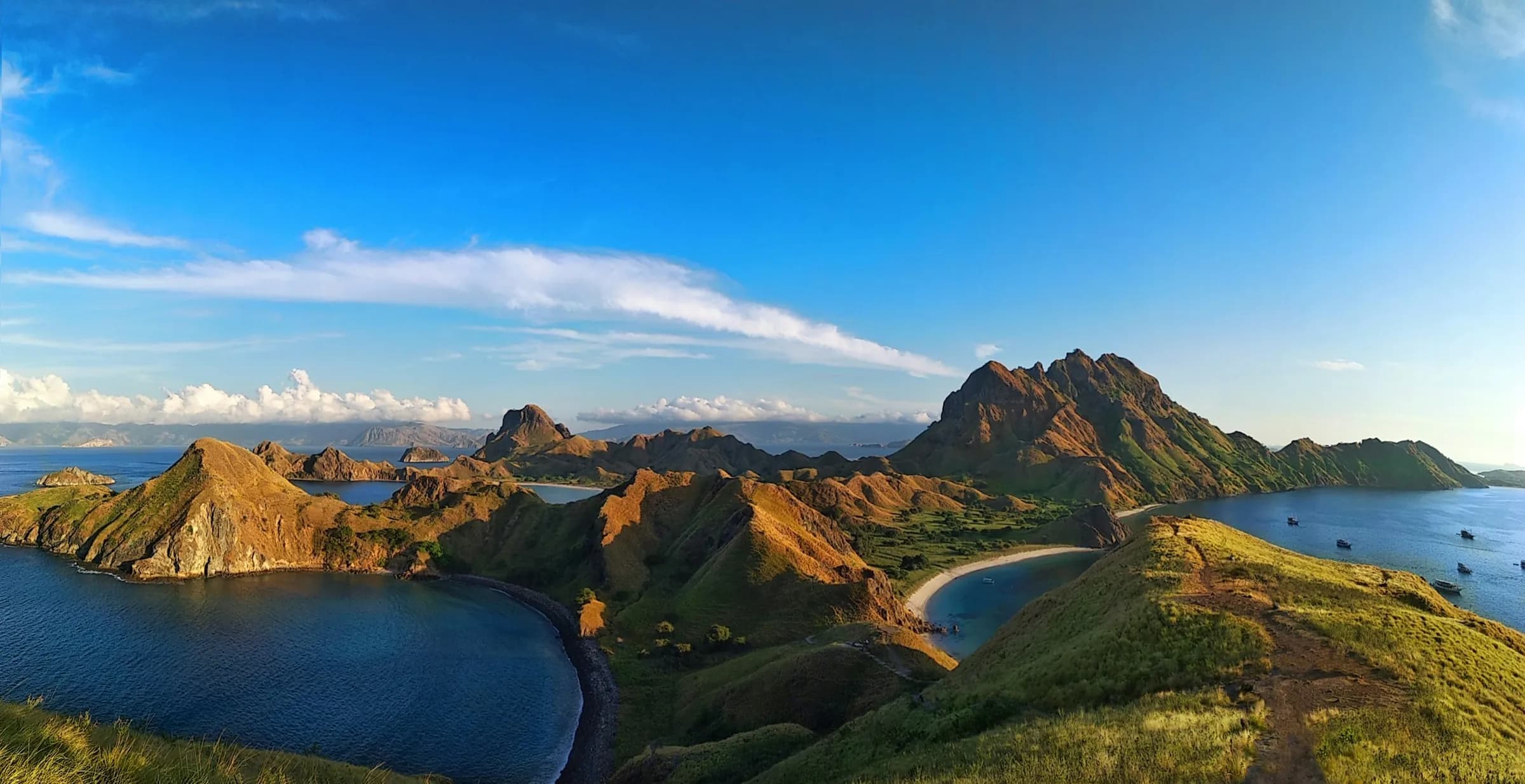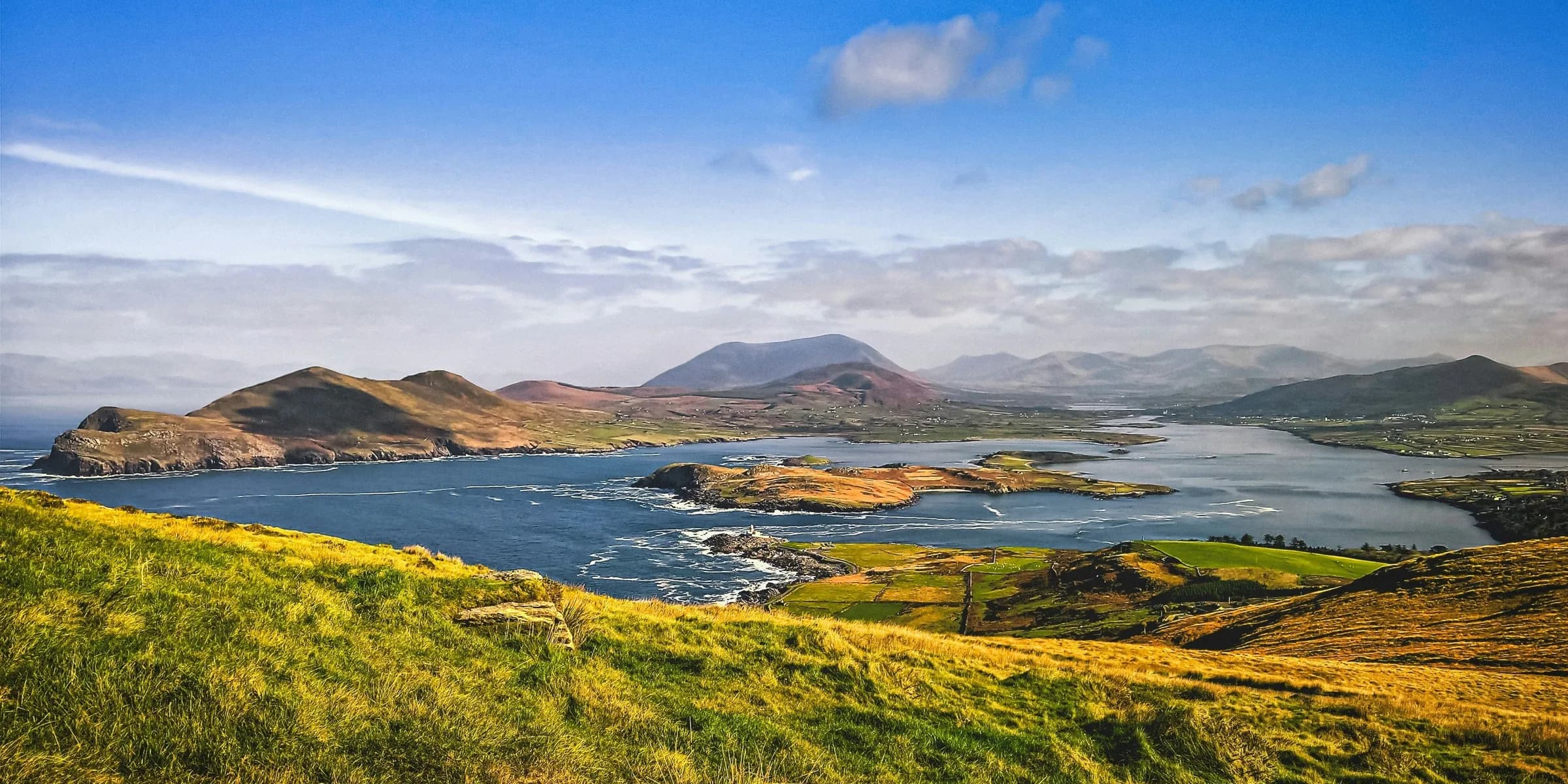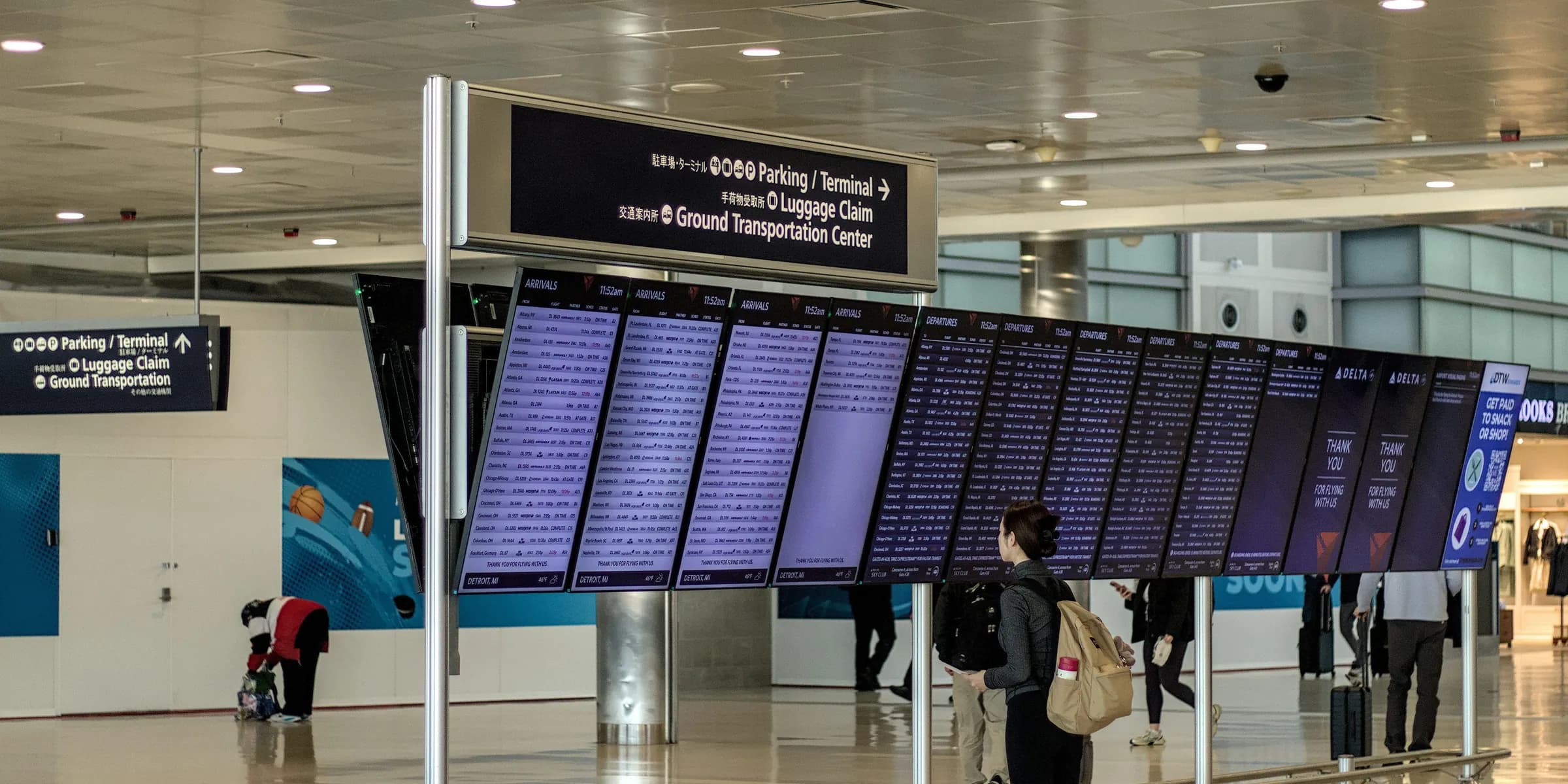
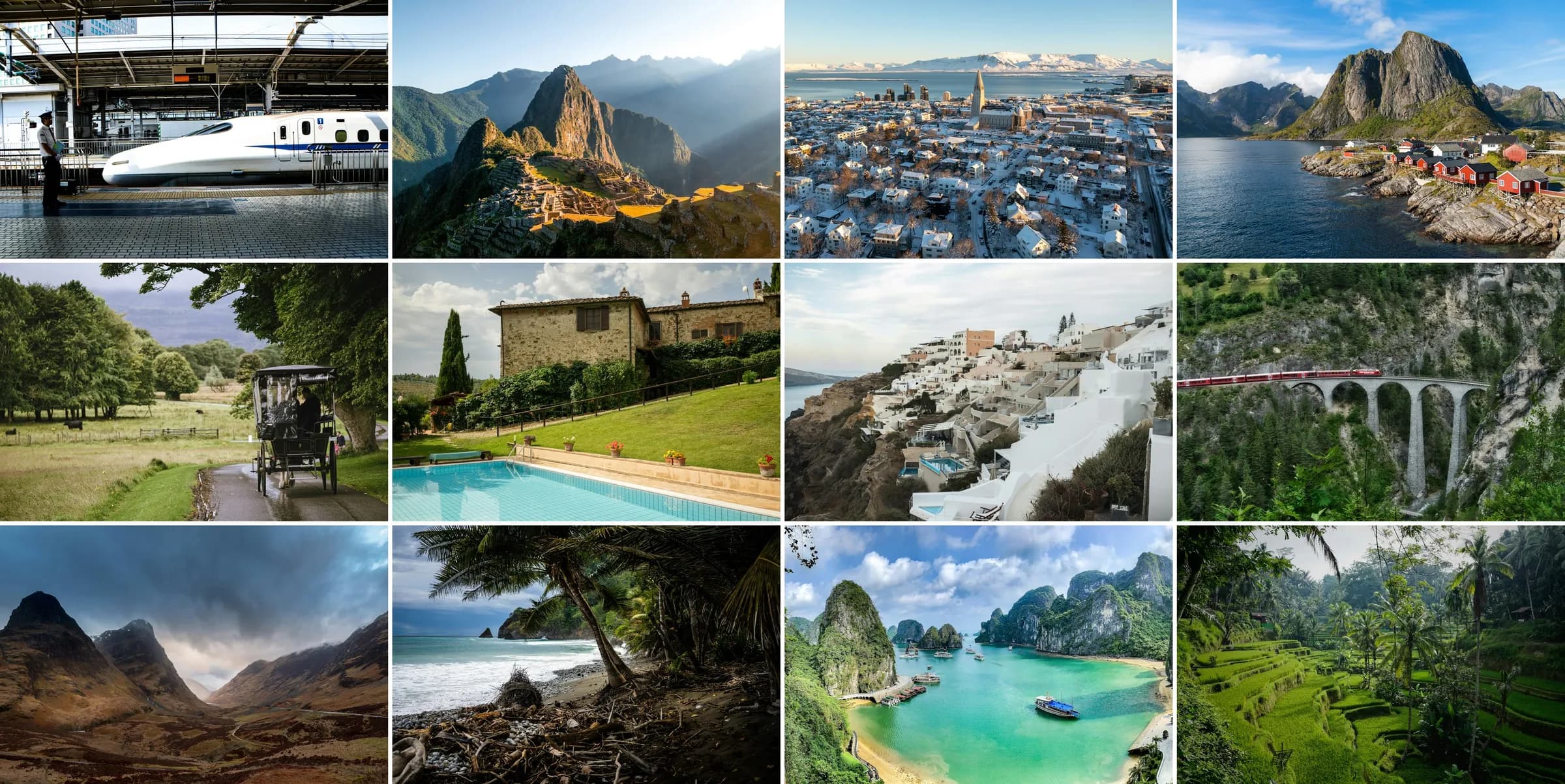
For most of 2027, book between now and March. Japan in cherry blossom or November foliage is a 10-to-14-month booking. Machu Picchu and the Inca Trail — capped at 500 people a day including porters — need 10 to 12 months, and Inca Trail permits release in early October. Iceland, Norway, Greek island and Amalfi peak weeks want 10 to 12 months. A November city trip to Athens or Lisbon is fine at three.
Key takeaways
- Japan sets the earliest clock of anywhere we sell: 10 to 14 months. Cherry blossom in late March and April, and the last two weeks of November in Kyoto, are the two windows where a 12-month booking is the target rather than the maximum.
- Peru runs on someone else's calendar. Inca Trail permits for the following year are normally released in the first week of October and peak dates go within days. The trail is capped at 500 people daily including porters and guides — roughly 200 actual trekkers.
- Wave season is January through March, the annual stretch when the travel industry takes the largest share of its bookings. If you start shopping in January for the following September, you are already behind the people who booked last September.
- The binding constraint is almost never flights. It's room counts: Ballyfin has 20 rooms, Sanctuary Lodge at Machu Picchu has 31, and the fjord hotels in Norway run between eight and forty.
- Booking early buys inventory, not always price. Korean KTX fares are fixed and open about 30 days out; Jeju flights are cheapest three to six weeks ahead; Vietnamese domestic flights want two to three weeks. Early booking there buys you nothing.
- Two 2027 events will eat regional inventory whole. The Ryder Cup at Adare Manor will consume Limerick and the southwest, and Phu Quoc hosts APEC. If your dates touch either, add months.
- Three to five months is genuinely enough for Athens and the Peloponnese out of summer, Italy's cities in winter, Scotland from October to March, and Bali or Vietnam in their shoulder months.
When should you book a trip for 2027?
The honest general answer is nine to twelve months before departure for a peak-season trip to a destination with small, good hotels, and three to six months for a shoulder-season trip to a destination with deep hotel inventory. Almost everything else is detail on top of those two numbers.
What makes the answer feel harder than it is: people assume the pressure comes from airfare. It doesn't. Airfare to Europe and Asia is generally available until close to departure, at a price. What runs out is the eleven-room lodge in Monteverde, the sea-facing category at the Amalfi property, the two connecting rooms in the Irish country house, the morning slot on Machu Picchu's Route 2-A, and the Glacier Express Excellence Class seat. Those are finite in a way a wide-body aircraft is not.
So the useful question isn't "when should I book." It's "what is the scarcest single thing in this trip, and when does that go." Answer that and the rest of the calendar assembles itself behind it.
What is wave season, and why does it matter to you?
Wave season is the industry's name for January through March — the stretch after the holidays when the largest share of the year's leisure travel gets booked. The term started in cruise and spread. Operators time their promotions to it, advisors staff up for it, and suppliers expect it.
Here is the part that catches people. Wave season is when most travelers book. It is not when the best inventory goes. The couple who booked the Oia caldera suite for September 2027 did it in autumn 2026, often directly with the property they stayed at last time, before general availability opened. By the time the January rush arrives, a meaningful share of the small-property inventory in Iceland, Norway, the Cyclades and the Amalfi Coast has already moved.
Which means wave season is a floor, not a plan. Booking in February for August is not early. It is average. If you want the specific room rather than a room, you want to be ahead of the wave, not in it.
What is the booking calendar for each destination?
Thirteen destinations, the window that's actually contested in each, and the one thing that binds. Lead times are counted back from departure.
| Destination | The contested window | Lead time | What actually runs out |
|---|---|---|---|
| Japan | Late March–April blossom; November foliage | 10–14 months | Ryokan with private onsen, Kyoto machiya, family-sized rooms. Kyoto's last two weeks of November is a 12-month booking. The Ghibli Museum runs a fixed monthly ticket cycle you cannot accelerate. |
| Peru | June–August | 10–12 months | Machu Picchu entry is sold by specific route and hour, not by day. Inca Trail permits release in the first week of October for the following year and peak dates go within days. Sanctuary Lodge has 31 rooms. |
| Ireland | June–August; anything with golf | 10–12 months; 12–18 for golf | Tee times at Royal County Down, Royal Portrush, Ballybunion and Lahinch go before hotels do. Castle inventory is finite — Ballyfin is 20 rooms. Automatic rental cars sell out before manuals. The 2027 Ryder Cup at Adare Manor will absorb the southwest. |
| Italy | May, June, September on Amalfi, Capri, Como | 10–12 months | Sea-facing room categories at 30-to-60-room properties, sold to returning guests. Tuscan and Umbrian estates run 12 to 20 rooms. Vatican and Uffizi slots with a licensed guide should be reserved the day your dates are fixed. |
| Iceland | June–August; February–March aurora | 10–12 months | Rural hotels, which are small and few. The Retreat at Blue Lagoon prices and sells by suite category rather than as a hotel. Ice-cave and glacier guides run small licensed teams and fill months ahead. |
| Norway | February–March aurora; June–August fjords | 10–12 months | Hotel Union Øye, Juvet Landscape Hotel, Lyngen Lodge and the Lofoten rorbu lodges have between eight and forty rooms each. Private aurora guides with their own vehicles book out before the hotels. |
| Greece | June–September islands; late Sept–Oct | 10–12 months; 8–10 for October | Caldera-view inventory is a few hundred rooms across Oia and Imerovigli. The Acropolis is capped at 20,000 visitors a day on hour-long timed slots, and summer slots go five to seven days out. The fortnight around August 15 is the tightest in the Greek year. |
| Scotland | May and September; August in Edinburgh | 9–12 months; 12 for August | Eight-room Highland lodges, the castle hotels, and Skye, which has very limited quality inventory and sells first. Edinburgh in festival month is booked a year out and pushes rates across the central belt. |
| Switzerland | July–September; Christmas–New Year | 9–12 months | Wengen, Mürren, Zermatt and Engadine hotels are small, family-run, and rebooked by returning guests before they advertise. Glacier Express Excellence Class goes early; scenic-train reservations open on their own clock, roughly 90 days out. |
| Costa Rica | December–March; Christmas and Easter hardest | 9–12 months | Lodges in Monteverde and on the Osa Peninsula have eight to thirty rooms. Naturalist guides book out earlier than hotels. Manuel Antonio and the Monteverde reserve are both capped daily. |
| Vietnam | October–April in the north | 8–11 months | Roughly twenty bay cruise cabins worth having on a given night, plus the pool villas at The Nam Hai. Tet falls on February 6, 2027 — plan around it, not through it. Phu Quoc hosts APEC in 2027. |
| South Korea | April blossom; late Oct–mid Nov foliage | 8–11 months | Korea has a fraction of Japan's luxury room stock, Gyeongju has a handful of properties worth the name, and the best English-speaking guides go before the hotels. |
| Bali | Dry season April–October; July, August, Christmas tightest | 8–12 months | Private-pool villas are single properties, not room blocks. When one is taken, it is taken. There is no second key. |
Why are the good properties gone before you start looking?
Three structural reasons, none of them conspiracy.
First, the properties are small. This is the thing most people underestimate. A hotel you have seen a hundred photographs of may have twelve rooms. Ballyfin has twenty. When a travel publication runs a list of the world's best hotels, the total inventory across the whole list is smaller than a single airport Marriott. Demand for those rooms is global and the supply cannot be expanded, because the building is the product.
Second, repeat guests get first refusal. Family-run alpine hotels, Irish country houses and Greek island properties routinely rebook their best weeks at checkout for the following year. That inventory never reaches general availability. It is not unfair — it is how a twenty-room hotel stays solvent — but it means the public booking calendar starts already partly consumed.
Third, the scarcest item is often not a room at all. It's a person or a permit: the licensed guide who can actually get you through the Vatican before the crowds, the naturalist in Corcovado who knows where the tapir goes, the Amalfi driver who speaks good English, the Machu Picchu route at the hour when the light is right. These are individuals with finite mornings. There is no overflow inventory behind them.
Does booking early actually save you money?
Sometimes, and it is worth being precise, because "book early to save" is repeated far more often than it is true.
Where early booking saves money: Norway and Iceland, where properties publish rates well ahead and rarely discount into peak. Costa Rica at Christmas and Easter, where the last rooms price highest. Greek island hotels, where the shoulder weeks are cheapest when released and climb.
Where early booking saves you nothing: Korean KTX fares are fixed and reservations open about 30 days ahead — booking early secures a seat, not a discount. Jeju flights are cheapest three to six weeks out, and last-minute fares can run two to three times higher. Vietnamese domestic flights want two to three weeks' notice for fare reasons. Greek high-speed ferry schedules for the following summer often aren't published until winter, so those get booked later by necessity.
And international airfare is its own animal. Booking a transatlantic seat fourteen months out is not usually where the value is; the fare buckets that matter often aren't loaded yet. We generally secure land arrangements first and time the flights separately, which is also why our itineraries quote land-only.
In what order should you book?
Sequence matters more than raw lead time, and most expensive mistakes are ordering mistakes rather than timing ones.
- The single scarcest item. The Machu Picchu entry slot. The villa that sleeps ten. The tee time. The Ashford or Adare week. This is the fixed point.
- Accommodation for the whole route, working outward from that fixed point, and starting with the smallest properties. Book Höfn before you book Reykjavik; Skye before Edinburgh; the Osa before San José.
- International flights. After the rooms, not before. Group airfare is flexible; rooms for nine people are not.
- Private guides and drivers. Alongside the hotels in peak season, and before them if a specific guide matters.
- Domestic flights, trains and timed entries, each on its own clock — scenic-train reservations around 90 days, KTX at 30, Jeju and Vietnamese domestics at three to six weeks.
The most common reversal we see is flights first. Someone finds a fare, books it, and then discovers that the week they've committed to has nothing left worth staying in. Changing a flight costs a few hundred dollars. Changing the trip costs the trip.
What if you're reading this late?
Late is a real position and it is not hopeless — it just changes what the trip is. At four months out for a peak-season European itinerary, you are building around what's left rather than around what's good, and the honest move is usually to shift one variable rather than accept a worse version of the same trip.
The three variables, in order of how much they buy you: move the dates by two or three weeks, which in September and May often opens everything; move the region — the Peloponnese instead of Santorini, Tohoku instead of Kyoto, the Cairngorms instead of Skye; or move the property tier and spend the difference on guides and access instead of thread count. In our experience the first of those three does the most work and costs the least.
Who this suits — and who it doesn't
This calendar is for people planning a multi-region trip to a destination they haven't been to, in a month other people also want, staying somewhere with fewer than fifty rooms. If that describes you, the lead times above are not conservative.
If it doesn't, ignore most of this. A long weekend in Dublin books fine at six weeks. A repeat trip to a city you know, staying at the hotel you liked last time, does not need a year. A November week in Athens, a February week in Lisbon, a shoulder-season city break almost anywhere in Europe — three months is plenty and twelve is a waste of your attention. Booking early is not a virtue in itself. It's a response to scarcity, and where there's no scarcity there's nothing to respond to.
One more group this doesn't suit: people whose dates genuinely can't be fixed a year out. If your work makes a twelve-month commitment impossible, the right strategy isn't to book early anyway — it's to pick destinations and months with depth of inventory, and there are plenty. Portugal, mainland Greece, Italy's cities in winter, Costa Rica's green season, Vietnam in the shoulder. All excellent. All bookable at four months.
How far ahead should you book?
If you take one number from this page: for peak-season 2027 travel to Japan, Peru, Iceland, Norway, Ireland, Italy, Greece or Switzerland, be in conversation with someone by early 2027 at the latest, and ideally before the end of 2026. Nine to twelve months, twelve to fourteen for Japan's two windows and for anything built around a single property or permit.
For shoulder-season travel, three to six months. For a single city, six weeks. And whatever the destination, the day your dates firm up is the day to secure the scarcest item, because that decision has a deadline set by other people.
Let the Juniper team build your 2027 calendar
Juniper Tours was founded in 2020 and runs on a specialist model: each destination is planned by a person who knows it rather than by whoever picks up the phone. Taryn Harrison, our most tenured specialist, has 25 years in the business, more than 85 personal visits to Ireland, and covers Scotland and the Highlands too. Lexi Blade plans Italy, Switzerland, Portugal, Spain and Germany from Florence, and Kaycee Shields plans Italy, France and Greece. Cherisse Liptzin handles Japan, South Korea, Southeast Asia, Hawaii, Spain and England, and Liz Downey covers Japan, Peru and Alaska. Derek Krantz plans Costa Rica and Peru as well as Ireland, Scotland, Iceland, France, Greece, Croatia and Switzerland. Between them the team covers 23 destinations, and every Juniper trip is fully private and built from scratch — no group coaches, no fixed departures. The exception is a small number of hosted small-group departures, including Japan in cherry blossom season (April 5–16, 2027) and Bali & Komodo (June 20–29, 2027).
The practical value on a booking calendar is unglamorous and it's real: knowing which October the Inca Trail permits drop, which Kyoto ryokan releases inventory when, and which Amalfi property has already quietly sold its June to people who stayed last June. Our process starts with a free consultation of about 30 minutes, and a $100 planning deposit is credited toward your trip when you proceed.
Taryn blew them all out of the water. Two countries, ten counties in fifteen days. — Chelsea M., verified Google review
Start with the destination pages for Japan, Peru, Ireland and Iceland, or read how the process actually runs on How It Works. If your 2027 trip is a honeymoon, the calendar tightens further — see honeymoon and couples travel, Italy honeymoons or Peru honeymoons. For the permit detail behind the Peru row, read Machu Picchu Permits 2027, and for the things with hard capacity limits, What Sells Out and How Early. When your dates are close to firm, book a free consultation and we'll work backward from the scarcest thing in your trip.