Peru works as a honeymoon when you build it around recovery as well as wonder — which mostly means sleeping lower than Cusco for the first nights, giving Machu Picchu a proper morning rather than a rushed one, and ending somewhere warm and horizontal. Done that way it is one of the most memorable honeymoons there is. Done as a checklist, it is exhausting.
Is Peru actually a good honeymoon destination?
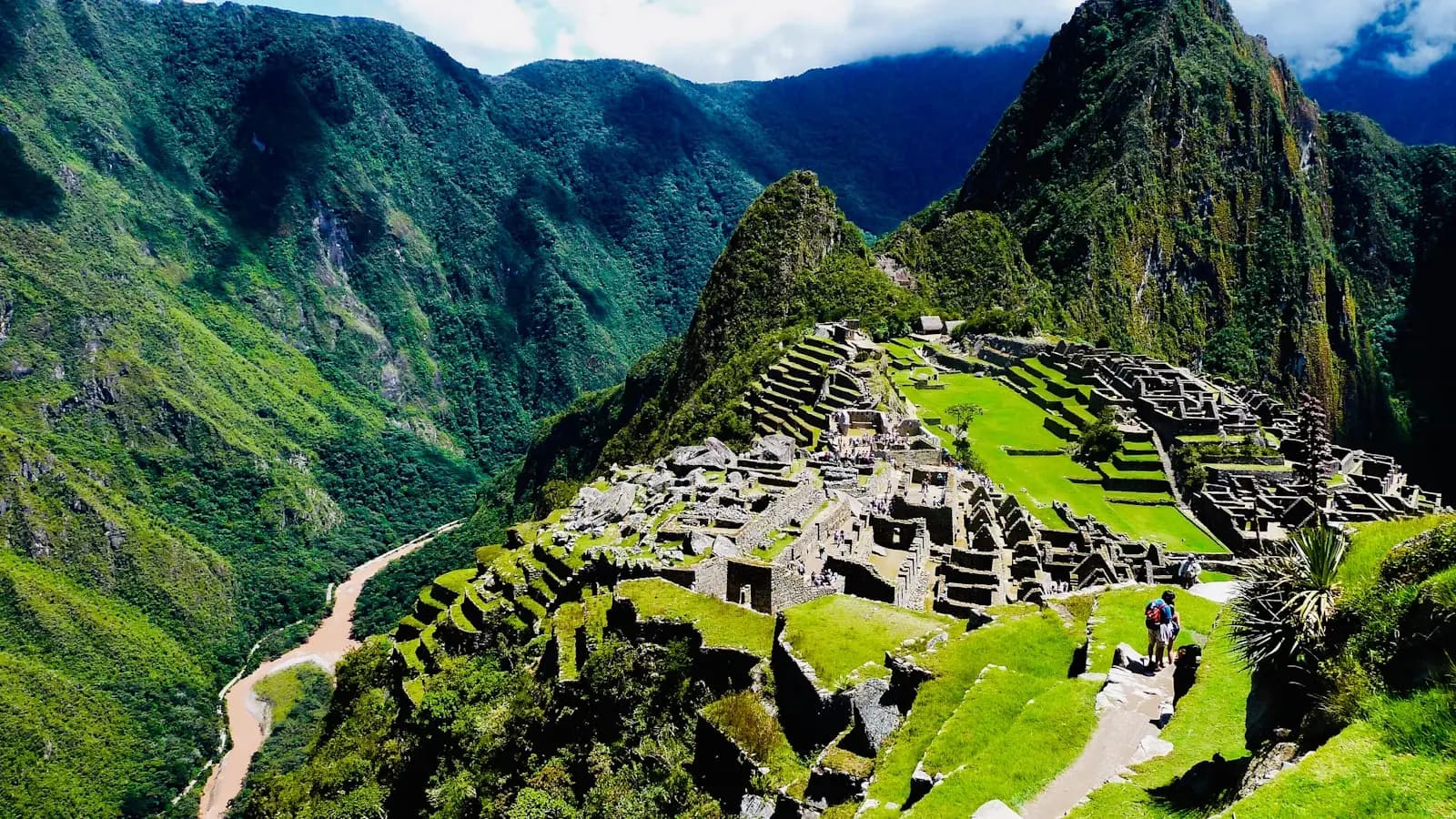
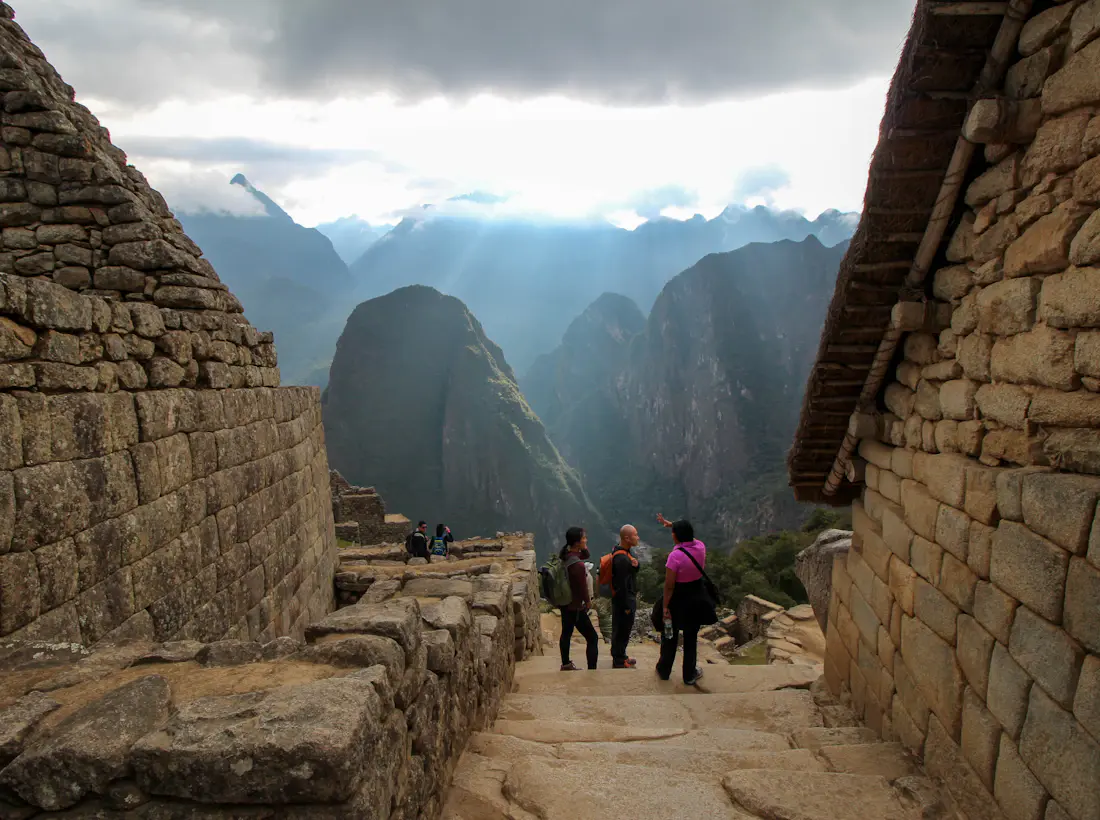
Yes, for a particular kind of couple. If your idea of a honeymoon is two weeks of not moving, Peru is the wrong country and there is no shame in that. If you want the trip to be the story — something you will still be describing in ten years — very little competes with standing at the citadel in early light on your honeymoon.
What makes it work romantically is not what people expect. It is not candlelit dinners, though those exist. It is that Peru gives you genuine shared novelty: a language of stonework neither of you can read, a valley that turns gold at six in the morning, a river at dawn with nothing on it. Novelty shared is the thing that actually bonds a trip to a marriage.
How long do you need?
Ten days is the realistic minimum for a Peru honeymoon that does not feel like a work trip. Twelve to fourteen is the sweet spot, because it lets you add a second climate without cutting the Andes short.
The reason Peru needs more days than a European honeymoon is not distance on a map — it is altitude. You cannot compress acclimatisation, and trying to is how couples lose the first three days of their marriage to a headache.
What about the altitude, honestly?
This is the single most important planning decision, and it is counter-intuitive. Cusco sits at 11,152 feet. The Sacred Valley is lower, around 9,400 feet. Machu Picchu is lower still at 7,972 feet.
So the route that feels obvious — fly into Cusco, stay in Cusco, do Machu Picchu from Cusco — is the one most likely to make somebody ill. The better sequence is to land at Cusco and transfer straight down to the Sacred Valley, sleep low for two or three nights, visit Machu Picchu from there, and only then come back up to Cusco once your body has adjusted. Cusco is a far better city when you can breathe in it.
On a honeymoon this matters more than on any other trip, because you have no slack. There is no second week to make up for a lost first one.
Where do you actually stay?
Four stages, each with a different character, which is what keeps a Peru honeymoon from feeling repetitive:
The Sacred Valley. A luxury lodge among the terraces — garden suites, mountain views, a spa to ease the altitude. The gentlest, most beautiful place to begin.
Machu Picchu. A retreat close to the citadel gates, cloud-forest gardens and hot-spring-fed baths, which buys you the early entry that day-trippers cannot get.
Cusco. A restored colonial mansion in the old town — stone courtyards, a fireplace, oxygen-enriched suites, and San Blas a few steps away.
The Amazon. A private lodge in the canopy at Tambopata: open-air suites, candlelit dinners, dawn boat trips to oxbow lakes. It is the change of scene that turns an Andean trip into a honeymoon.
We do not publish property names, because the right lodge depends on your dates and what you want from each stage — your specialist matches the exact property and suite rather than selling you a fixed package. The tier is what we commit to: hand-selected four- and five-star, arranged end to end.
Should you hike the Inca Trail on your honeymoon?
Usually not, and we will say so plainly. The classic Inca Trail is four days of camping with shared facilities at altitude. Some couples genuinely want exactly that, and for them it is wonderful. For most, it is a strange thing to do in the first fortnight of a marriage.
There is a good middle option. A one-day hike from Km 104 arrives at the citadel through the Sun Gate on foot — the arrival everybody actually pictures — without the camping. You get the walk-in, then a hot shower and a proper dinner.
One hard constraint if you are set on the trek: the entire Inca Trail network closes from 1 to 28 February every year for maintenance, reopening 1 March. Machu Picchu itself stays open all February; it is the trail that shuts. February honeymoons are still very much possible — the trek is not.
When should you go?
May through September is the Andean dry season and the classic honeymoon window, with clear skies and cold nights. June to August is busiest and priced accordingly.
April, October and early November are the value months: quieter, largely dry, and noticeably cheaper. For a honeymoon this is often the better trade, because the citadel with fewer people on it is a materially different experience. Our month-by-month guide to visiting Peru goes through the trade-offs in detail.
Can you combine Peru with a beach?
Yes, and many couples should. The Andes are exhilarating and they are also demanding; ending the trip somewhere warm and slow is a genuinely good structure for a honeymoon.
The natural pairings are a Galápagos cruise via Ecuador, the Brazilian coast, or a Caribbean leg. Adding a country means adding days rather than swapping them — a combined trip generally starts around two weeks — and your specialist will tell you honestly when a pairing costs more in transit than it returns.
How much does a Peru honeymoon cost?
Most fully private, custom Peru honeymoons fall between about $5,000 and $15,000+ per person, land only, depending on how many regions you combine and your accommodation tier. International airfare is not included.
The lever that moves the number most is the number of regions, not the lodges — in Peru almost every region change is a flight. Our full breakdown of what a Peru trip costs walks through the tiers and what actually sits behind them.
What do you pay Juniper?
The 30-minute consultation is complimentary and carries no obligation. A $100 planning deposit begins your custom itinerary and is credited against your trip; everything after that is quoted transparently before anything is booked.
Planning yours
A Peru honeymoon is mostly a sequencing problem, and sequencing is the part worth handing to somebody who has done it before. See Peru honeymoons for how the route comes together stage by stage, or the Grand Tour of Peru for the fully expanded version.
For the decisions either side of this one, our guides to visiting Machu Picchu and custom Peru trips cover the rest.
Peru is designed by Allison Tucker and Cherisse Liptzin — book a call.