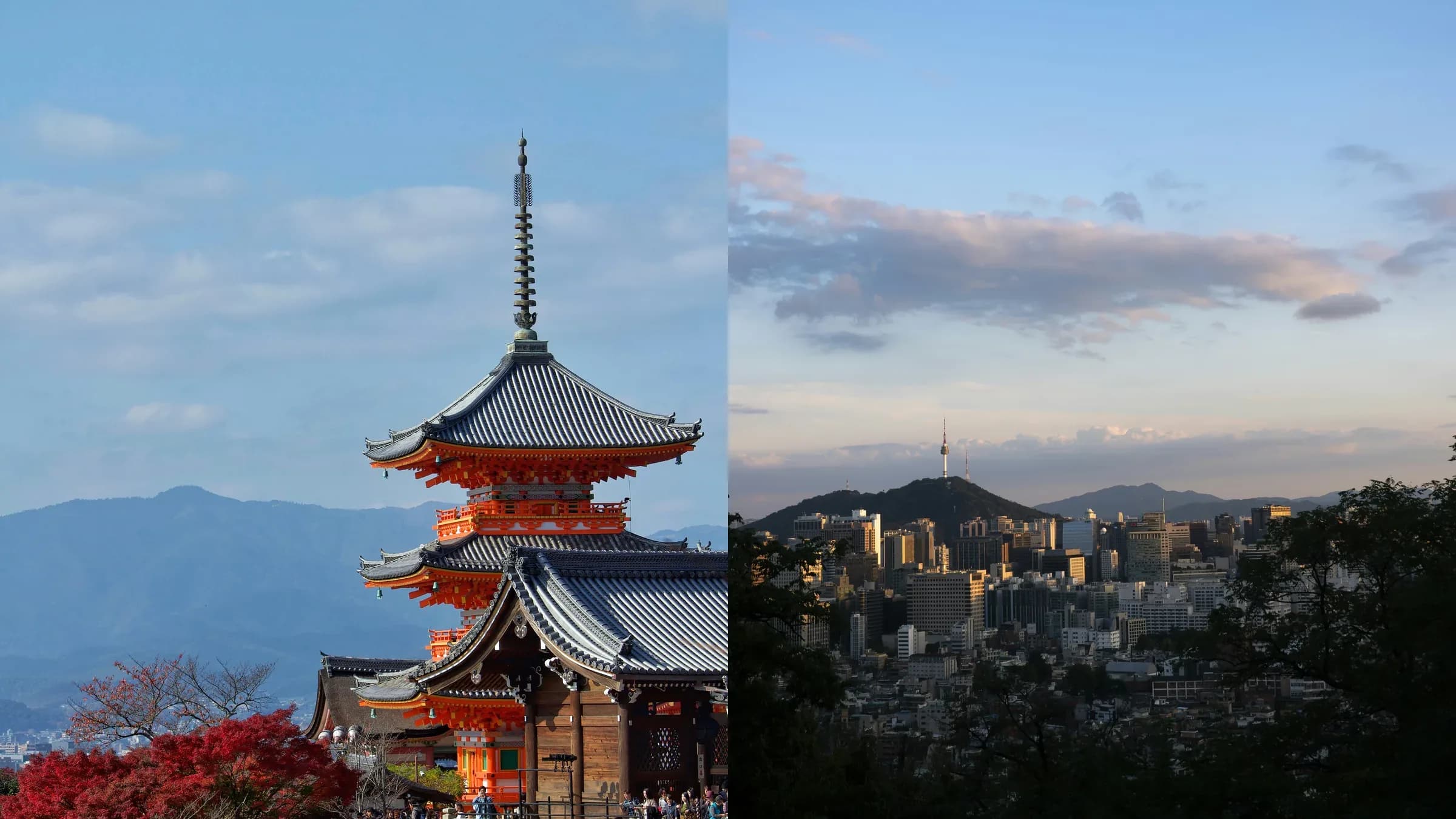
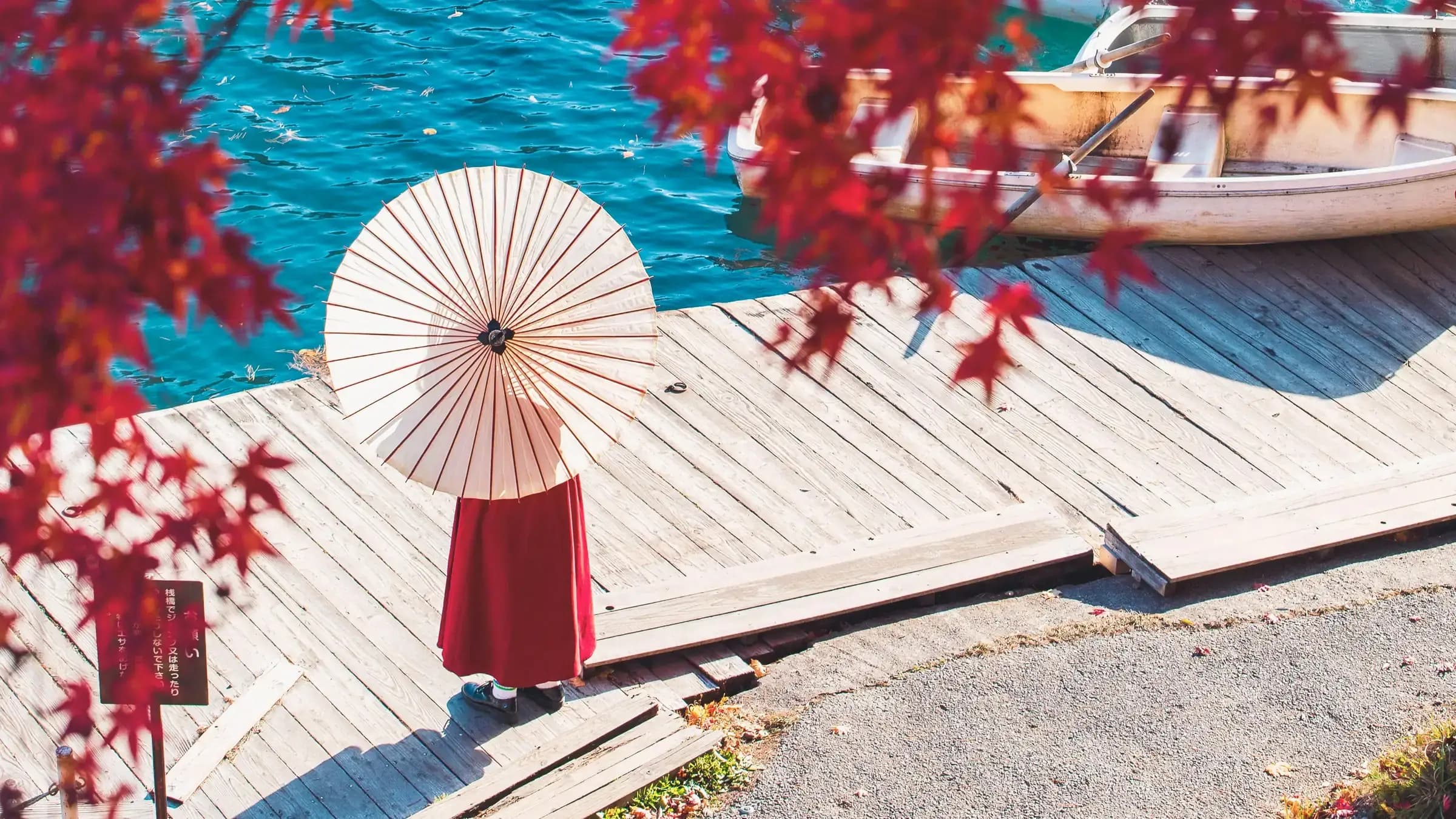
Japan's autumn color runs north to south, and 2026 is running late. The Japan Meteorological Corporation's first koyo forecast, issued September 2, 2026, puts Tokyo's maples at their peak around November 29 and Osaka's around December 4, with Sapporo and Nagano nine or more days later than average after a hot summer. The season's first color appeared on Mount Kurodake in Daisetsuzan on September 2. Kyoto's best week is late November, not early.
Key takeaways
- Koyo moves the opposite direction to sakura. Autumn color starts in Hokkaido in mid-September and reaches Kyushu in early December — roughly 11 weeks of travel from north to south, and from high elevation to low.
- 2026 is a late year. The Japan Meteorological Corporation's September 2 forecast says lingering summer heat will push peak color to "later than average" or "on schedule" nationwide, with Sapporo and Nagano 9+ days late.
- Kyoto peaks far later than most travelers plan for. The famous temple gardens run November 18 to December 5 in a normal year. People book the second week of November and arrive to green trees.
- The high country goes first. Kamikochi in the Japanese Alps peaks around mid-to-late October, weeks before Tokyo, because elevation matters as much as latitude.
- Spot-level forecasts don't publish until late September. Japan's forecasters release nationwide regional guidance first; individual temples and gorges get dates from around late September onward, updated weekly.
- Autumn is now as busy as spring. Late November in Kyoto is the single hardest hotel week of the Japanese year outside New Year, and the good rooms are gone 10 to 12 months out.
- Juniper's published range for custom Japan is $5,000–$15,000+ per person, and autumn sits at the upper half of it because of hotel pricing in the peak fortnight.
When is peak autumn foliage in Japan in 2026?
It depends entirely on where you stand, and the spread is nearly three months. The first reds of 2026 appeared on September 2, on the alpine bearberry near the summit of Mount Kurodake in Hokkaido's Daisetsuzan range — a start that forecasters called slightly later than typical. From there the color line descends the mountain over roughly six weeks, reaching Sounkyo Gorge in early to mid-October.
At the other end, Kyushu's maples don't finish until early December. In between, the Japan Meteorological Corporation's first 2026 forecast — issued September 2, the day before this post — gives two hard anchors: Tokyo around November 29 and Osaka around December 4 for maple. Northern Japan is on schedule for maple, eastern Japan on schedule or delayed, western Japan on schedule.
The word doing the work in that forecast is "delayed." Autumn temperatures nationwide are running above average, and the places most affected are the ones that would normally turn first: Sapporo and Nagano are forecast nine or more days later than their long-term averages. If you had a 2026 trip built around mid-October color in Hokkaido, move it a week.
Why does koyo run north to south when cherry blossom runs south to north?
Because they're triggered by opposite things. The sakura front moves north with warmth: blossom needs accumulated heat after a cold winter, so it starts in Kyushu in late March and reaches Hokkaido in early May. Koyo is triggered by cold. Maple leaves stop producing chlorophyll when daily minimums drop below roughly 8°C, and the reds develop fastest when nights fall near 5°C while days stay bright.
Cold arrives from the north and from altitude. So the autumn front starts on Hokkaido's high peaks in September and works down the archipelago and down the mountainsides simultaneously. This is why Kamikochi, at 1,500 meters in Nagano, turns weeks before Tokyo at sea level despite being at a similar latitude, and why Nikko's Irohazaka switchbacks show three distinct stages of color at once as you climb.
The practical consequence: a two-week Japan trip in autumn can chase color the way a spring trip chases blossom, but in reverse. Start north or high, end south or low. Our guide to the best time to visit Japan works through the same logic across all four seasons.
What are the peak windows, region by region?
These are practical planning windows — the range within which you'd expect good-to-excellent color in a normal year, adjusted for 2026's late start. Treat them as targets, not guarantees.
| Region / spot | First color | Peak window | 2026 note |
|---|---|---|---|
| Hokkaido — Daisetsuzan (Kurodake, Asahidake) | Early September | Mid-to-late September | First color confirmed Sept 2; slightly late |
| Hokkaido — Sounkyo Gorge | Late September | Early to mid-October | Running late with the rest of Hokkaido |
| Hokkaido — Sapporo / Jozankei | Mid-October | Late October to early November | Forecast 9+ days later than average |
| Tohoku — Oirase Gorge, Lake Towada | Mid-October | Late October to early November | On schedule to slightly late |
| Japanese Alps — Kamikochi | Early October | Mid-to-late October | Nagano forecast 9+ days late; target the last week of October |
| Nikko — Irohazaka, Lake Chuzenji | Mid-October (high) | Late October to mid-November | Color descends the switchbacks over about three weeks |
| Mount Fuji — Kawaguchiko, Fuji Five Lakes | Late October | Mid-to-late November | Maple corridor light-ups typically run the second half of November |
| Tokyo | Early November | Late November to early December | JMC forecast: maple peak around November 29 |
| Kyoto | Early to mid-November | November 18 to December 5 | Takao turns first; Higashiyama and Arashiyama last |
| Osaka / Nara | Mid-November | Late November to early December | JMC forecast: Osaka maple peak around December 4 |
| Kyushu — Fukuoka, Yabakei, Kuju | Mid-November | Late November to mid-December | The last color in the country |
Why does Kyoto peak so much later than travelers expect?
This is the single most common mistake in autumn Japan planning, and it costs people the trip. Travelers see "November foliage in Kyoto," book the first ten days of the month because it feels safely inside the window, and arrive to a city that is mostly still green.
Kyoto sits in a basin at low elevation in western Japan. It gets cold late. In a normal year the famous gardens — Tofukuji's Tsutenkyo bridge, Eikando, the Arashiyama temples, Kiyomizudera — run their best from about November 18 to December 5. Takao, up in the northwest hills, is the exception and turns in early-to-mid November, which is why it's the right answer for anyone locked into early-month dates.
There's a second wrinkle worth knowing. Official forecast dates and temple peak dates disagree, and both are correct. Japan's meteorological services record koyo against a single designated maple tree per city, which is why you'll see Kyoto's "official" peak land in early December. The temple gardens are planted with mixed maple cultivars chosen partly for how they color, and they read as spectacular for a week or two before that standard tree does. Plan to the garden, not the observatory.
The illuminations tell you where the temples themselves think the peak is. For 2026, Toji has confirmed evening openings from October 31 to December 13, Eikando from November 20 to December 6, and Kiyomizudera from November 21 to 30. Several other major temples had not published 2026 dates as of early September, and some still had 2025 schedules posted — check before you build an evening around one.
How reliable is the forecast this far out?
Directionally reliable, precisely not. The first nationwide forecast of the season, which is what we have now, is built on temperature outlooks and gives regional tendencies — earlier, on schedule, later. Year-to-year variation at a given spot is typically three to five days either side of the average, and a single cold snap in late October can pull a whole region forward by a week.
Spot-level forecasts for individual temples and gorges begin publishing around late September and are updated weekly through the season. If your dates are already fixed, those updates won't change anything, but they will tell you which of your days to spend where — and in Kyoto, moving a temple from your Tuesday to your Friday is often the difference between good and extraordinary.
What you should not do is delay booking until the forecast firms up. In the peak fortnight there is no inventory left to move into.
Is autumn busier than cherry blossom season?
In Kyoto, effectively yes. Autumn's peak is more compressed than spring's — the color holds for roughly two weeks against sakura's rolling front — and it lands on a fortnight that includes a Japanese public holiday and heavy domestic travel. Late November in Kyoto is the hardest hotel period of the year outside the New Year holiday.
The mitigations are real, though. Autumn crowds concentrate on a much smaller list of places than spring crowds do: perhaps a dozen temples in Kyoto absorb most of the pressure. Tohoku, the Japanese Alps and Kyushu are genuinely uncrowded in their peak weeks. And autumn's weather is the best of the Japanese year — dry, clear, days in the high teens Celsius — which makes the walking-heavy days that define a Japan trip much more pleasant than a humid June.
On cost, autumn behaves like spring. Expect the top end of the range in our breakdown of what a Japan trip costs, with Kyoto hotel rates in the peak fortnight running well above their annual average .
Which parts of the trip should you lock first?
In order: Kyoto hotel, then ryokan nights, then any evening temple admission that requires timed entry, then rail.
Kyoto's supply of genuinely good rooms is small and it does not expand for the season. The machiya properties and the handful of luxury hotels sell their late-November nights first, often before general release. Ryokan in Hakone, the Fuji lakes and the Alps behave the same way and frequently impose minimum stays over the peak.
Rail is the easy part. Shinkansen reserved seats open one month before departure, so nothing there needs solving early — but reserved seats between Tokyo and Kyoto in late November do sell out, and turning up for an unreserved car with luggage on a peak Saturday is not the experience you paid for.
Who this suits — and who it doesn't
Autumn Japan is wrong for you if your dates are immovable and fall in the first half of November. You can still have an excellent trip, but you will be building it around Takao, Nikko and the Alps rather than around the Kyoto photographs that made you want to come. Be honest about that at the planning stage rather than disappointed on the ground.
It's also wrong if crowds ruin things for you and you insist on Kyoto's headline temples. Tofukuji in the last week of November is a queue with a garden attached. If you want the color without the pressure, Tohoku in late October delivers arguably better scenery to a fraction of the audience.
And it's wrong for anyone who needs a guarantee. Color is a weather event. A typhoon tail in mid-November can strip a hillside in a day. The right way to buy insurance is to spread your trip across two or three elevations and latitudes, so no single front can take the whole thing.
How far ahead should you book?
For autumn 2027, start 10 to 12 months out — meaning now, if you're reading this in the 2026 season and it made you want the following year. Kyoto for the last two weeks of November is a 12-month booking. Ryokan with private onsen in the Alps and the Fuji lakes are the same.
For everything outside the Kyoto peak fortnight, eight to ten months is usually enough. Hokkaido in late September and Tohoku in late October are meaningfully easier, and you can often still build a strong itinerary at six months if you're flexible on property.
If you're considering 2026 itself — the color is already moving, Hokkaido is close to done, and the honest answer is that Kyoto in late November is effectively sold out at the level we work at.
Let our Japan specialist time your autumn trip
Cherisse Liptzin was raised in one of the country's largest Japanese-American communities, has explored 21 countries, and is a self-proclaimed foodie who believes the best way to know Japan is through its cuisine — which, in November, means the season's first matsutake and the year's new rice as much as it means maples. She builds autumn itineraries the way they should be built: staged across elevations and latitudes so a single weather front can't take the whole trip. Every Juniper trip is fully private and built from scratch — no group coaches, no fixed departures, no forty-person minibus at the same temple gate.
"Everything planned by Juniper Tours went incredibly smoothly. Every driver and guide was wonderful and the one time we thought we might miss a train, because of unexpected traffic, our driver was on the phone with the 24/7 service desk working to book new tickets for us. I was very impressed with the service and the app." — Hailey M., verified Google review
Start with our custom Japan trips to see how we structure a private itinerary, and if you're traveling as a couple, Japan honeymoons is built around slower pacing and better rooms in exactly the weeks that matter here. For the wider calendar, read the best time to visit Japan; for budgeting, how much a trip to Japan costs. When you have dates in mind, book a free consultation and we'll tell you honestly whether they'll land on color.