Yes — for a specific kind of couple. Norway gives you solitude, scale and light that behaves strangely: the sun never sets in Tromsø from May 19 to July 26, and never rises from November 28 to January 14. It does not give you warmth, beaches or a bar scene. Tromsø's warmest month averages 15.6°C and Bergen is wet on 198 days a year. If you want to be alone together somewhere astonishing, it's close to unbeatable. If you want a lounger, it's the wrong country.
Key takeaways
- There are two entirely different Norway honeymoons — a winter aurora trip built around Tromsø and Lofoten, and a summer fjord trip built around Bergen and the Sognefjord. They share a passport and nothing else.
- Most couples spend $5,000–$15,000 per person, depending on accommodation tier and trip length, with 8–12 days the sweet spot.
- Aurora season runs late September to late March; February and March give you the darkness plus 7 to 12 hours of usable daylight, which December does not.
- The best properties are tiny. Hotel Union Øye, Juvet Landscape Hotel and Lyngen Lodge are measured in single- or low-double-digit rooms, which is why they need booking ten to twelve months ahead.
- Norway is not a nightlife honeymoon. Outside Oslo, kitchens close early and towns are quiet by ten. Plan around that rather than being surprised by it.
- Privacy is Norway's real luxury. A rorbu cabin on the water in Lofoten in February has no neighbours, and that is a harder thing to buy than a suite.
- You cannot combine the aurora and the midnight sun. If both are on the list, you're planning two trips, and Norway is a good place to have that argument early.
Is Norway good for a honeymoon?
It's extraordinary for couples who want drama and solitude, and genuinely wrong for couples who want warmth and nightlife. That's the honest version, and it's worth deciding which of those you are before you go any further.
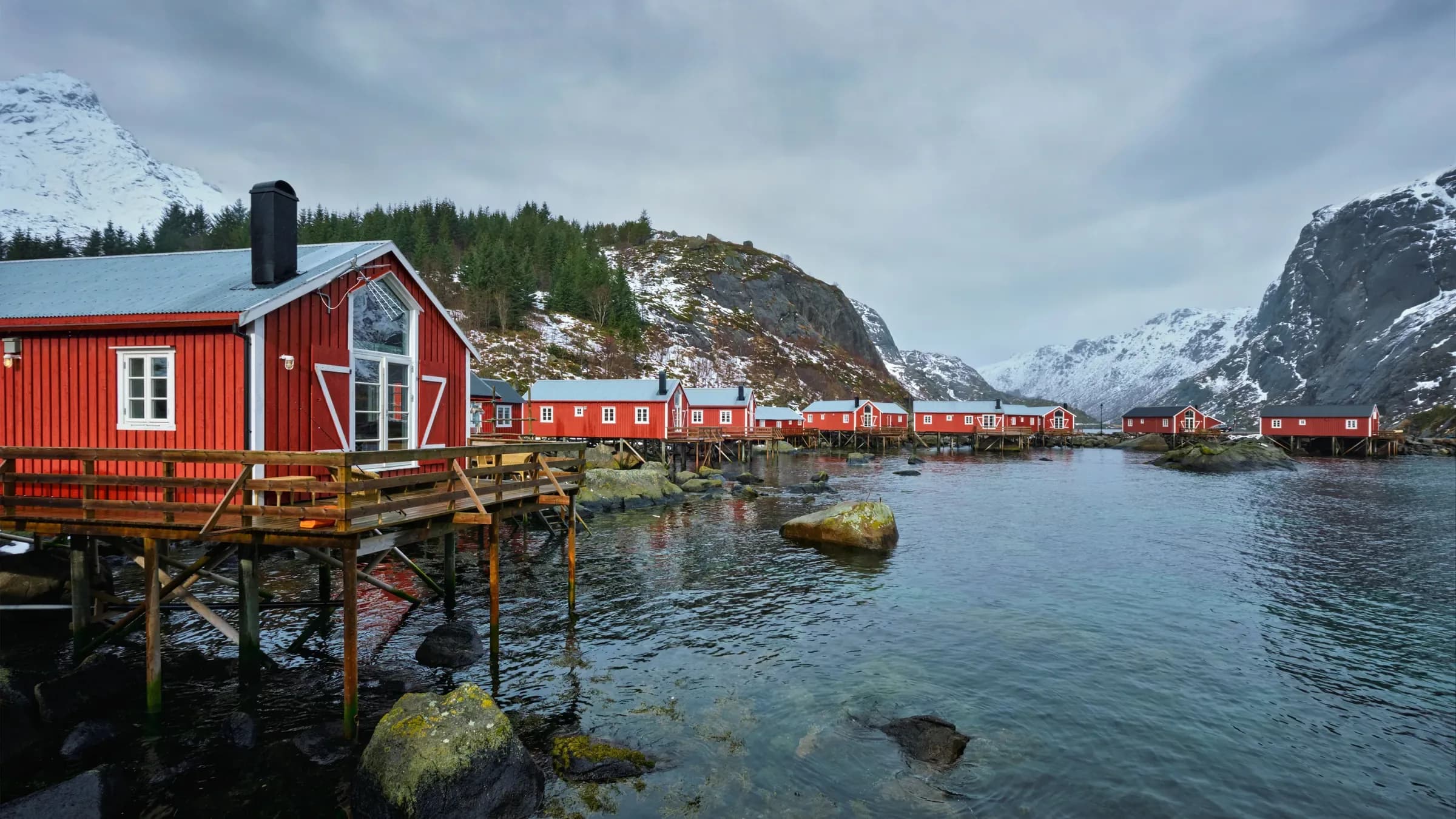
What Norway does better than almost anywhere is give two people space. Not resort space — actual space. A cabin at the end of a road on a Lofoten headland in February with the sea forty feet away and nobody else within a mile. A fjordside room where the only sound at eleven at night in June is water. The country is large, thinly populated, and organised in a way that puts you in beautiful places without putting you in crowds. For a honeymoon, that's the point.
What it doesn't do is warmth or spectacle-on-demand. There is no reliable sunbathing. There are very few restaurants open past nine outside the cities. Nobody is going to bring you a cocktail on a beach. If your picture of a honeymoon involves being looked after by a resort, Norway will feel austere — and we'd steer you elsewhere rather than sell you a trip you'll be polite about afterwards. Our Norway honeymoons page is deliberately explicit about who this is for.
Winter or summer: which Norway honeymoon is yours?
| Winter aurora honeymoon | Summer fjord honeymoon | |
|---|---|---|
| When | Late September–late March; February and March are best | Mid-June–early September; late August is the value pick |
| Where | Tromsø, Lofoten, the Lyngen Alps, Alta | Bergen, Sognefjord and Flåm, Geiranger and Sunnmøre |
| Light | 1h50m of daylight in Tromsø in mid-January; polar night Nov 28–Jan 14 | 24 hours in Tromsø in June; 18h55m in Bergen |
| Temperature | Tromsø averages −0.4°C high in January | Tromsø 15.6°C, Bergen 19.7°C in July |
| What you do together | Aurora chasing, dog sledding, whale boats out of Skjervøy, sauna and cold water | Fjord boats, hiking, the Flåm Line, long slow evenings outside |
| Where you sleep | Rorbu cabins, glass-roofed lodges, small Arctic properties | Fjordside hotels, historic timber lodges, design cabins |
| Risk | Weather. The aurora is a probability, not a booking | Rain. Bergen has 198 wet days a year |
| Best for couples who | Want one unrepeatable night more than seven comfortable ones | Want to be outside all day and eat dinner at midnight in daylight |
What is a winter aurora honeymoon actually like?
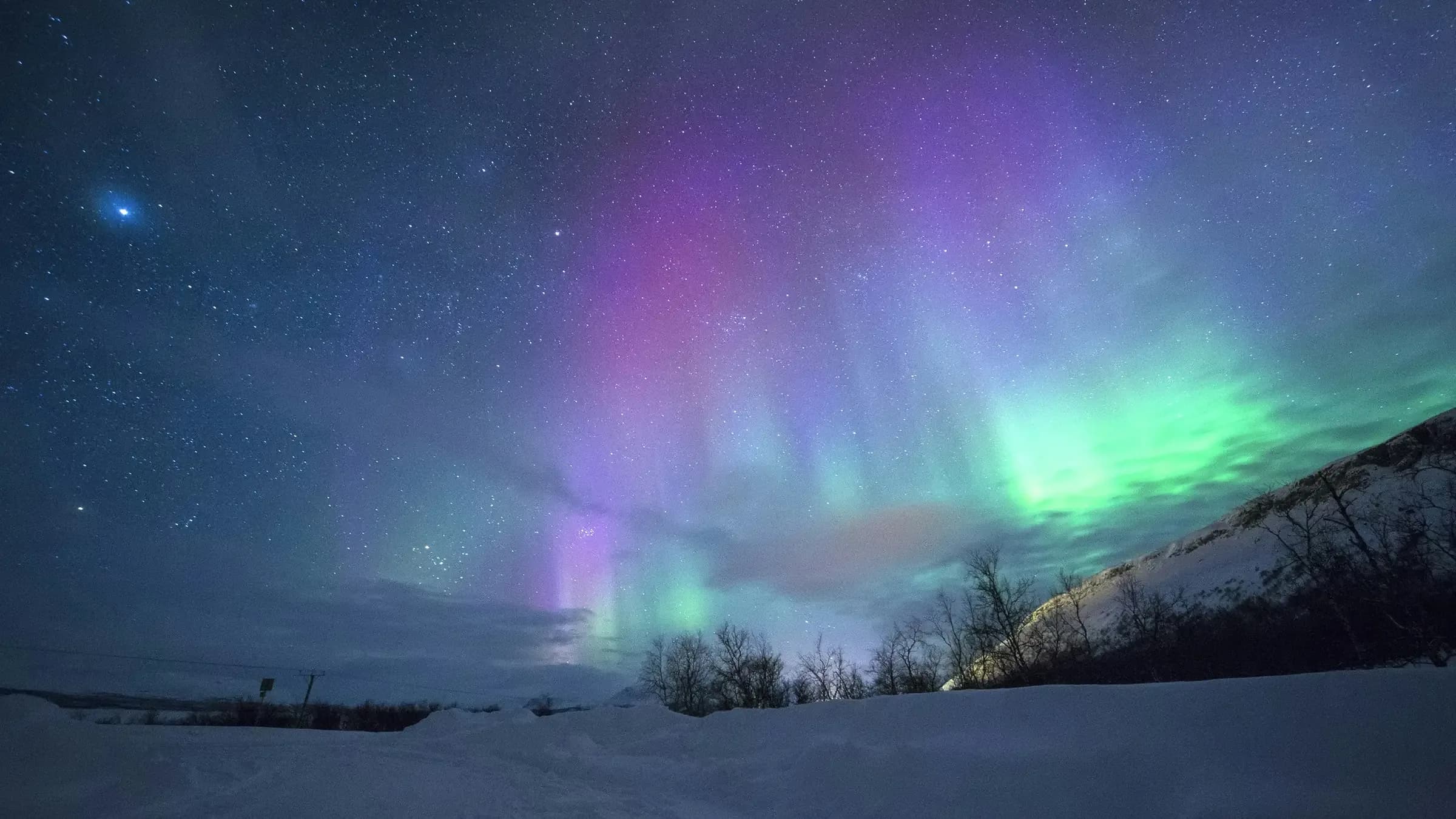
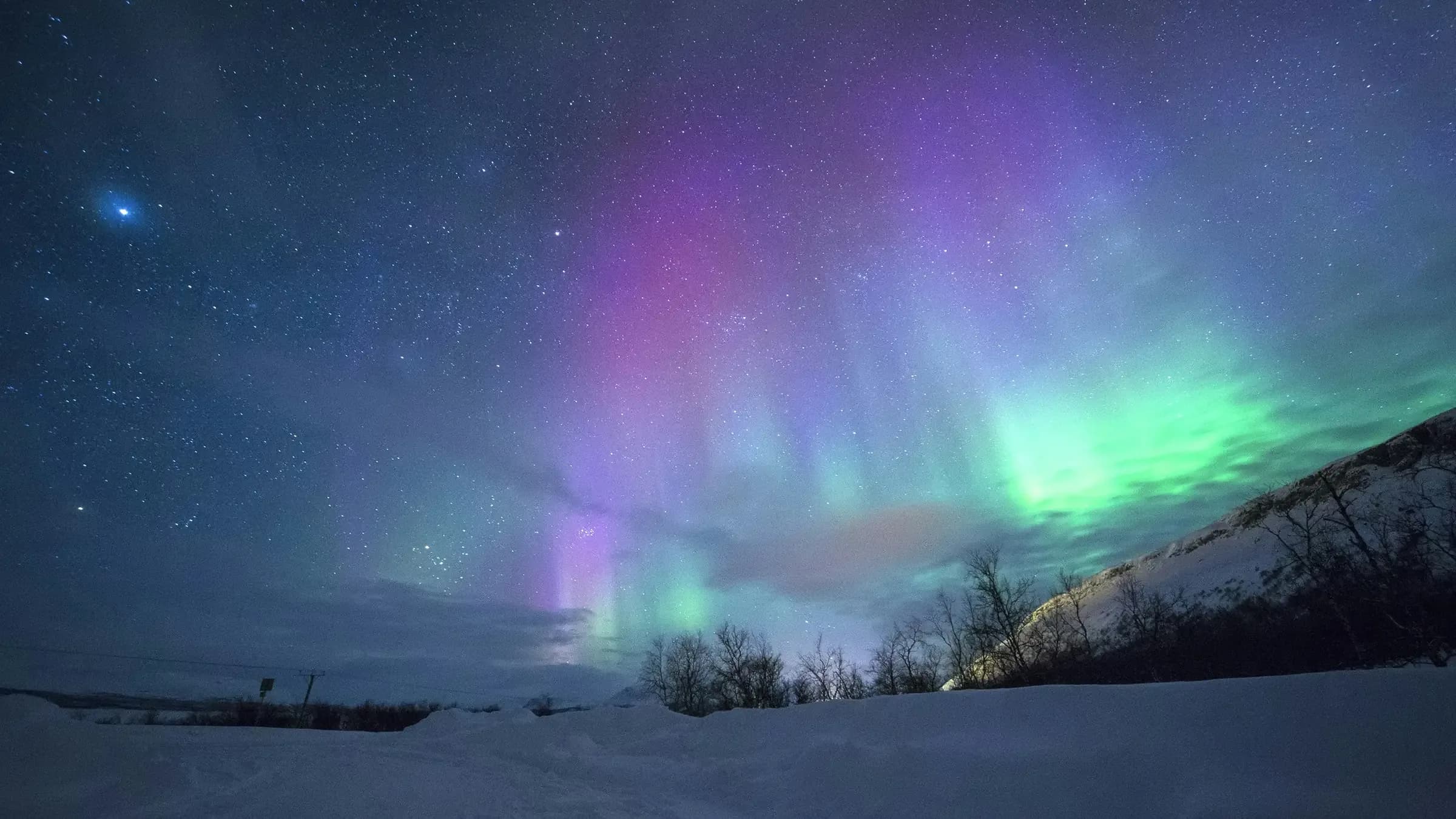
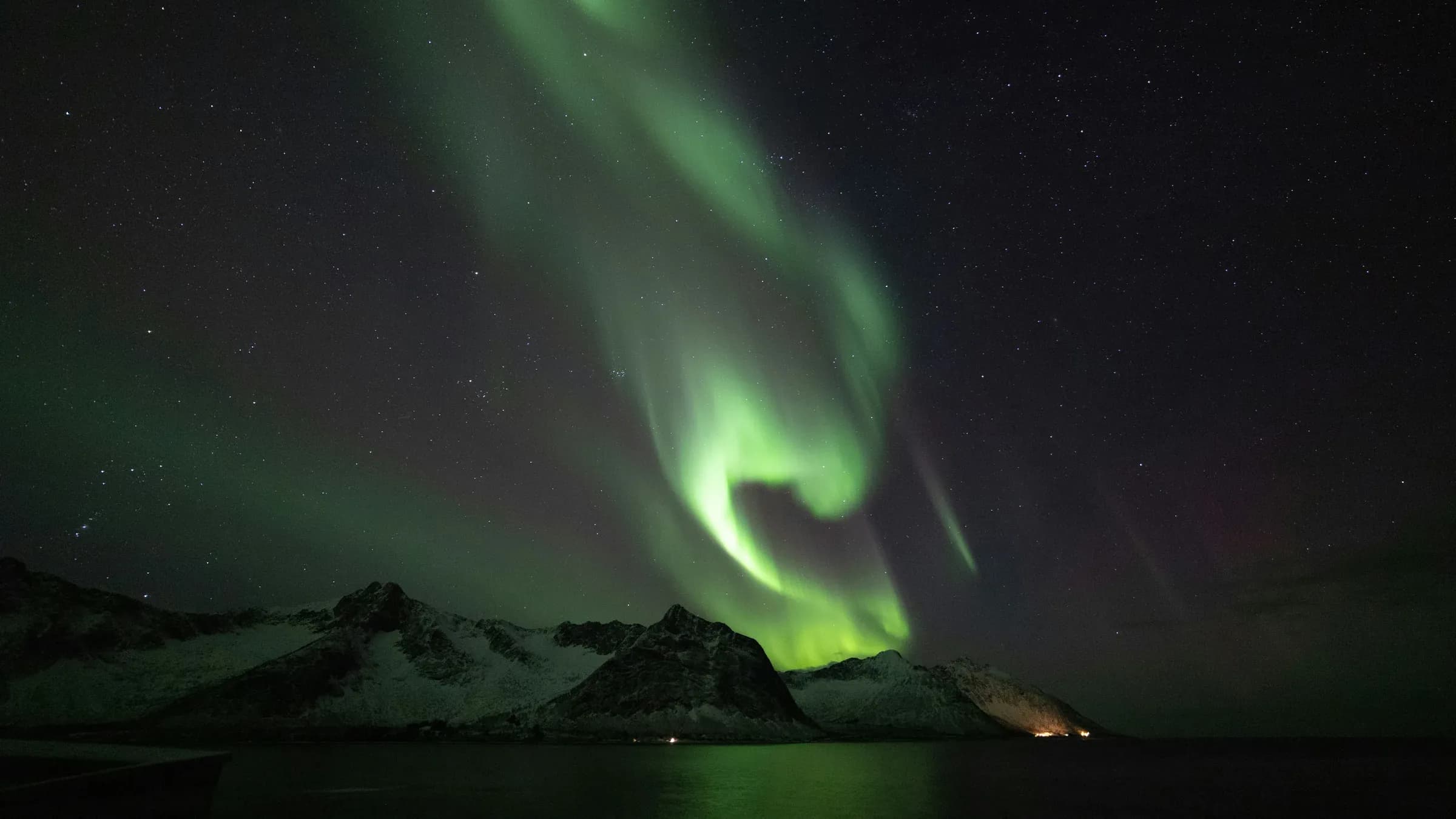
Cold, dark, slow and — when it works — the most memorable few hours of most people's travelling lives. The shape of it is: a base in Tromsø or Lofoten, three or four nights kept deliberately loose, and a guide with a vehicle who watches the cloud forecast and decides at four in the afternoon where you're going.
That last part is the whole trip. Coastal Tromsø runs around 55–60% cloud cover in midwinter , and the difference between seeing the lights and not is almost always the willingness to drive two hours inland to find clear sky. Operators reporting on three- and four-night stays put the odds at roughly 75–80% in December and January and 70–75% in November and February . Those are good odds. They are not a guarantee, and any honeymoon planned around a guarantee will end badly.
The rest of the days fill themselves: dog sledding, a whale boat out toward Skjervøy during the November–January herring season, a sauna over the fjord, and a great deal of doing nothing in a warm room while it's dark outside at two in the afternoon. That last one is underrated. Couples who have just planned a wedding tend to need it.
Worth knowing: the 2026/27 aurora season should be a strong one. Solar Cycle 25 peaked in 2024 and is now in its declining phase, which produces the long-lived coronal holes and recurring solar wind streams that make aurora activity steady and repeatable rather than a lottery on one big flare.
What is a summer fjord honeymoon actually like?
Long. Not tiring — long. The days lose their edges. In Bergen you get 18 hours 55 minutes of daylight in June; north of the Arctic Circle the sun doesn't set at all. You end up hiking at nine in the evening and eating at eleven because it doesn't occur to you that it's late.
The route most couples want runs Bergen, then the Sognefjord arm around Flåm and Aurland, then Geiranger and the Sunnmøre Alps, out from Ålesund. You move on the Bergen Railway (492 km, 6.5–7 hours), the Flåm Line (20 km, dropping 866 metres in under an hour), and small electric boats through the Nærøyfjord — about two hours from Flåm to Gudvangen, on water so still the reflection is better than the view. We make the case for doing all of it from land, not a ship, in the Norwegian fjords without a cruise ship.
The honest downside is weather. Bergen averages 2,490 mm of rain across 198 days a year, and a fjord honeymoon in persistent drizzle is a test. May is statistically the driest month at 110 mm, and late August gives you warm sea, clear high trails and thin crowds. Neither is a guarantee either.
Where should you stay?
Norway's romance is architectural and geographic rather than service-led. The properties worth planning a honeymoon around are small and specific:
- Hotel Union Øye, on the Hjørundfjord — a historic hotel in a spectacular and genuinely remote setting. For many couples this is the trip.
- Juvet Landscape Hotel, Valldal — separate glass cabins set into the landscape with no view of each other. Severe, beautiful, and not for everyone.
- Storfjord Hotel, near Ålesund — timber lodge above the fjord, warmer in feel than the other two.
- Solstrand Hotel & Bad, Os — a proper fjord spa hotel south of Bergen. The right first or last two nights.
- Nusfjord Arctic Resort and Hattvika Lodge, Lofoten — restored fishing-village cabins on the water, which is exactly the right form for this landscape.
- Lyngen Lodge, near Tromsø — small, activity-focused, and positioned for aurora rather than for a lobby.
- The Thief or Amerikalinjen, Oslo — for the night either side of a domestic flight.
A word on glass igloos: they photograph better than they sleep, and a fixed glass roof only helps if the aurora happens to be overhead and the sky above you happens to be clear. We say the same about them in glass igloos in Iceland. One night is a lovely idea. Building a trip on it is not.
How much does a Norway honeymoon cost?
Most couples invest $5,000–$15,000 per person, depending on accommodation tier and trip duration, over a trip of 8–12 days. A well-built middle version lands around $7,000–$11,000 each , land arrangements only.
Where the money goes is worth understanding, because Norway's cost is not markup — it's labor, in a country with no tipping culture and a high minimum standard of living. The currency helps: at about 9.3 NOK to the dollar in September 2026, American travelers are getting more than they would have five years ago. We break the whole thing down in how much a Norway trip costs.
The one line we'd defend hardest on a honeymoon is the room with the view. In Norway, the difference between a good room and the right room is the difference between looking at the fjord and being in it.
Is Norway romantic, or just beautiful?
Both, but the romance is a particular kind and it's worth naming. Norway isn't romantic in the candlelit-terrace sense. It's romantic in the sense of two people alone in a very large landscape, which is a different feeling and, for the right couple, a deeper one.
What that means practically: the good moments are unstructured. The midnight walk. The sauna and the cold water. The four hours in a car with a guide waiting for cloud to break, and then the twenty minutes when it does. A honeymoon here should be under-programmed on purpose — three or four fixed things across ten days, and a lot of space around them.
Who this suits — and who it doesn't
Norway is wrong for couples who want to be warm, who want a beach, or who want somewhere that stays up. It's wrong if either of you needs certainty — the aurora is a probability, weather closes mountain roads, and small ferries cancel. It's wrong if one of you is going to be cold and quietly miserable for eight days, which is a more common failure mode than people admit. And it's wrong for a first-time-abroad honeymoon where the priority is being looked after.
It's also worth saying plainly: if you're choosing between Norway and the Maldives, you already know the answer, and it isn't a close call in either direction.
It suits couples who are moved by scale, who don't mind weather, and who would rather have three extraordinary days than ten pleasant ones. It suits people who hike, photograph, or simply like being outside. And it suits couples who have travelled together enough to know that the best days are usually the unplanned ones — because in Norway, they will be.
How far ahead should you book?
Ten to twelve months for a February or March aurora honeymoon, and for June through August in the fjords. This is not padding. Hotel Union Øye, Juvet and Lyngen Lodge have between eight and forty rooms each; the specific rooms couples want go first, and private guides with their own vehicles book out earlier than hotels do.
Six to nine months works for late May, September and November. If you're marrying in summer and honeymooning immediately, note that July is Norway's busiest and priciest month — delaying to late August costs less, is quieter, and is a better trip. Couples weighing Norway against elsewhere in the region may also want the best European honeymoon destinations for 2027.
Let our Norway specialist plan your honeymoon
Most of what makes a Norway honeymoon work is invisible from a booking site: which of the fifteen rooms at a fjord hotel actually has the view, which aurora guides will drive to Finland and which won't, and which nights to leave completely open. That's the part we handle. Every Juniper trip to Norway is fully private and built from scratch around your dates — no group coaches, no fixed departures. Your Norway specialist will also tell you if Norway is the wrong honeymoon for you, which is a conversation we have fairly often.
"They were great. Had us all set up for a wonderful trip." — Brad W., verified Google review
Start with Norway honeymoons, which sets out the fjordside, rorbu and Arctic-lodge options couples actually choose between, or browse our custom Norway trips more broadly. If you haven't settled on a season yet, the best time to visit Norway is the place to start, and our Norway itineraries show how differently the two versions run. When you're ready, book a free consultation. It's free, and it's a conversation rather than a pitch.